I joined a recorded X Space with Pakistan Republic Party (PRP) leader Reham Khan, hosted by Faisal Usmani.
Not as a heckler. Not as a supporter. In the past I make a similar X Space.
I am co-hosting this space with @Faisalabassi alongwith @AdeelAsifPk ft. Madam @RehamKhan1 https://t.co/1dAgZ9F3Pi
— Zorays Khalid (@zorayskhalid) June 30, 2022
But as someone who has seen parties born from conviction—and others born from reaction. There is another party with PRP mnemonics that is Pakistan Reforms Party. This here is Pakistan Republic Party.
This was not my first interaction.
I congratulated journalist Reham Khan on her third marriage to US-based Pakistani actor Mirza Bilal Baig, coinciding with widespread media reports of the wedding.


Congratulations @RehamKhan1
— Zorays Khalid (@zorayskhalid) December 23, 2022
In the past I had remained curious about Reham’s thoughts when marrying Imran Khan—no judgment, just wondering what drew her in: charm, power, or something else? We all have our moments. She and Bilal seemed like a wonderful pair! I had engaged earlier on Instagram as well. I see myself as a potential supporter.
How can I join PRP (Pakistan Republic Party)?@RehamKhan1
— Zorays Khalid (@zorayskhalid) July 15, 2025
What followed, however, raised questions that deserve to be documented, not buried under applause or outrage.
Is PRP an Idea — or an Afterthought?
At moments, PRP felt less like a movement forged over time and more like a sudden declaration: “Ruko zara bachon, main apni party khud banati hoon.”
Not arrogance. Not necessarily ego. But urgency.
Urgency can be brilliance.
Or it can be impulse.
The question is which one this is.
On July 2015 I came across this.

Protocol, Power, and Blind Spots
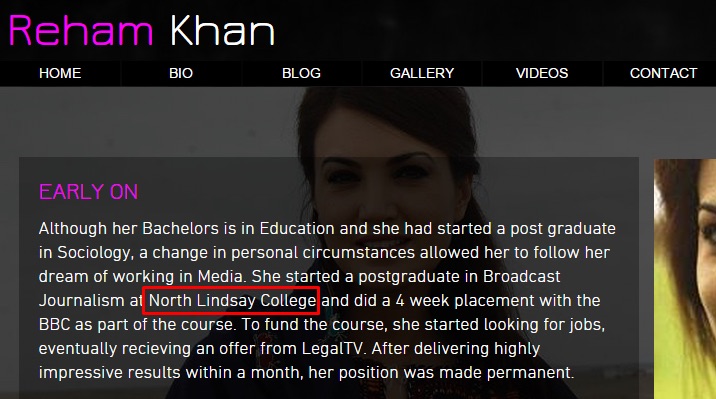
Reham Khan repeatedly emphasized her dislike for protocol and political elitism. Yet, paradoxically, she acknowledged not knowing the religious beliefs of people working around her—until they requested time off for religious holidays. Also, she heralds that she was head hunted for BBC.
This raises an uncomfortable but important distinction:
Shared values vs shared intellect.
You can reject symbolism, but systems still run on awareness. Leadership isn’t just about intent; it’s about attentiveness.
Merit or Micro-Nepotism?
A question I posed plainly:
How is my techno guy—someone I personally know—less qualified than a handpicked insider?
And how is that different from nepotism, or at best, a short-term unscalable arrangement?
Merit must be provable, not assumed.
Otherwise, we simply replace old networks with newer, friendlier ones.
NGO-Style Politics or a National Alternative?
With respect, I asked:
In light of parties like Barabri Party, Awaam Pakistan Party, and Istehkam-e-Pakistan Party,
how is PRP not perceived as another foreign-funded, urban-elite, NGO-style initiative?
How is it different from outfits like Awami Muslim League or Pakistan Aman Party?
This wasn’t hostility.
It was a demand for differentiation.
To be honest, the logo itself is a cheap Canva freemium AI-made graphic featuring an eagle, which I fear is already an Istehkam Pakistan Party election symbol—in the past, it was with the All Pakistan Muslim League’s symbol. As of 2025, the Eagle—often referred to as the Shaheen—serves as the official electoral symbol of the Istehkam-e-Pakistan Party (IPP), a designation that traces its roots back to the symbol’s previous association with Pervez Musharraf’s All Pakistan Muslim League (APML). The shift occurred following key legal milestones: the Election Commission of Pakistan (ECP) delisted the APML on October 13, 2023, due to its failure to conduct mandatory intra-party elections, freeing up the symbol. Shortly thereafter, on October 26, 2023, the IPP—led by Abdul Aleem Khan and Jahangir Khan Tareen—successfully applied for and was allotted the Eagle after competing requests from other parties. Despite attempts by APML remnants to reclaim it, including a Supreme Court appeal dismissed in early 2024 for ongoing non-compliance with ECP rules, the symbol remained with the IPP. The party prominently used it during the February 2024 general elections and continues to hold it in the ECP’s official records today.
— Faisal Usmani (@FaisalUsmaniUSA) December 20, 2025
Timing: Strategy or Serendipity?
The Space took place shortly after a verdict against Imran Khan and Bushra Bibi in the Toshakhana case.
So the question becomes unavoidable:
-
Was this timing designed to fill an immediate political vacuum?
-
Or was it coincidence—luck masquerading as strategy?
Either answer has consequences.
One signals intelligence.
The other, opportunity without preparation.
Secularism, Framing, and Loaded Questions
During the Space, Ahmad Waqas Goraya asked whether PRP would discourage misuse of the religious card. Reham Khan responded clearly: PRP is a center-left, secular party.
The answer itself wasn’t the issue.
The framing was.
A structured question with an obvious answer leaves no room for nuance. Had a more provocative scenario been posed—say, about blasphemy exploitation—the optics could have shifted dangerously. Leaders must not only answer well; they must recognize when a question is steering them.
The 30-Politician Experiment
Perhaps the most ambitious claim:
We want to produce the next generation of 30 politicians with no political background.
This is bold. Also risky. At one stage she called her party a socialist party answering to a folk from Pakistan Barabari Party.
Experience matters. So does fresh blood. The real question is whether PRP plans to train these individuals rigorously—or simply platform them.
Learning by doing is admirable.
Learning by governing is costly.
@RehamKhan1 what is your anti narcotics and fitness policy
— Zorays Khalid (@zorayskhalid) July 16, 2025
Longevity, Safety, and Self-Assessment
Reham Khan stated:
-
She feels unsafe in existing political parties.
-
She sees herself politically relevant for the next 30 years.
-
She believes hard work eventually pays off.
-
And candidly: “We will learn.”
Honesty is refreshing.
But politics is unforgiving.
The Litmus Test Pakistan Needs
Which brings us to the core question:
Why must Pakistan “try first” to know if something works?
Why can’t there be a litmus test—clear benchmarks, pilot governance models, measurable outcomes—before asking for national trust?
PRP says it is focusing on Gilgit-Baltistan, Karachi, South Punjab, and Hazara (KPK).
Good. These regions need attention.
But focus must come with proof of concept.
Final Thought
This was not an attack.
It was not an endorsement either.
It was a record.
Because in Pakistan, political narratives are often rewritten after the fact. This one is documented at inception.
History will decide whether PRP was conviction crystallized at the right moment—or a moment mistaken for conviction.
The question remains open.
As it should.