

























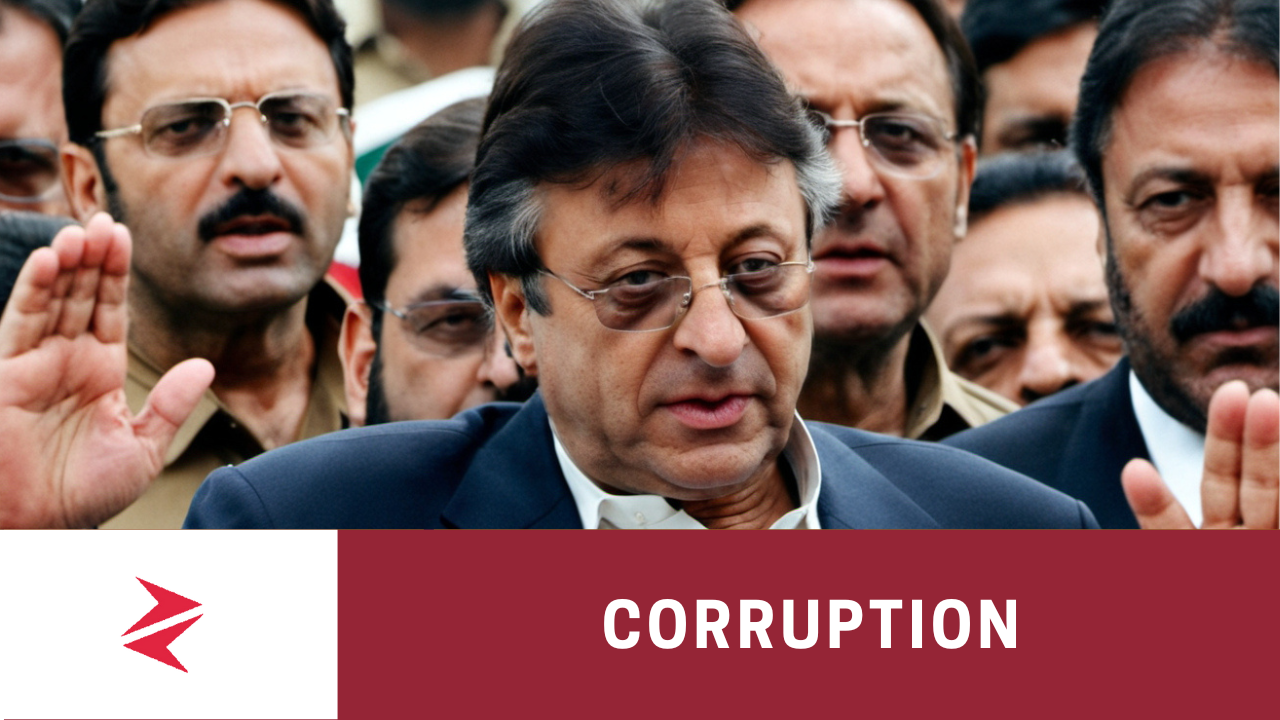

From 2013 to the present, Pakistan has remained in the same position. The corruption score of Pakistan did not increase or decrease, staying between 100 and 40. The corruption score of Pakistan did not change; it stayed constant. With incomplete statistics, one can manipulate the narrative to suit a particular agenda. To them, the public is forcefully being made to understand that Imran Khan has been in government for only three years, and the comparison is being made with the 35-year rule of corrupt politicians who are allegedly performing their duties well.
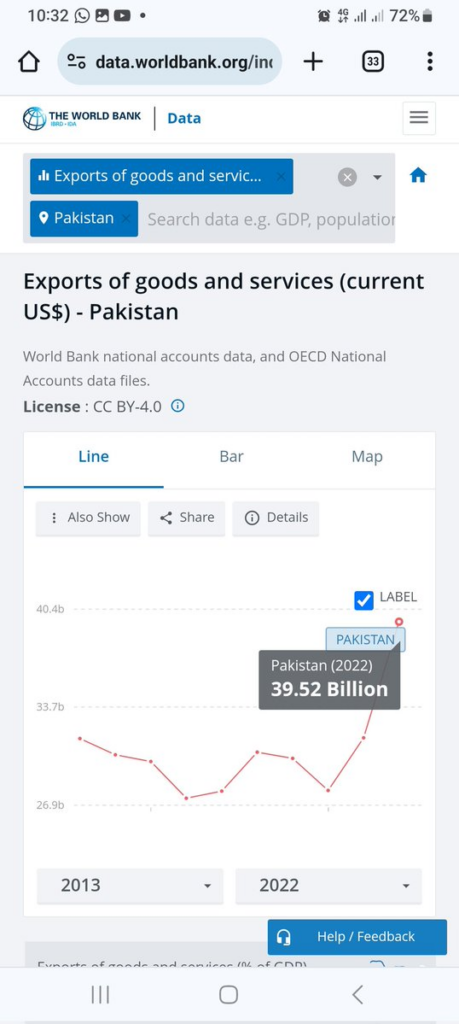
Not only did the exports increase, but the current account deficit, which was around 4 billion dollars in 2013, rose to 19 billion dollars by 2018. Imran Khan’s government later managed to reduce it to 12 billion dollars.
What was the economic team of the PML-N doing during those 5 years?
How did the corruption of the Sharif family make its way into the CPI, while money laundering and the entry of illegal funds are not even considered by the CPI? In June 2013, PML-N took over the government, and at that time, the Zardari government had handed over nearly 127 position. An index of 143 was recorded during the Zardari era in 2010.
From 2013 to 2018, the country was progressing to such an extent that its exports declined so much in the first three years that they could not even reach the 4th and 5th positions, where they were in 2013. On the other hand, during Khan’s fourth year in power, according to World Bank figures, there was an increase of 9 billion dollars in exports.

Certainly, the Transparency Index (commonly known as the Corruption Index) indicates that an increase in a country’s index points corresponds to higher transparency and lower corruption. Here, the graph illustrates that during Imran Khan’s tenure, the transparency graph declined.
