






































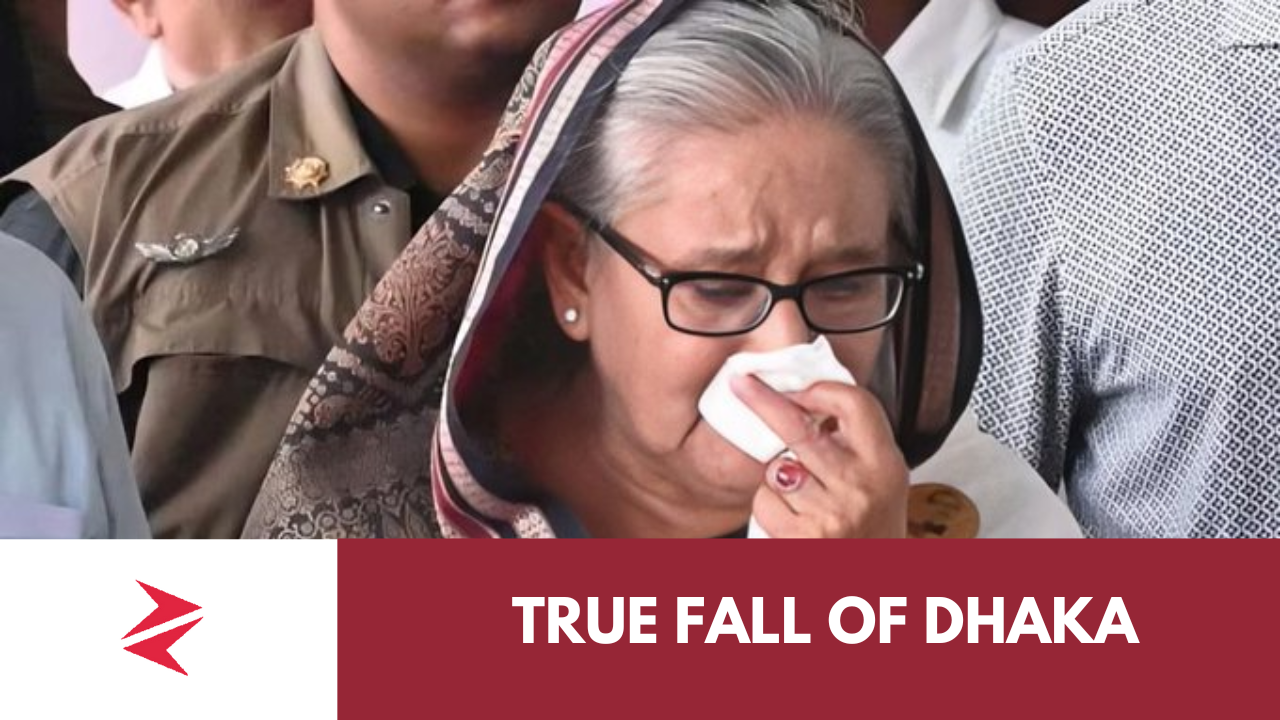
The removal of Hasina, who was often seen as India’s closest geopolitical partner in Bangladesh, represents a significant shift. Her government’s alignment with India had led to ambitious connectivity projects and the resolution of contentious territorial and water-sharing issues. India’s support for Hasina, despite her growing authoritarianism, and its push for reduced international pressure on her government, had further solidified this alliance.
As a result, Hasina has resigned, and the Bangladesh Army is now setting up an interim government, with the Army Chief calling for calm and stability. Reports suggest that Hasina is leaving Bangladesh for India. Her departure is a significant concern for India, which has seen Hasina as its closest geopolitical ally in Asia. The two countries have collaborated on major projects in connectivity and resolved contentious issues, fostering a strong partnership. India’s support for Hasina, despite her authoritarian tendencies, included pushing for reduced international pressure on her government.
However, the political landscape is now fraught with uncertainty. The Bangladesh Nationalist Party (BNP), a historically contentious adversary of India, may rise to power. The BNP’s previous reluctance to tackle militant groups and its alliances with Pakistan and China contrast sharply with Hasina’s pro-India stance. The prospect of a BNP-led government threatens to disrupt ongoing economic projects and shift alliances away from India.
With Hasina gone, India faces uncertainty about her successor. The Bangladesh Nationalist Party (BNP), a potential successor, has a fraught history with India. The BNP’s previous reluctance to address militant groups and its closer ties with Pakistan and China raise concerns. If the BNP gains power, it could disrupt India’s economic projects and shift its alignment towards China. Additionally, India’s backing of Hasina has generated opposition and unpopularity within Bangladesh.
Mukti Bahini’s Legacy
 Today also marks the symbolic end of Sheikh Mujib ur Rahman’s legacy, with all statues of him being removed from Bangladesh. This dramatic shift is seen by some as a victory for the student-led protests and a broader fight for justice, signaling a significant moment in the nation’s history.
Social Hashtags: