










































Share the post “PSX Moves to T+1 Settlement: Why February 9, 2026 Changes Everything”
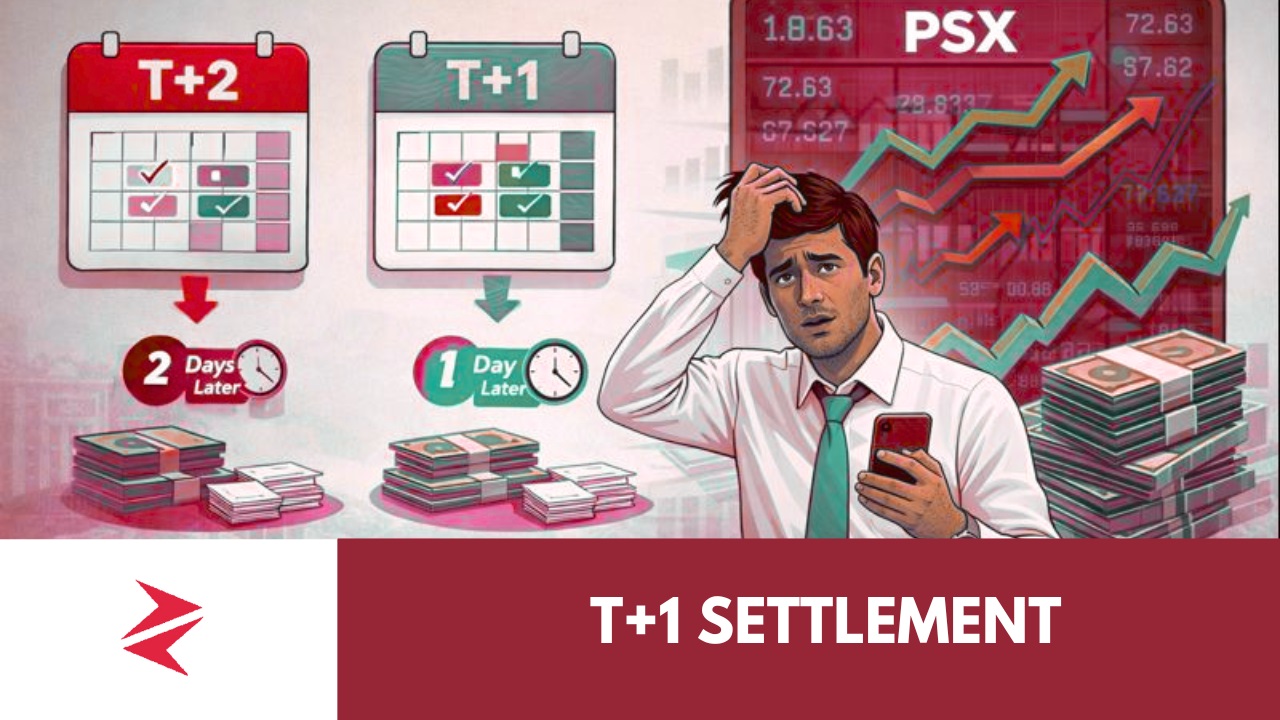
On February 9, 2026, the Pakistan Stock Exchange (PSX) will move from a T+2 to a T+1 settlement cycle.
At first glance, this sounds technical.
In reality, it is one of the most powerful structural changes PSX has seen in years.
This is not about sentiment.
Not about IMF.
Not about interest rates.
This is about how money moves inside the market.
What Is Settlement? (Plain English)
When you buy or sell a stock:
-
You trade today (T)
-
Shares and money are exchanged later
Under T+2
➡ Settlement happens 2 working days after the trade
Under T+1
➡ Settlement happens the very next working day
That’s it.
But the consequences are far bigger than the definition.
Why Settlement Speed Matters (The Broker Reality)
In Pakistan, brokers play a unique role:


Share the post “PSX Moves to T+1 Settlement: Why February 9, 2026 Changes Everything”