


























Share the post “Maria B, Basant, and the Performance of Mourning in a Marketplace of Kites”
There are moments when a society does not merely argue; it convulses. Basant’s return to Lahore did not arrive quietly. It arrived carrying decades of memory, class anxiety, state indecision, moral exhibitionism, and—predictably—commerce. And then it collided with a single Instagram story.
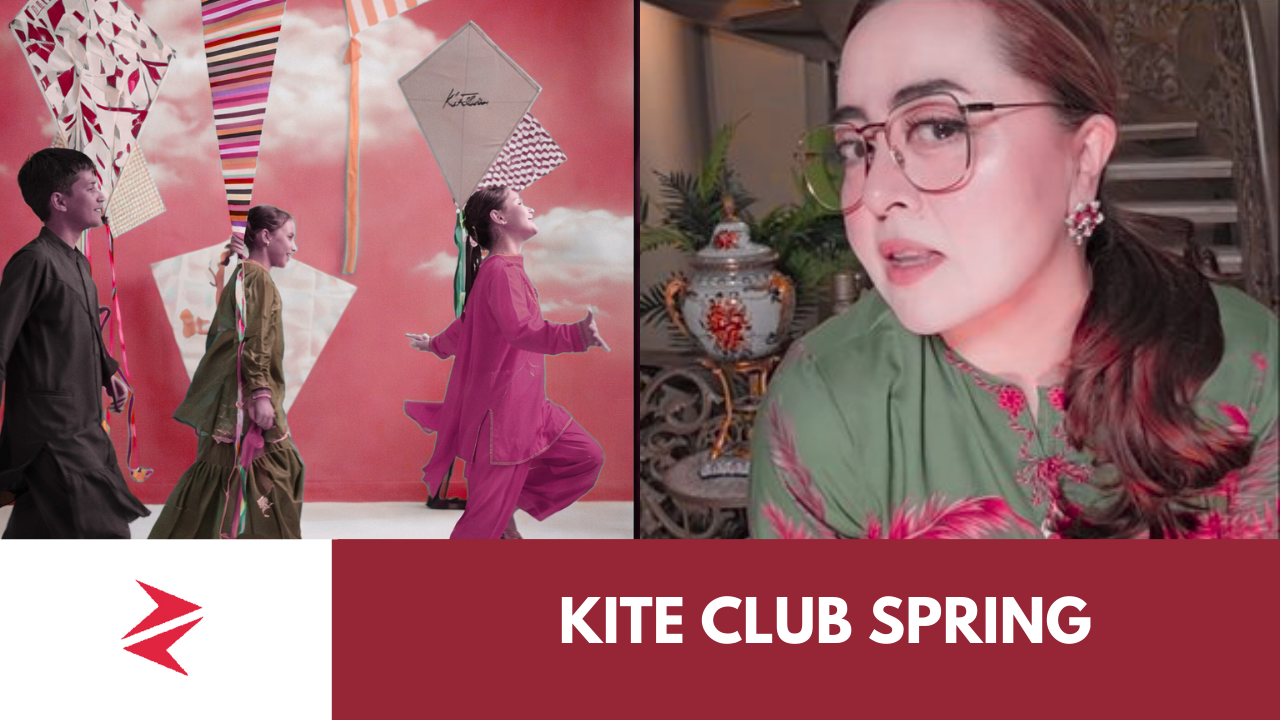
On one side of the screen: children dressed in bright hues, kites suspended mid-air, a polished launch of Kite Club, Spring/Summer ’26—live, clickable, purchasable. On the other: a stark orange gradient with a declaration—“No, I’m not celebrating Basant. Please stop sending me invites. There is nothing to celebrate. There is much to mourn. We have lost our humanity and integrity.” Both published by Maria B, within the same news cycle, without irony acknowledged.
This is not about whether one should celebrate Basant. That is a personal choice. This is about asserting moral superiority while monetising the very symbol one claims to reject—and expecting the public to treat the contradiction as depth.

I don’t.
What unfolded afterwards was not “trolling” in the lazy sense. It was catharsis. Raw, multilingual, unfiltered. Urdu, Punjabi, English—sarcasm, anger, mockery, blind praise, genuine concern, and outright abuse. Not because the public is cruel by default, but because hypocrisy—real or perceived—triggers something visceral. Especially when it comes wrapped in sanctimony.
People didn’t miss the sequencing. “She also launched a kite collection.” “Business business hota hai, status status hota hai.” “Woh mourn karte karte paisay bana rahi hain.” Others went further, harsher, uglier. Slurs were hurled. Diagnoses were offered by strangers. That ugliness should not be celebrated—but neither should it be used to distract from the core issue: the dissonance between posture and profit.
Supporters rushed in with familiar defences. Businesses sell festive clothes regardless of whether the founder celebrates. Empathy for Palestine. Accidents during Basant. Smog. Deaths. Mourning. All real. All valid. None of them resolve the contradiction. If Basant is morally indefensible—“nothing to celebrate”—then its aesthetics are not neutral. You cannot launder meaning through children’s wear and call it coincidence.
This is not an isolated episode. There is a pattern here that people remember. Calls to boycott Coke while outlets play Coke Studio. Selective outrage that aligns neatly with prevailing political or ideological winds. Moral messaging delivered loudly, followed by commercial continuity behind the scenes. When repetition sets in, skepticism becomes rational.
What troubles me more is the tone of certainty with which mourning is prescribed to everyone else. “There is nothing to celebrate.” That is not grief speaking quietly; that is authority declaring closure. Lahore, a city that has survived partition, bombings, blackouts, martial laws, and smog, is suddenly told that joy itself is unserious. As if festivals are denial rather than defiance. As if happiness is indulgence, not resistance.
I reject that framing.

Yes, people have died due to reckless kite flying. That is a failure of enforcement, materials, and governance—not of joy. We regulate cars after accidents; we don’t declare movement immoral. We improve safety; we don’t demand collective sadness as penance. To weaponise tragedy against a cultural ritual while cashing in on its imagery is not integrity. It is theatre.
And the audience is no longer passive.
What followed online—“hypocrite,” “double standards,” “performative,” “logic: 0”—was not a coordinated smear. It was a mirror. Even praise (“queen,” “GOAT,” “she’s right”) existed less as argument and more as allegiance. The debate was never balanced because the moment itself wasn’t. It was asymmetrical: one side selling kites, the other side being told not to fly them.
This episode says something uncomfortable about influencer capitalism in Pakistan. Moral language has become a branding layer. Mourning is content. Integrity is claimed, not demonstrated. And the public is expected to suspend memory for the sake of vibes.
I won’t.
If you believe Basant is wrong, stand by that belief fully—optics included. If you believe commerce and conscience can coexist, then speak honestly about that compromise. But don’t perform grief while monetising colour. Don’t declare humanity lost while shipping SKUs inspired by the very thing you disavow.
Festivals are not distractions from reality. They are how societies breathe between crises. Joy is not apathy. Joy is survival. And survival does not need permission from a brand.