








































Share the post "Net Billing Makes it No More Beneficial to Sell Solar Energy Back to WAPDA"
I’m Zorays Khalid, founder of Zorays Solar. Over the last decade, I’ve worked hands-on with 300+ on-ground solar installations across Pakistan—residential rooftops, commercial facilities, industrial units, and hybrid energy systems. I’ve seen Pakistan’s solar policy evolve from optimism to uncertainty, and now into a decisive transition phase.
This article updates the conversation with the latest solar policy shift: NEPRA’s notice on halted net-metering applications, the practical shift toward net billing / gross metering, and—most importantly—how existing and new solar owners can maximize productivity, remain compliant, and protect ROI.
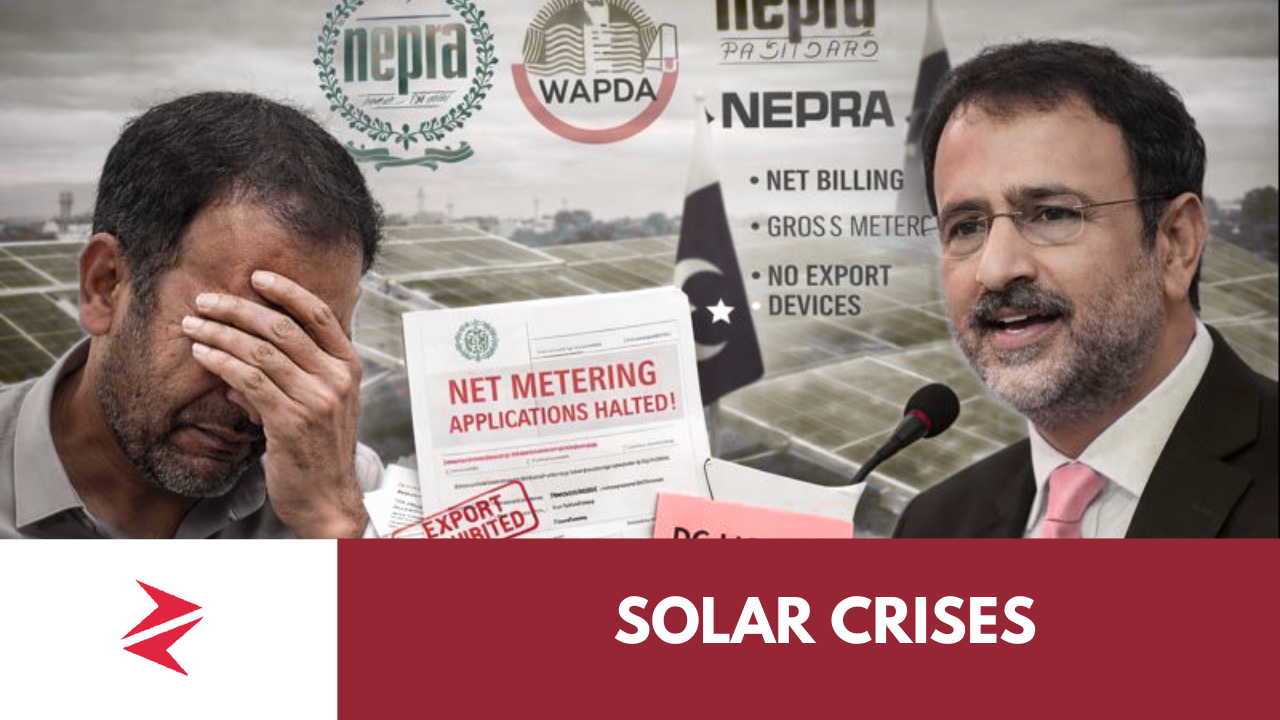
NEPRA Takes Notice: Why New Net-Metering Applications Are Being Halted
In late 2024, :contentReference[oaicite:0]{index=0} (NEPRA) formally took notice after multiple DISCOs began halting or slowing new net-metering applications. This development—widely reported by ProPakistani—was not random. It was the result of three converging pressures:
- Revenue stress on DISCOs due to high solar export volumes
- Grid instability at the LT level caused by uncontrolled bidirectional flow
- Policy misalignment between consumer incentives and utility economics
Let’s be clear: this is not an anti-solar move. It’s a recalibration.
Net metering, as originally implemented, worked brilliantly when penetration was low. But with solar now mainstream in urban Pakistan, the rules were bound to change.
Share the post "Net Billing Makes it No More Beneficial to Sell Solar Energy Back to WAPDA"