




































There is a pattern in war. And then there are anomalies that expose the real strategy.
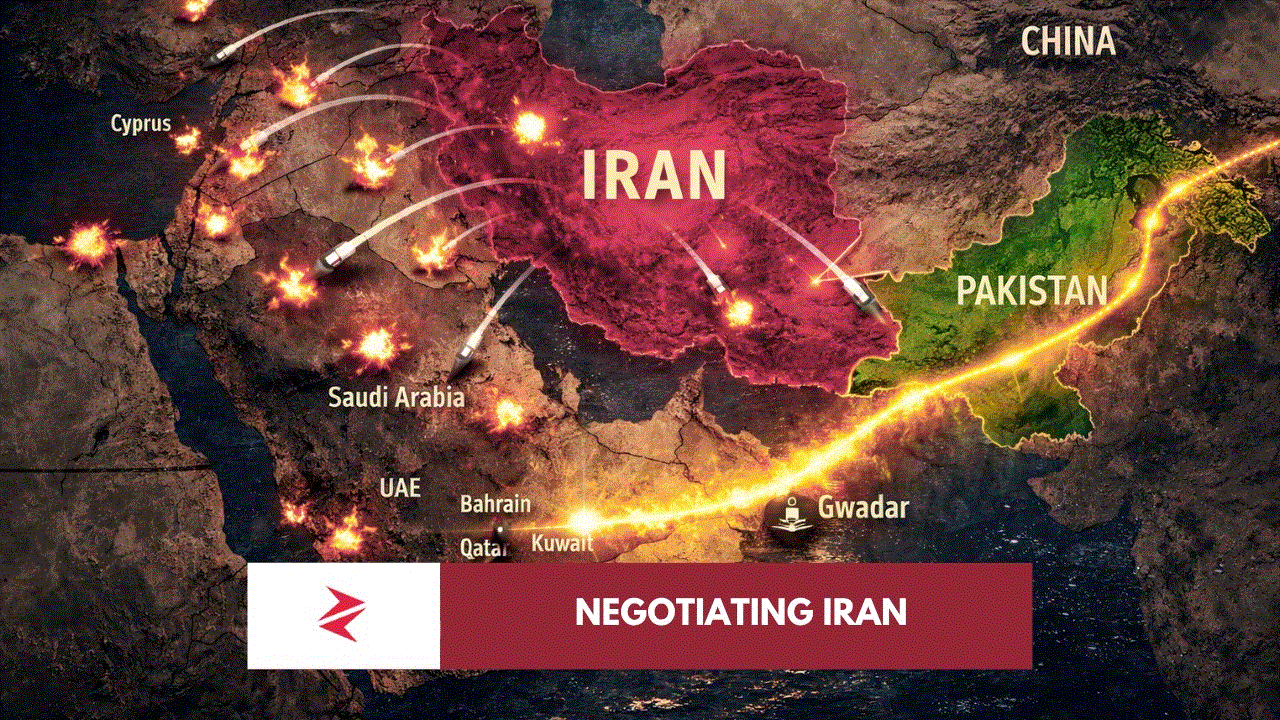
Thirty days. Missiles across continents. Drones saturating airspace. Iran has struck Iraq, Saudi Arabia, UAE, Bahrain, Qatar, Kuwait, Jordan, Turkey — even Cyprus. No hesitation. No restraint.
Yet one country — sharing a 900-kilometer border with Iran — remains untouched.
Pakistan.
Not a warning. Not a threat. Not even rhetorical escalation.
And that silence is louder than every missile launched.
The Illusion of Chaos — And the Precision Behind It
War often appears chaotic to the public. But states do not operate on impulse at this scale. Patterns emerge — not in where strikes land, but in where they don’t.
Pakistan is not a passive bystander. It sits in the middle of this war in ways that most headlines fail to articulate.
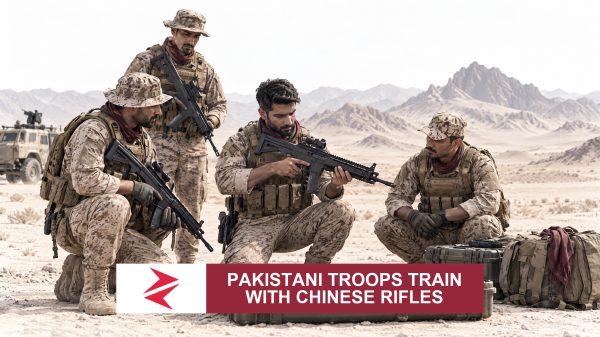
It hosts US-linked reconnaissance dynamics. It has deployed F-16 assets to Saudi Arabia. It maintains deep military procurement ties with China. It is managing internal sectarian pressure while simultaneously evacuating tens of thousands of its own citizens from Iranian territory.
And publicly, it has framed Iran as “defending itself.”

Contradiction? No.
Strategic ambiguity.
This is not indecision. This is positioning.
Pakistan: The State That Refuses to Choose
Pakistan is currently doing something extremely rare in modern conflict.
It is aligned — and not aligned — at the same time.
On one side, it stands with Saudi Arabia through defense cooperation. On another, it maintains economic and diplomatic channels with China — Iran’s primary lifeline. And simultaneously, it avoids antagonizing Iran directly.
This balancing act is not accidental.
Because the moment Pakistan is forced to choose — the entire regional equation shifts.
Iran understands this.
Attacking Pakistan would collapse that ambiguity. It would push Islamabad firmly into the opposing camp.
And for Iran, that outcome is strategically worse than leaving Pakistan untouched.