





























Share the post “Pakistan Senate resolution condemning Israel as India–Israel strategic ties deepen during Gaza conflict”
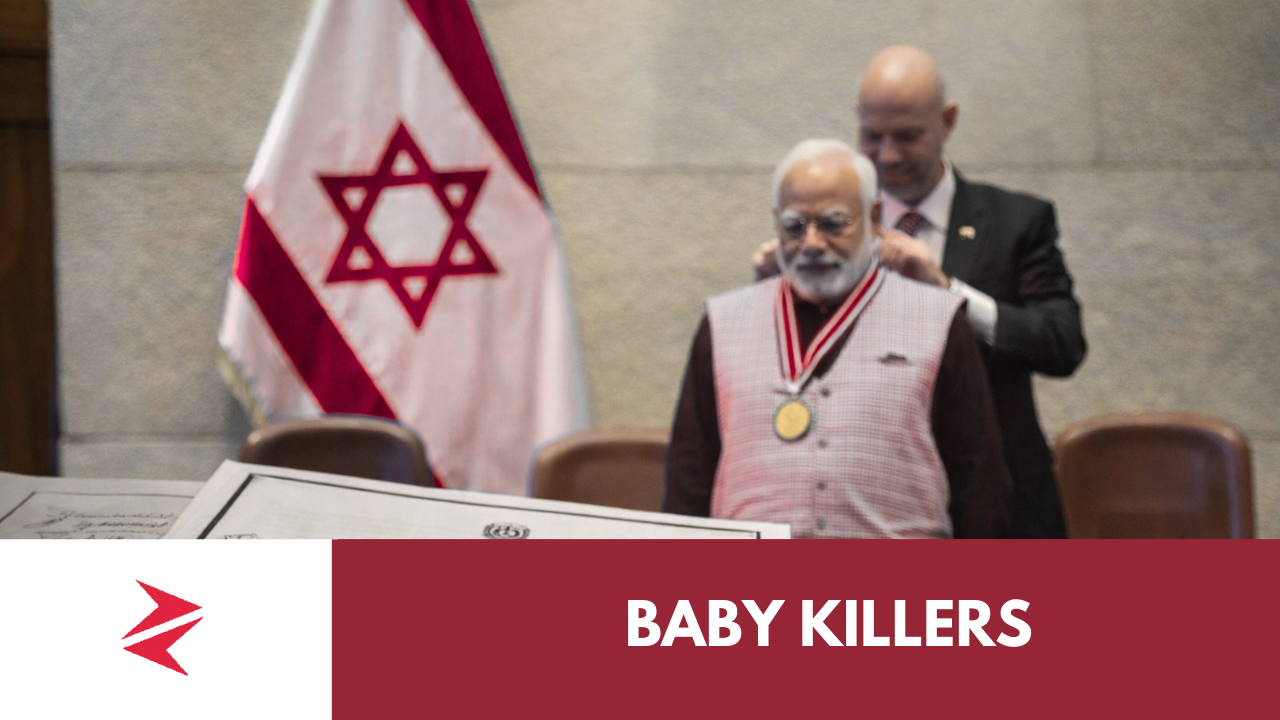
The current geopolitical moment is layered, contradictory, and deeply revealing. On one side, Narendra Modi stands inside the Knesset chamber, honored by Israel’s parliament amid visible warmth between New Delhi and Tel Aviv. On another front, Pakistan’s Senate formally condemns Israel’s conduct in Gaza, reaffirming support for Palestinian self-determination. Simultaneously, Donald Trump—long perceived as instinctively aligned with India’s strategic camp—has been publicly praising Pakistan and its Prime Minister in language that would have been unthinkable a decade ago.
This is not chaos. It is recalibration.
The India–Israel nexus did not emerge overnight. Since diplomatic normalization in 1992, and especially after 2014, defense and technology cooperation accelerated dramatically. Israel became one of India’s top arms suppliers, contributing missile defense components, UAV systems, counter-terror intelligence frameworks, and advanced battlefield analytics. Joint R&D, cyber collaboration, and agricultural technology exchanges expanded the relationship beyond weapons. Symbolically, Modi’s visible embrace of Israel marked a departure from India’s earlier balancing posture toward Palestine.
The recent Knesset honor, presented to Modi, serves as more than ceremonial optics. It signals institutional endorsement of India as a long-term strategic partner in a period when Israel seeks resilient alliances amid growing international scrutiny over Gaza. For Israel, India represents scale, talent, industrial capacity, and political reliability. For India, Israel provides high-end defense innovation in areas such as missile interception, electronic warfare, drone autonomy, and active protection systems.
Yet, the regional interpretation differs sharply.
Pakistan’s Senate resolution—captured in the attached document images—condemns Israel’s military operations in Gaza and warns against alignment structures perceived as hostile to Muslim-majority states. The language reflects domestic consensus across party lines. This is significant: it transforms what could have been rhetorical outrage into a parliamentary record. That institutionalization matters in diplomacy.
The concept loosely referred to online as a “Hexagon Alliance” amplifies these tensions. Though not formalized as a treaty bloc, commentary around Israel’s outreach strategy suggests multi-nodal coordination involving the United States, India, select Gulf partners such as the UAE, and potentially European actors. Whether the term is rhetorical or aspirational, it conveys strategic clustering against perceived “radical axes,” including Iran and by extension its regional alignments.
Here is where Donald Trump re-enters the frame.
Trump’s recent praise of Pakistan and its Prime Minister complicates simplistic narratives. Historically, Trump’s administration tilted strongly toward India, particularly in counterbalancing China. Yet political figures evolve with electoral calculations and strategic repositioning. Praise toward Pakistan may reflect transactional recalibration—counterterror assurances, regional leverage in Afghanistan, or signaling flexibility in South Asia.
Citation: Pluralism Index

This triangular dynamic produces three observable realities:
First, India–Israel ties are operationally deep and technologically substantive. They are not symbolic flirtations. Defense supply chains, intelligence exchanges, and innovation pipelines bind the relationship.
Second, Pakistan’s institutional response is not merely ideological. It reflects domestic political pressure tied to Gaza imagery and long-standing support for Palestinian sovereignty. Public opinion constrains foreign policy space.
Third, the United States under Trump appears less doctrinally rigid than assumed. Praise toward Pakistan does not dissolve US–India strategic convergence, but it introduces ambiguity. Ambiguity in geopolitics is leverage.
The online discourse included in your material reveals the emotional volatility of this moment: nuclear bravado, sectarian slurs, dehumanizing language from multiple sides. This noise obscures the structural shift underneath.
India’s ties with the UAE and Gulf states add another dimension. New Delhi maintains robust economic integration with the Gulf, massive diaspora flows, and energy interdependence. Therefore, framing the India–Israel partnership as a straightforward anti-Muslim coalition oversimplifies reality. The region is interlocked economically even as political narratives polarize it.
However, Gaza remains the moral fulcrum.
Technological innovation—AI battlefield systems, drone swarms, predictive analytics—can be marketed as deterrence tools. But when civilian suffering dominates global screens, moral backlash intensifies. That backlash influences parliaments like Pakistan’s Senate and shapes public discourse across Muslim-majority societies. No alliance architecture can ignore this legitimacy cost.
From an EEAT standpoint, three data-backed pillars define the present alignment: