

















Share the post “How to convince Somali-Landers to stop normalising Zionists?”
There are moments in history when silence becomes a position.
And moments when recognition is not diplomacy — but alignment.
Israel’s decision to recognise Republic of Somaliland on 26 December 2025, framed as “Abraham Accords–style pragmatism,” has triggered celebrations in Hargeisa — and condemnation across the Muslim world.
This is not a post written to deny Somalilanders their pain.
Nor to erase their struggle for self-determination.
It is written to ask a harder, adult question:
At what cost does recognition come — and who pays it?
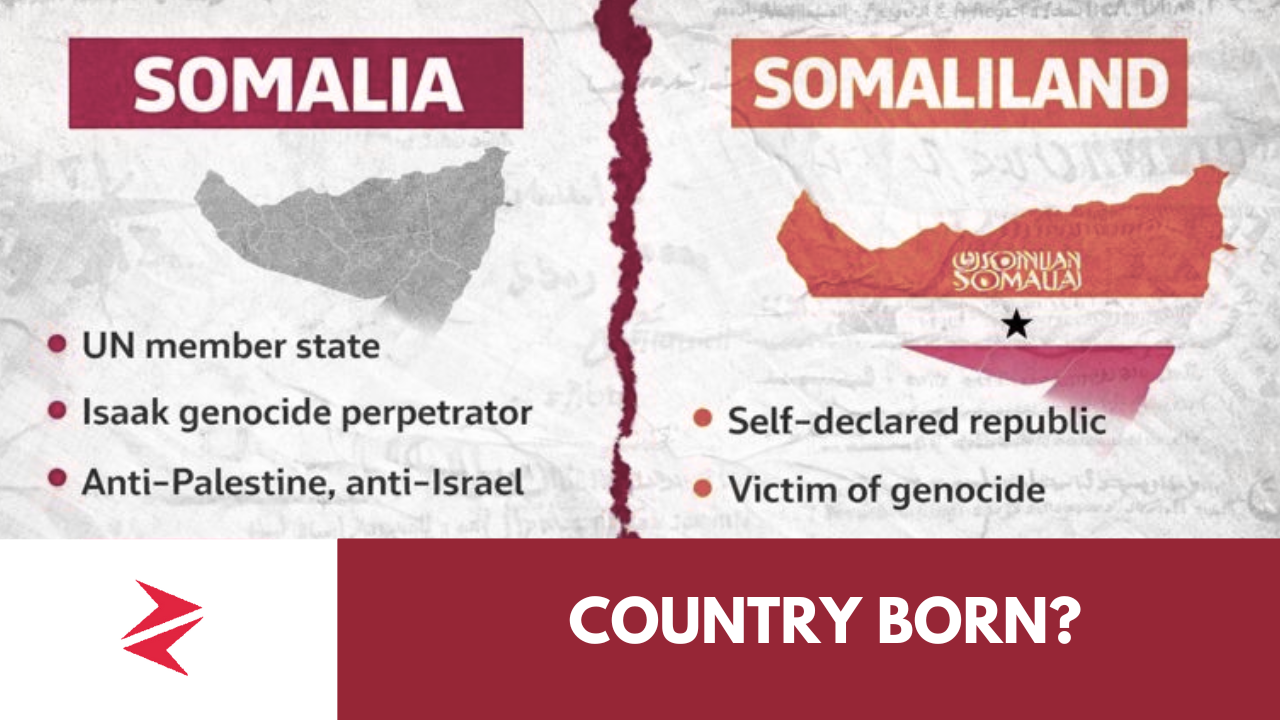
Somalia vs Somaliland: A Necessary Distinction (Not a Convenient One)
Let’s be precise.
Somalia (Federal Republic)
-
Internationally recognised UN member state
-
Long history of centralised violence
-
Responsible for the Isaak genocide (1960–1991), documented by Yale Genocide Studies Program
-
Consistently pro-Palestine, anti-Israel in state policy
Somaliland
-
De facto independent since 1991
-
100% Sunni Muslim society
-
Built relative stability without international recognition
-
Victim — not beneficiary — of Somalia’s past crimes
- Anti-Al-Shabaab
These facts can coexist.
Acknowledging Somalia’s crimes against Somaliland does not require shaking hands with an occupying power elsewhere.
Two injustices do not cancel each other out.
Share the post “How to convince Somali-Landers to stop normalising Zionists?”