




























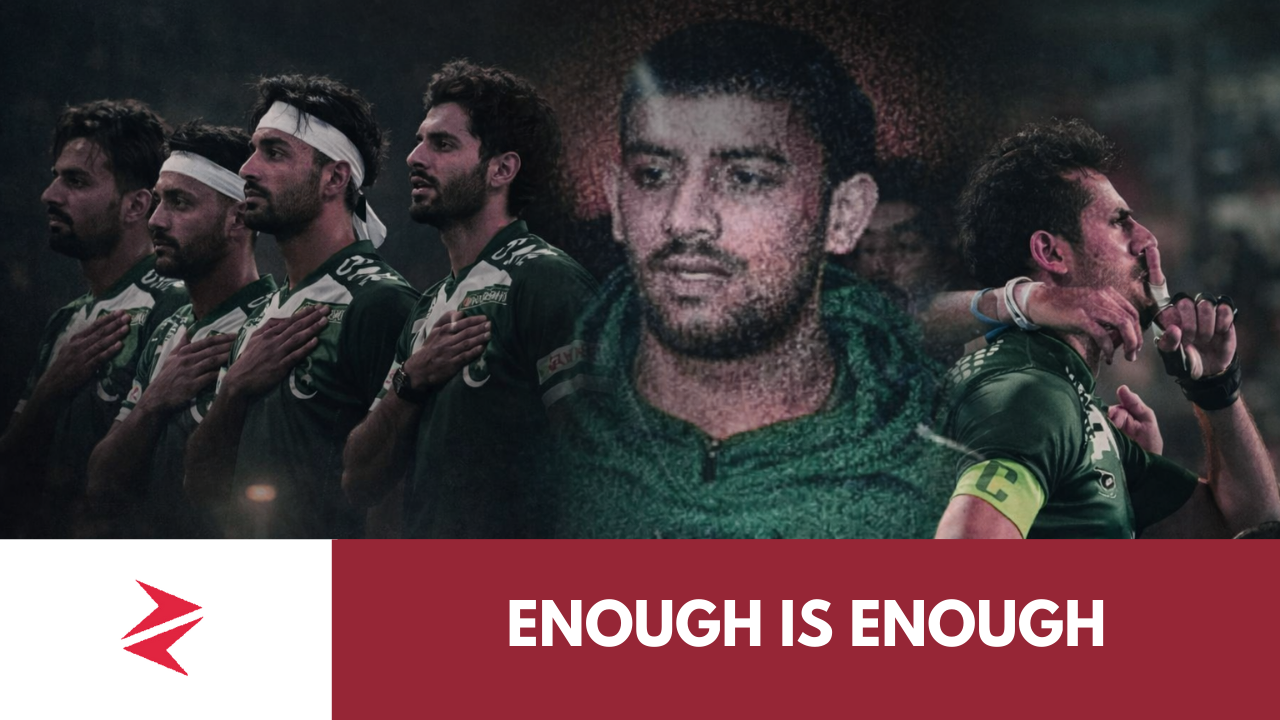
There are humiliations that happen quietly, and then there are humiliations that unfold in front of the world. What Pakistan’s national hockey team allegedly endured during the Australia leg of the FIH Pro League is not merely administrative incompetence—it is symbolic collapse. A team representing the country, standing hand on heart during the anthem, reportedly left wandering foreign streets for hours because hotel payments were not cleared. If even half of what Captain Ammad Butt has described is accurate, this is not mismanagement. It is institutional decay.
According to multiple public statements attributed to Ammad Butt, players faced severe logistical failures from the moment the tour planning began. Upon arrival in Sydney, they reportedly roamed for approximately eleven hours due to accommodation confusion. In Hobart, the situation escalated further when hotel arrangements allegedly fell apart over an unpaid demand said to be around Rs150 million. The explanation, as circulating on social media, pointed toward lack of funds clearance from the Pakistan Sports Board. Eventually, the squad was shifted to what players described as substandard lodging conditions.
But the financial misstep is only one dimension of this crisis. What truly stings is the psychological burden placed upon athletes already carrying the weight of national expectation. Ammad Butt’s words cut deeper than any headline: “They have caused us psychological stress. We had to make our own breakfast, wash the dishes ourselves, and manage everything on our own. How can you expect us to perform in such a situation?” This is not a complaint about luxury. This is a captain asking how professional athletes are expected to compete under administrative chaos.
More alarming are allegations that players were pressured into silence. Threats of bans, according to Butt, were reportedly used to discourage public exposure of the situation. If true, this transforms the issue from incompetence to suppression. You cannot ask players to defend national pride on the field while threatening them off it.
Public reaction has been swift and emotionally charged. Many observers point out the stark contrast between how cricket governance crises receive wall-to-wall media and political attention, while hockey—the declared national sport—barely registers sustained institutional urgency. Faran Saleem’s observation reflects a widespread frustration: if this were the cricket team, there would be global uproar. Instead, hockey players face embarrassment in relative silence.
Prime Minister Shehbaz Sharif has reportedly taken notice, and the Pakistan Sports Board has announced an inquiry. However, in Pakistan’s sports history, inquiries often become procedural headlines rather than transformative moments. The deeper question is structural: how many times has “notice taken” translated into systemic overhaul? Accountability in sports governance requires more than reshuffling names; it requires financial transparency, professionalized administration, and insulated leadership free from political patronage cycles.
Calls for the removal of Tariq Bugti and Rana Mujahid reflect public anger, but replacing individuals without reforming the governance architecture risks repeating the same failures under new faces. Pakistan hockey’s decline has not been sudden; it has been incremental. From Olympic dominance to struggling qualification campaigns, the erosion has been administrative long before it became competitive.
There is also a technical nuance worth clarifying. Under updated international sports logistics protocols, it is generally the responsibility of the touring federation—not the host nation—to arrange and fund accommodation unless specific hosting agreements dictate otherwise. This means if financial miscalculations occurred, they originate domestically. That makes the embarrassment self-inflicted.
Pakistan once defined global hockey. Four Olympic gold medals. Three World Cups. A generation that treated stick and ball as instruments of national identity. Today, a generation grows up without witnessing that dominance. When players publicly speak about washing their own dishes on tour, the crisis is not about crockery. It is about collapse of stewardship.
The emotional intensity surrounding this incident signals something larger than one tour. It reflects accumulated frustration with decades of underperformance, politicized federations, and reactive governance. The players have signaled unity. They have signaled exhaustion. The public has signaled anger. What remains to be seen is whether the state signals reform.
If this moment ends in another closed-door inquiry and cosmetic adjustment, the damage will not merely be reputational. It will be generational. Because the next time a young athlete considers choosing hockey over another sport, this is the headline he will remember.