



























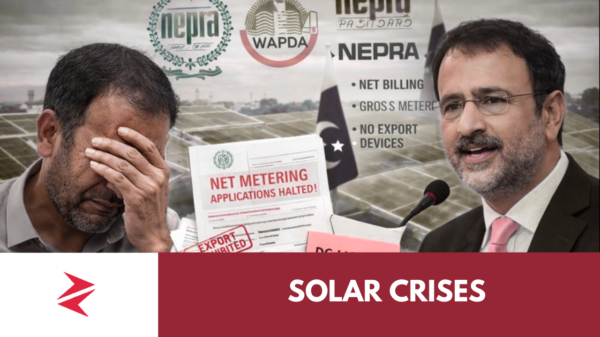











The Pakistani government’s recent decision to transition from net metering to gross metering has sent shockwaves through the solar energy sector. This policy shift, which slashes the buyback rate for surplus solar electricity from Rs 27 to Rs 10 per unit, is being framed as a necessary recalibration to balance the grid’s financial burden. However, a closer look reveals that this move disproportionately harms solar consumers while benefiting traditional energy stakeholders.
For years, net metering has been a cornerstone of Pakistan’s renewable energy strategy, empowering over 286,000 consumers to generate their own electricity and reduce reliance on the grid. Under this system, households and businesses could offset their nighttime consumption by exporting excess solar energy during the day, effectively balancing their electricity costs. A typical middle-class household with a 10kW solar system, for instance, could generate 1,000 units monthly, consume 650 directly, and export 350 to the grid, significantly reducing their electricity bills.
The shift to gross metering, however, disrupts this equilibrium. Under the new policy, solar consumers are forced to sell all their generated electricity to the grid at a meager Rs 10 per unit, only to buy it back at the inflated grid rate of Rs 50 per unit. This means that a household generating 500 units of solar energy would earn just Rs 5,000 from the grid but still have to pay Rs 50,000 for their 1,000-unit consumption, resulting in a net bill of Rs 45,000—nearly double what they would have paid under net metering.
