






































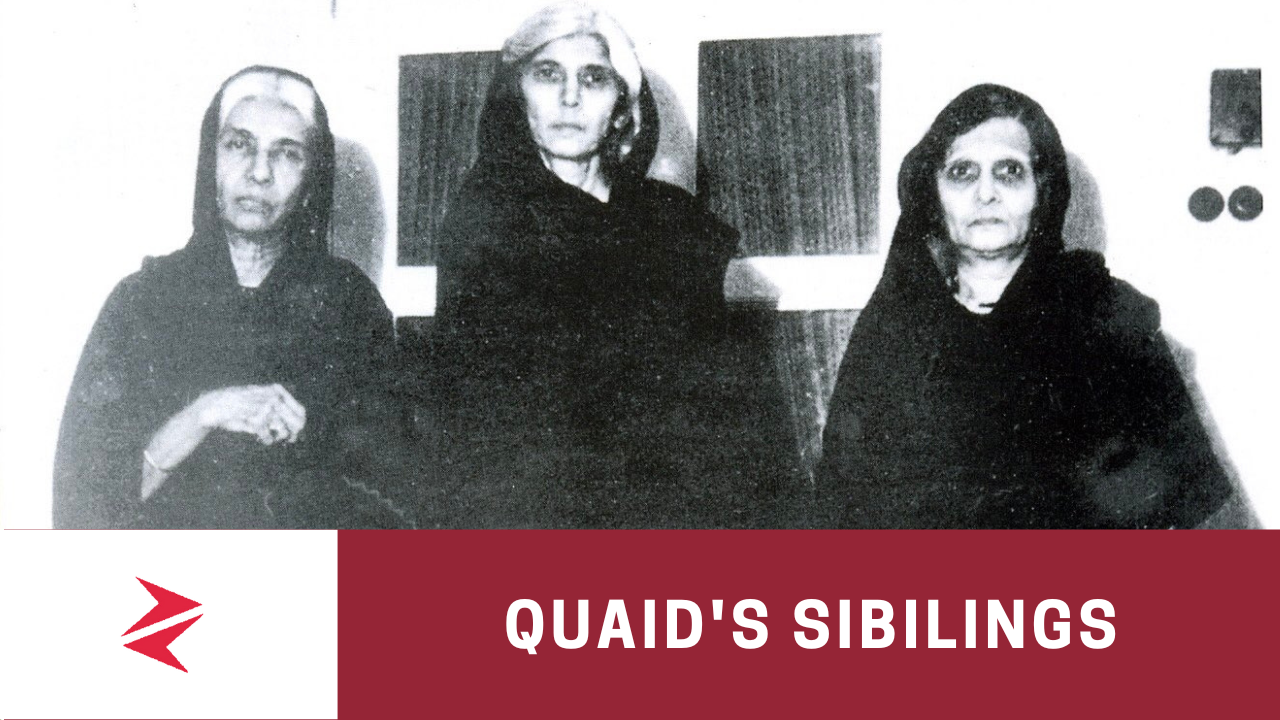
Similarly, he expressed his affection for Mariam Abdenbhoy Peerbhoy, stating, “to pay per month Rs.100/- (one hundred) to my sister, Mariam Abdenbhoy Peerbhoy, during her lifetime.”
The will also highlighted Quaid-e-Azam’s fondness for his youngest sister, Shereen Jinnah, who opted to live in Karachi until her passing in 1980. “I direct my executors to pay per month Rs.100/- (one hundred) to my sister Shereen, during her lifetime,” he wrote.

Affection for His Brother Ahmed Ali Jinnah
Even though Ahmed Ali Jinnah passed away at a young age, Quaid-e-Azam’s love for him endured. “To pay per month Rs.100/- (One Hundred) to my brother Ahmed during his lifetime,” Quaid-e-Azam’s will stated, emphasizing his affection for his sibling.

The Source of His Generosity
Quaid-e-Azam’s financial provisions were made possible by his own wealth, as he was known to be one of the richest individuals in India. This affluence allowed him to bestow perpetual gifts to his beloved siblings, ensuring their comfort and security.

An Enduring Legacy
Quaid-e-Azam’s gesture of caring for his sisters and brother in his last will exemplifies his greatness not just as a leader but as a human being. His commitment to family values and compassionate nature continue to inspire generations.

Conclusion
In the tapestry of history, Quaid-e-Azam Muhammad Ali Jinnah’s legacy shines as a beacon of family values and generosity. His father’s influence and his own love for his sisters and brother shaped him into a man of compassion and nobility. Through his last will, he ensured that his family would be taken care of, even in his absence. The story of Quaid-e-Azam’s love for his siblings serves as a reminder of the enduring power of familial bonds and the importance of selfless acts of kindness. As we remember and honor this great leader, let us strive to emulate his remarkable qualities in our own lives, fostering love, unity, and compassion within our families and communities.
