






































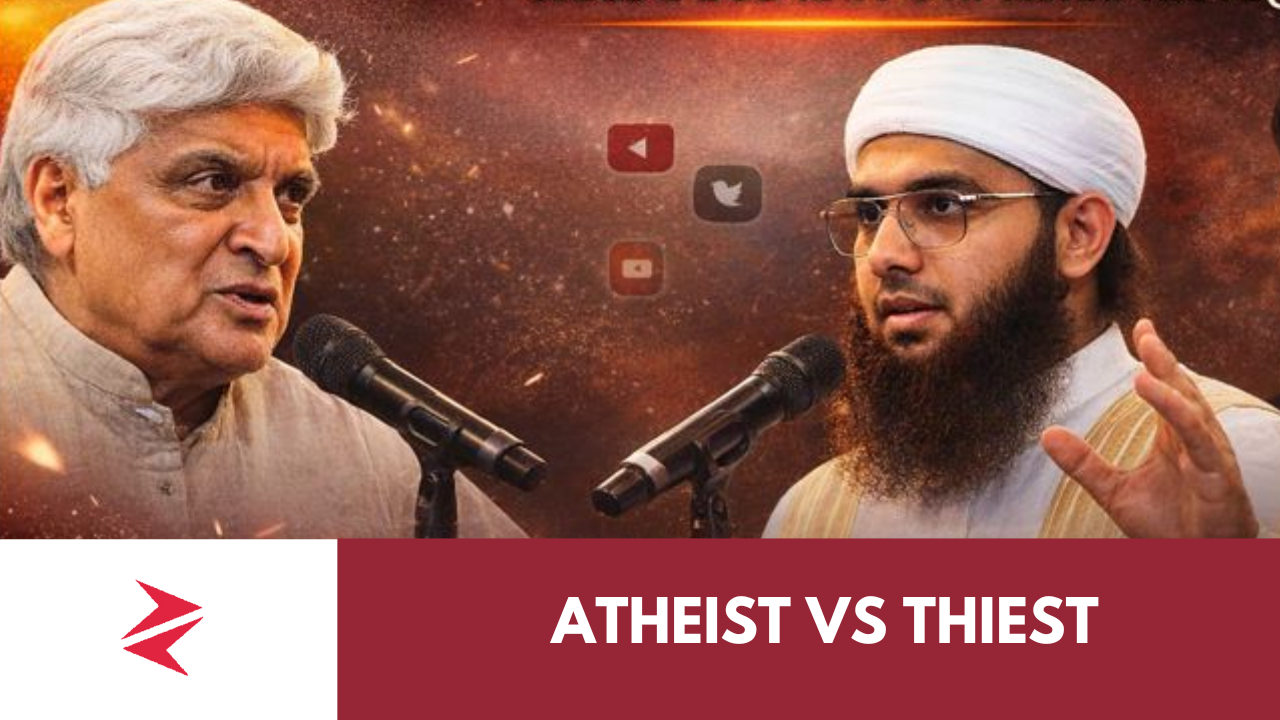
Share the post “How Mufti Shamayl Nadwi Outmaneuvered Javed Akhtar in a Viral God Debate”
-
Scripture will not convince a skeptic.
-
Science cannot verify metaphysical claims.
-
Therefore, only reason is admissible.
By doing this, he removed Akhtar’s most reliable escape hatch: dismissing theology as faith-based assertion.
4. Morality Cannot Be a Majority Vote
When Akhtar framed morality as a human construct—like traffic rules—Nadwi’s response was devastatingly simple:
If morality is purely social consensus, then:
-
Genocide can be moral if popular.
-
Oppression can be ethical if normalized.
-
Justice becomes negotiable.
Objective moral outrage, Nadwi argued, only makes sense if morality itself is objective—and objectivity implies a transcendent source.
Share the post “How Mufti Shamayl Nadwi Outmaneuvered Javed Akhtar in a Viral God Debate”