



























Share the post "Islamabad’s Living Standard Has Deteriorated: From Planned Capital to Stressed Metropolis (EEAT Analysis)"
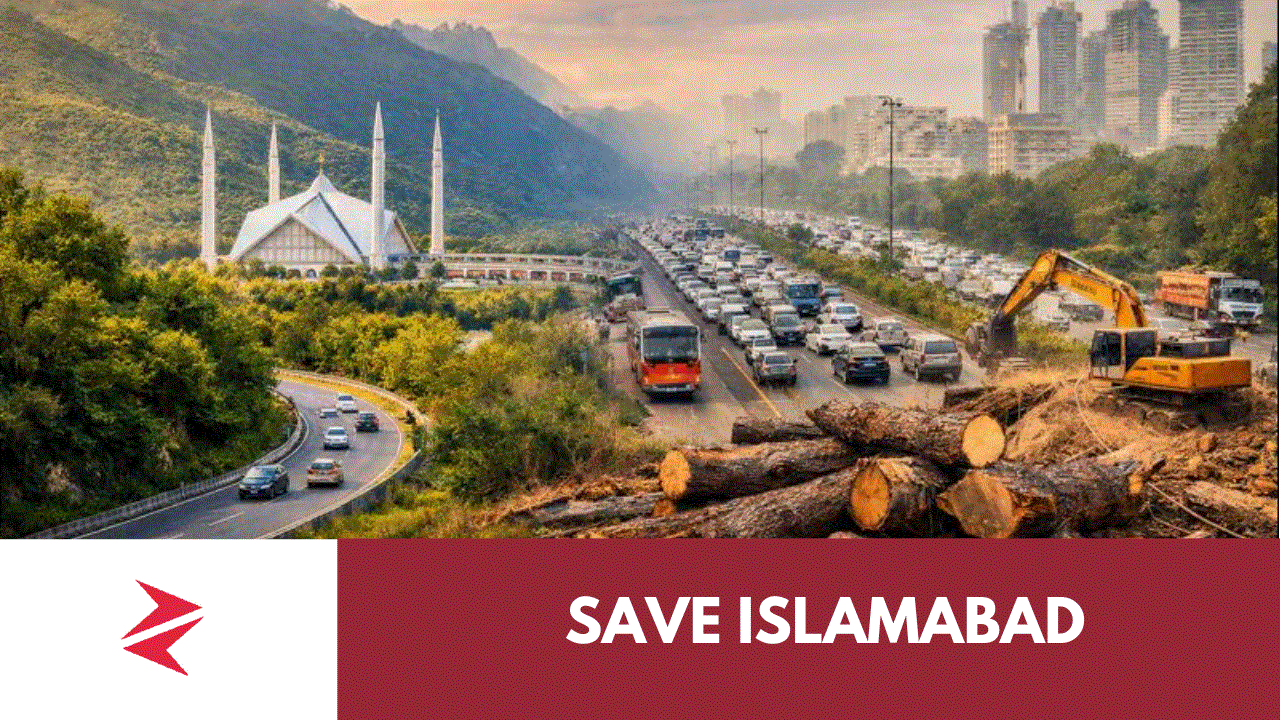
Once celebrated for order, greenery, and calm, Islamabad is now at the center of a national debate about livability. Journalists, residents, planners, and businesses increasingly describe a city strained by uncontrolled urbanization, traffic paralysis, environmental loss, and rising costs. This article synthesizes on-record commentary, civic data points, and policy actions to present a balanced, evidence-based assessment—and to separate legitimate urban challenges from rhetoric that risks social harm.
What Changed—and Why It Matters
1) Unchecked Urban Growth & Planning Drift
Veteran journalist Nusrat Javeed has publicly regretted relocating to the capital, echoing a common refrain: Islamabad’s master-planned character has eroded. Rapid population growth—driven by national migration and economic centralization—has outpaced zoning, utilities, and public transport, pushing development into green belts and peri-urban areas.
Share the post "Islamabad’s Living Standard Has Deteriorated: From Planned Capital to Stressed Metropolis (EEAT Analysis)"