
































The easiest mistake in Pakistan’s appliance market is to assume that the best technology automatically wins, because it does not. A refrigerator, an air conditioner, a washing machine or a microwave oven may be engineered in Europe, manufactured with Turkish industrial depth and marketed through glossy campaigns, but the Pakistani market is not won in a boardroom presentation; it is won inside dealer shops, service centres, warehouses, instalment counters, family budgets, price-sensitive negotiations, summer breakdown complaints and the very blunt trust economy of ordinary consumers.
That is why the Dawlance question matters. This is not merely about one brand trying to beat another brand. This is about whether a historic Pakistani appliance name, now backed by one of Türkiye’s strongest industrial groups through Beko and Koç Holding, can convert global capability into local market leadership again. Dawlance has the legacy. It has the brand memory. It has product categories that still matter. It has a manufacturing base. It has after-sales infrastructure. It has serious foreign investment behind it. Yet the brutal market question remains: can it once again become Pakistan’s No. 1 appliance brand, not in nostalgia, not in old reputation, but in actual dealer confidence, category share, consumer pull and long-term industrial relevance?
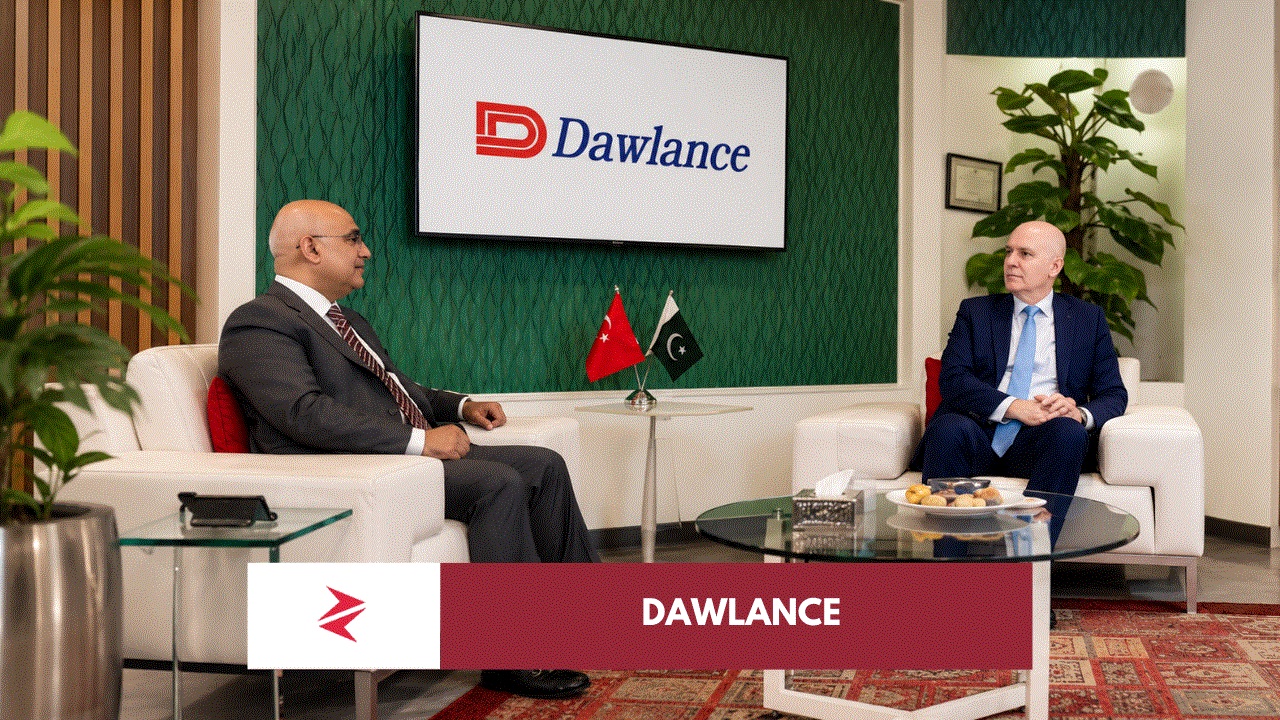
The attached image itself tells the larger story without needing a slogan. A Dawlance logo appears on a corporate screen, with Pakistan and Türkiye flags placed in the room, and two suited executives engaged in a formal business conversation. The visual message is straightforward: Dawlance today is no longer only a legacy Pakistani refrigerator company; it sits inside a Türkiye-Pakistan industrial relationship where manufacturing, investment, exports, policy stability and consumer confidence are all tied together. That is a powerful position, but power on paper is not the same as power in the market.
Dawlance was once widely seen as Pakistan’s dominant refrigerator name. That memory still exists in households where older consumers remember Dawlance refrigerators as durable, practical and trusted products. In 2016, Arçelik announced the acquisition of Dawlance as Pakistan’s market-leading home appliance brand, with Dawn reporting the announced transaction value at $258 million, and later reporting the completed acquisition at $243 million after regulatory approvals. The same 2016 reporting noted Dawlance’s two manufacturing sites in Karachi, one in Hyderabad, its extensive distribution and service network, and its operations across refrigerators, air conditioners, microwave ovens, washing machines and freezers.
That historical base matters because Dawlance is not a garage startup fighting for shelf space. It is a Pakistani household brand with industrial roots, later absorbed into a serious global appliance group. In April 2026, Dawn reported that Beko announced a $20 million investment in Dawlance’s refrigerator manufacturing infrastructure, with the stated aim of enhancing production capability, deepening localisation, improving automation, building workforce capability and integrating international manufacturing practices with local expertise. The same report quoted Koç Holding leadership saying that since 2016, Beko had invested over $375 million in Dawlance, which is not a small symbolic commitment but a long-term industrial bet on Pakistan.
So the first claim is clear: Dawlance does not lack backing. Dawlance does not lack a parent group. Dawlance does not lack technology access. Dawlance does not lack brand recall. The problem, if one exists, is not capability. The problem is conversion: how effectively that capability becomes consumer preference, dealer loyalty, price competitiveness, service trust and category dominance.
This is where Haier becomes the uncomfortable benchmark. Haier’s strength in Pakistan has not simply been about having appliances on display. Haier has built a business that feels local in execution: pricing discipline, dealer reach, product availability, aggressive retail visibility, financing sensitivity, after-sales perception, and the habit of moving quickly when market conditions shift. Haier’s Pakistan website itself reflects the broad consumer battlefield, listing refrigerators, freezers, washing machines, air conditioners, LED TVs, small appliances and kitchen appliances, with service and dealer channels integrated into the customer journey. Dawlance’s own official product structure is also broad, covering refrigerators and freezers, washing machines, LED TVs, kitchen appliances, microwave ovens, multi cookers, dishwashers, air conditioners, water dispensers and small domestic appliances, which means the gap is not merely about category presence.
The sharper question is: who controls the emotional and commercial centre of the Pakistani appliance dealer? In Pakistan, a dealer is not merely a retailer. A dealer is a credit interpreter, warranty explainer, neighbourhood consultant, price negotiator, complaint absorber and informal brand ambassador. If the dealer believes a brand will support him, move stock, honour commitments, update ledgers clearly, handle claims fairly, keep policies stable and avoid leaving him exposed when prices change, he sells with confidence. If he does not believe that, even a technically superior product begins to gather dust.
That is why the comments supplied with this draft are valuable as market sentiment, even where the numbers should be treated cautiously. One dealer-side observation claims Dawlance’s air conditioner share increased from around 18 percent in previous years to around 20 percent this year, while Haier remained around 29–30 percent. Another comment claims Haier commands a very large portion of market confidence because of after-sales service. These figures are not presented here as audited market data, because they were supplied as informal market commentary, but they are useful because they reveal the conversation happening inside the trade: Dawlance is seen as improving, but Haier is still seen as commercially entrenched.