




















Corporate acquisitions usually generate excitement because of the headline numbers.
How much was paid?
Who bought whom?
Was the premium justified?
For investors, these are natural questions. Yet sometimes the real story lies well beyond the transaction itself.
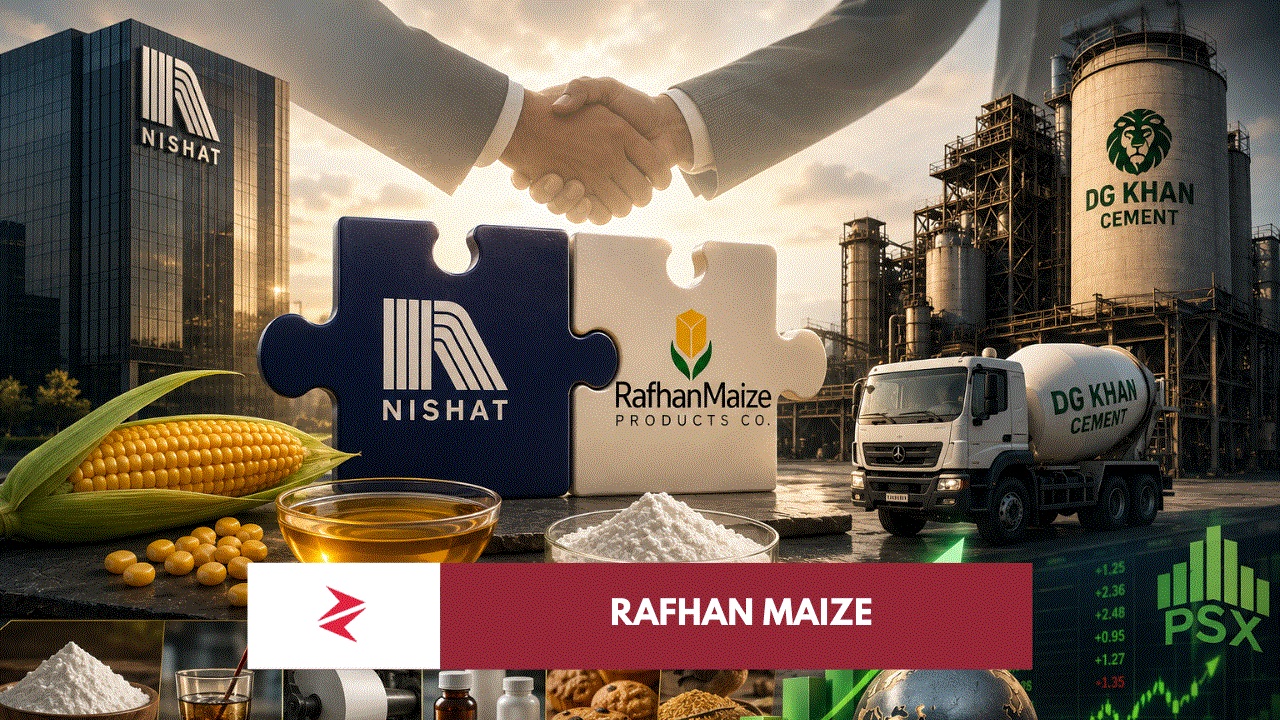
Nishat Group’s acquisition of approximately 73.9% of Rafhan Maize from Ingredion is one of Pakistan’s largest corporate acquisitions in recent years. The transaction, reportedly valued at approximately US$165 million, leaves Ingredion with roughly a 20% strategic shareholding while transferring operational control to one of Pakistan’s largest industrial groups.
Rafhan’s Pakistan business generated nearly US$250 million in revenue during 2025.
Those figures make headlines.
The long-term implications could matter far more.
Looking Beyond Foreign Investment
Pakistan’s economic debate often revolves around attracting foreign direct investment.
That conversation is important.
Foreign capital brings technology, international networks and access to global markets.
However, another form of investment receives far less attention despite being equally important:
Domestic capital being reinvested into productive Pakistani businesses.
When one of Pakistan’s largest industrial groups commits billions of rupees to acquire and expand a manufacturing company, it reflects something equally valuable:
Confidence.
Not confidence in quarterly earnings.
Confidence in Pakistan’s long-term industrial potential.
That distinction matters.
Countries rarely industrialize solely because foreign investors arrive.
They industrialize because local businesses continuously reinvest, modernize and expand.
Why Rafhan Maize Matters
Many investors know Rafhan as a dividend-paying listed company.
Its economic role is much broader.
For decades, Rafhan has quietly become one of Pakistan’s most sophisticated food ingredient manufacturers.
Its products reach industries that most consumers never notice.
They are used in:
- Food manufacturing
- Beverage production
- Pharmaceutical formulations
- Paper manufacturing
- Textile processing
- Industrial starches
- Sweeteners
- Animal nutrition
Rather than selling finished consumer products, Rafhan supplies critical ingredients that allow dozens of downstream industries to operate.
That makes it an enabling business rather than simply another food company.
These businesses often possess stronger competitive advantages because customers depend on consistency, technical expertise and long-term relationships rather than branding alone.
Why Nishat Is Different
Every buyer brings different strengths.
Nishat brings scale.
Across banking, textiles, cement, insurance, power generation, automobiles and manufacturing, the group has repeatedly demonstrated its ability to build businesses over decades rather than quarters.
Its diversified portfolio provides several advantages:
- Capital allocation flexibility
- Manufacturing expertise
- Procurement efficiencies
- Corporate governance experience
- Long-term investment capability
- Export market relationships
With an estimated workforce exceeding 75,000 employees, Nishat has already proven it can manage large industrial ecosystems.
Food ingredients represent a logical extension of that capability.
This Is Bigger Than Food
Pakistan exports significant quantities of raw agricultural commodities.
The country’s next challenge is exporting value.
One kilogram of processed food ingredients often generates substantially more export earnings than one kilogram of raw agricultural output.
This is where companies like Rafhan become strategically important.
Rather than exporting maize alone, Pakistan can increasingly export:
- Modified starches
- High-value sweeteners
- Industrial food ingredients
- Specialty nutrition products
Value-added manufacturing creates higher margins.
Higher margins create better wages.
Better wages support stronger domestic demand.
That cycle becomes increasingly valuable for an economy seeking sustainable export growth.













Wan AI
July 6, 2026 at 10:46 am
One point that stood out is the idea that the long-term strategic value of this deal could matter more than the headline purchase price. It will be interesting to see whether the acquisition leads to better supply chain integration, stronger export competitiveness, and more investment in value-added food products, because those outcomes are likely to have a much bigger impact on Pakistan’s economy than the transaction itself.