



























Calling Mufti Taqi Usmani an idiot because you disagree with his fatwa is wrong. Treating every blockchain token, Bitcoin, USDT, a pump-and-dump meme coin and a regulated digital asset as if computer science created one identical financial object is also intellectually lazy. Wrong.
And this is precisely where Pakistan’s latest crypto argument has collapsed.
One camp is abusing one of the Muslim world’s best-known Islamic finance scholars as if a torrent of Gen Z profanity constitutes a rebuttal. The other camp is treating the word fatwa as a command to switch off every technical, monetary and jurisprudential question that follows. Between the two sits a serious issue involving mal, gharar, money, ownership, digital scarcity, stablecoin reserves, fiat currency and the future architecture of payments.
I am not issuing a fatwa here. I am asking a more technical question: are the economic and computer-science premises being used to classify every cryptocurrency as the same thing actually strong enough?
That question matters because Pakistan is no longer discussing crypto from a university seminar room. Pakistan ranked third in Chainalysis’s 2025 Global Crypto Adoption Index, behind India and the United States, using a methodology covering 151 countries and several forms of on-chain activity. Crypto.com’s own industry market-sizing exercise estimated global cryptocurrency ownership at 741 million people in 2025, although that figure should be understood as a corporate research estimate rather than a census of independently verified humans.
This is no longer a discussion about ten nerds mining imaginary coins in a basement.
It is a question Pakistan has already walked into.
What Mufti Taqi Usmani’s Reported Crypto Fatwa Actually Says
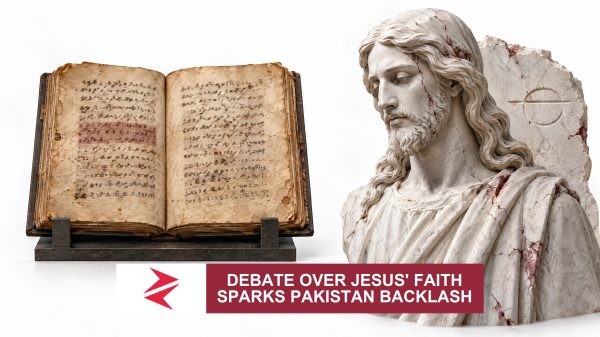
The viral headline was brutally simple: Pakistan’s top mufti declares crypto trading haram.
According to the July 9 ProPakistani report, the ruling was issued in June 2026 and circulated by scholars affiliated with Darul Uloom Karachi. The report says its scope includes cryptocurrencies, crypto tokens and stablecoins such as USDT, and presents the fundamental conclusion as: “Cryptocurrency is not considered wealth.”
Read that carefully.

The heart of this dispute is not Bitcoin’s price.
It is not whether a teenager lost his savings on a dog coin.
It is not even, at the primary classification stage, whether speculation is haram.
The first question is far more fundamental:
Is a cryptocurrency mal — legally cognisable wealth or property under Islamic jurisprudence — at all?
If the answer is no, the rest of the structure begins collapsing automatically because, under that analysis, you are supposedly exchanging recognised money for something that does not qualify as wealth.
That is the hinge.
And this is exactly why shouting, “Bitcoin is digital gold, boomer!” proves nothing. Equally, merely repeating, “It has no physical body, therefore it is not wealth,” does not close a centuries-old jurisprudential discussion about the definition of mal in an age of dematerialised assets.
The real dispute in one table
| Question | Reported blanket-fatwa position | Alternative Shariah analysis | Technical and economic issue |
|---|---|---|---|
| Is crypto mal? | Crypto is not recognised wealth | Digital assets may qualify as mal where value, exchangeability and recognised rights exist | Does physical form determine property status? |
| Must wealth be tangible? | Tangibility is central to the classification used | Majority-school definitions may recognise economically valued non-physical rights/assets | Modern finance contains dematerialised property |
| Does “no backing” invalidate an asset? | Lack of authority or recognised backing is a concern | Not every asset derives value from an issuing sovereign | Bitcoin, stablecoins and utility tokens have different value structures |
| Does volatility create gharar? | Extreme uncertainty supports impermissibility concerns | Normal commercial risk is distinct from excessive gharar | Asset-by-asset risk differs radically |
| Are USDT and Bitcoin identical? | Both fall within the prohibited digital-asset category | A reserve-backed stablecoin and decentralised scarce token require separate analysis | Issuer, reserves, redemption and network architecture differ |
| Is crypto trading gambling? | Speculation is a major concern | Leverage, futures and pump schemes may differ from spot ownership | The contract and activity may matter as much as the asset |
Claim: The crypto-halal debate cannot be intelligently resolved until scholars first settle which definition of mal they are applying and why.
That is not a disrespectful statement.
That is literally the jurisprudential question.
Malaysia Has Already Reached a Different Shariah Conclusion on Mal
Here is the part Pakistani social media shouting matches conveniently miss.
The Shariah Advisory Council of the Securities Commission Malaysia has formally considered whether regulated digital assets can constitute mal. Its 233rd and 234th meetings in 2020 resolved that digital currency can be recognised as mal from a Shariah perspective, while digital tokens can also be recognised as mal under the category of urudh. The Council further distinguished between technology-based digital currencies with no underlying asset and digital currencies backed by gold, silver, currency or other ribawi items. For assets satisfying its regulatory and Shariah conditions and traded on a registered digital asset exchange, the Council found investment and trading permissible.
This does not prove Mufti Taqi Usmani wrong.
It proves something much more inconvenient for headline warriors:
There is a substantive Shariah classification dispute.
The Malaysian SAC even records the majority-scholar formulation of mal as something possessing value, capable of being traded and giving rise to compensation if damaged. That is materially different from treating physical tangibility as the unavoidable gateway into the concept of wealth.
This is also the dispute explored in the Darul Fiqh analysis of Shariah interpretations of Bitcoin, while the more recent CoinStudy scholarly response argues that a broad Hanafi classification should not automatically be used to erase other established juristic conceptions of mal.
Again, pause.
One may reject those conclusions.
One may say their analogy is defective.
One may demonstrate that Bitcoin fails another Shariah test.
But “Mufti Sahib said it” is not an academic response to another Shariah institution saying, in a formal resolution, that digital currency can be mal.
Bring the dalil.
Bring the usul.
Bring the economic model.
Bring the protocol engineers.
That is how a civilisation confident in its religion should investigate a genuinely new asset class.
No, the Fiat Currency Argument Is Not as Simple as Crypto Twitter Thinks
The most common counterattack is now predictable.
“If Bitcoin is haram because it has no intrinsic value, what backs PKR or USD?”
This question is legitimate. The way it is usually argued is terrible.
Modern fiat currencies are generally not redeemable against a fixed quantity of gold. A national currency derives part of its monetary position from its legal status, sovereign monetary framework and its role inside the state’s payment and settlement architecture. The Reserve Bank of Australia, for example, draws an explicit distinction between cryptocurrencies, which have no legislated value, and national currencies, which derive part of their value from legal-tender status.
Therefore, saying, “PKR is also just paper, checkmate Mufti,” is not serious monetary economics.
The Pakistani rupee exists inside an enforceable network of taxation, settlement, banking obligations, government liabilities and central-bank monetary operations. Bitcoin does not become PKR merely because both rely upon collective acceptance.
But here is where the defenders of the blanket argument also become sloppy.
State issuance is an institutional distinction. It is not by itself a complete Shariah proof of halal status.
A central bank can operate inside an interest-based monetary system. Governments can legally recognise prohibited activities. Legal tender status tells us who issues and recognises a monetary instrument; it does not magically answer every question involving riba, zulm, debasement or Shariah classification.
The fiat argument therefore does not make Bitcoin halal.
It does, however, expose why “no physical substance” is an insufficient one-line explanation for declaring digital value fictional.
My position here is blunt: you lost the technical argument the moment you reduced this entire debate to inflation.
Paper currency losing value does not make Bitcoin halal.
A government increasing the money supply does not make every blockchain asset halal.
The stronger question is about the legal and economic nature of property itself.
Stay there.
That is where the real debate is.
USDT Alone Shows Why “All Crypto Is the Same” Needs Better Explanation
Now consider USDT.
Tether itself says its tokens are pegged one-to-one with the relevant fiat currency and backed 100 percent by its reserves; its public documentation describes reserve assets backing issued tokens and states that assets exceed liabilities.
Does that make USDT halal?
I am not making that ruling.
But it very clearly creates a different technical question from Bitcoin.
Bitcoin has no central issuing company promising dollar redemption. USDT has an issuer, reserve structure and fiat peg. USDC’s issuer, Circle, similarly describes USDC as redeemable one-to-one for US dollars and backed by highly liquid cash and cash-equivalent assets.
A random meme coin launched by an anonymous developer has another structure entirely.
An equity token representing rights to an underlying enterprise may create yet another legal structure.
A tokenised sukuk would create another.
A non-transferable digital right would create another.
The Securities Commission Malaysia’s Shariah Advisory Council did not accidentally distinguish between technology-backed digital currency, currency-backed digital assets and tokens. It did so because classification affects the Shariah rules applied to the instrument.
This is why a blanket statement covering Bitcoin, USDT and every token needs an extraordinary level of technical explanation.
Not because a mufti cannot issue it.
Because the burden upon a mufti is heavier, not lighter.
When a person carries scholarly authority capable of moving the financial behaviour of millions of Muslims, “people came and asked questions” cannot be where technical research ends. The modern mufti dealing with artificial intelligence, synthetic biology, derivatives or blockchain should have better access to subject-matter experts than the average Twitter trader.
I have watched the defence that critics should simply travel to Darul Uloom Karachi and ask for the reasoning.
No.
Publish the reasoning.
Publish the classification tree.
Publish which monetary economists, cryptographers, blockchain engineers, stablecoin specialists and Shariah finance experts were consulted.
A fatwa affecting an emerging financial sector should become stronger under scrutiny, not weaker.