







































Share the post "Yemen’s Khat Debate Is Bigger Than a Viral Cheek"
The internet sees a Yemeni man with a cheek packed full of green leaves and asks how he can possibly fit another one in. Yemen has a harder question: when khat is woven into social life, farm income and daily spending, who can afford to change the habit—and who can afford to keep it?
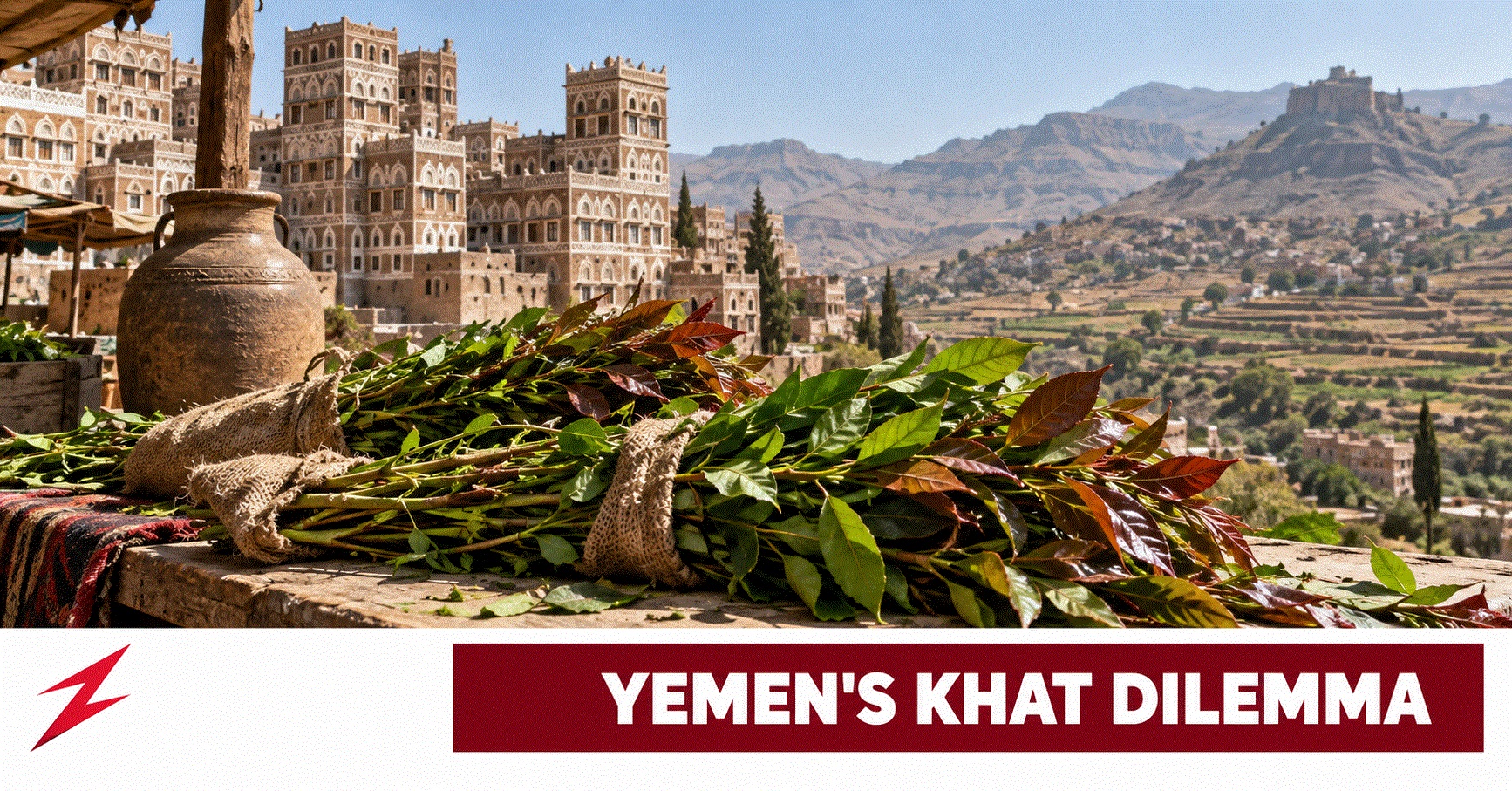
The plant is khat, also spelled qat, or Catha edulis. Its fresh leaves contain cathinone, the principal compound behind their stimulant effect, as documented in research on khat’s active substances. A photograph, however striking, tells us nothing certain about the person’s dose, health or political allegiance. Viral posts that label every chewer a Houthi turn a longstanding Yemeni practice into a convenient caricature. They make it easier to laugh at Yemen than to understand it.
A habit with a household cost
The most useful evidence is less sensational than the circulating graphics. In a World Bank report based on a representative survey conducted in 2006, researchers found that qat use took considerable time and, on average, accounted for around 10% of household budgets across income groups. The report argued that this spending competed with food, education and healthcare. It also warned why simple calls to eliminate the crop would fail: at the time, qat production accounted for an estimated 6% of GDP and 14% of employment.
Those are historical survey findings, not measurements of every Yemeni household in 2026. They are nonetheless enough to expose the flaw in the viral argument. Telling a struggling family to stop buying khat addresses demand while saying nothing about the farmer, trader or worker whose income depends on its sale.