










































| Product or practice | What matters most in the comparison | What the evidence supports |
|---|---|---|
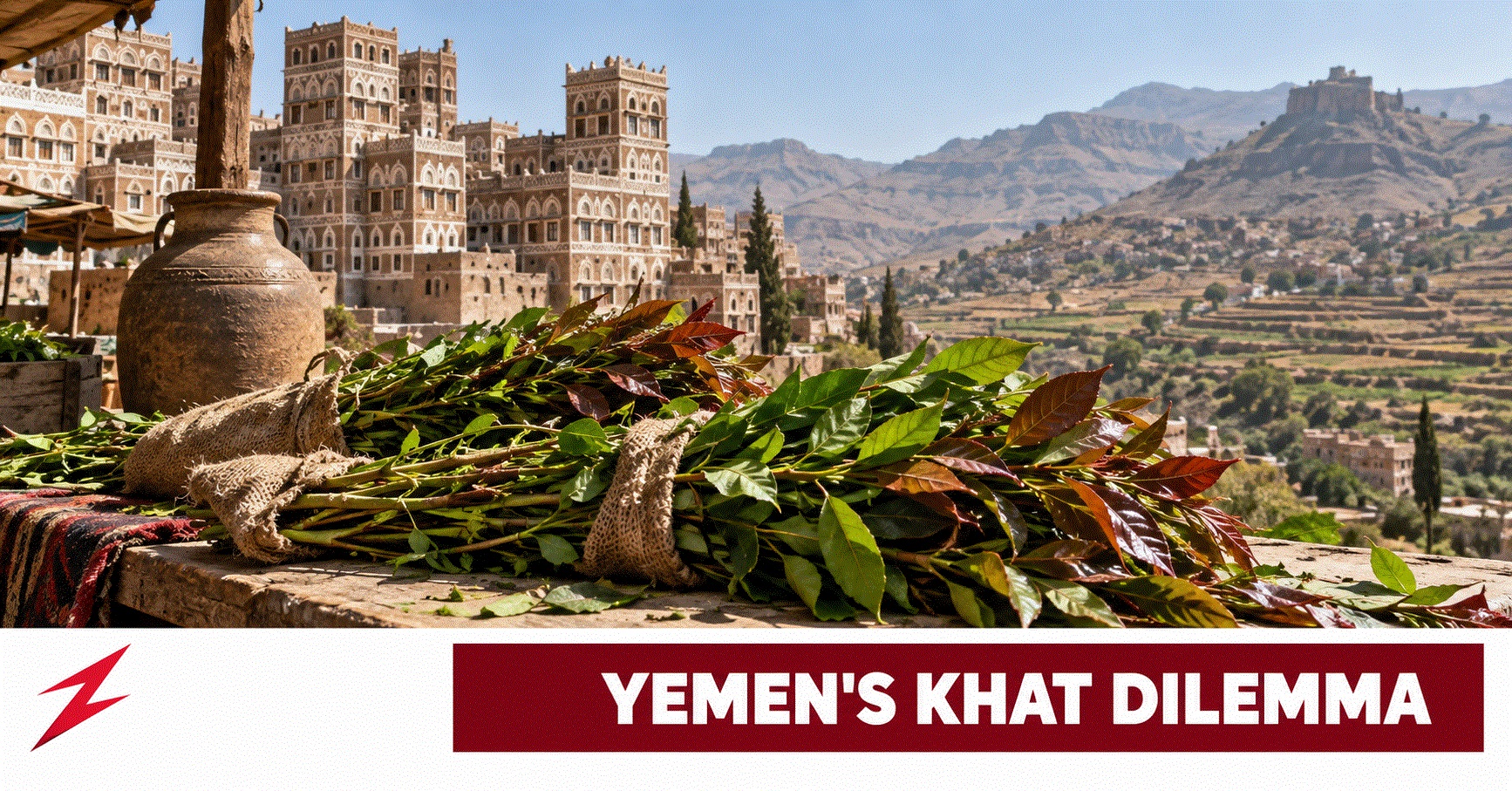
| Khat or qat | Fresh Catha edulis leaves contain the stimulant cathinone. | It has psychoactive effects; an image alone cannot establish an individual’s dose or health outcome. |
| Paan with areca nut | The ingredients matter more than the betel leaf wrapper. | The International Agency for Research on Cancer (IARC) classifies areca nut and betel quid without tobacco as carcinogenic to humans. Adding tobacco introduces another established hazard. |
| Naswar | It is smokeless tobacco, commonly placed inside the mouth. | IARC’s 2024 analysis attributes a substantial share of Pakistan’s oral cancer cases to naswar use. |
| Red “Jaba” drinks shown alongside the discussion | A bottle’s colour and photograph do not establish its contents. | Its ingredients and concentration would need independent verification before making claims about that specific drink. |
The table compares known product categories. It does not diagnose the people pictured or verify the formulation of the photographed drinks.
What would change the conversation?
The World Bank’s qat report did not treat awareness alone as a solution. It discussed reducing demand alongside public education, economic measures and viable crop diversification. That last condition matters: a farmer needs a dependable alternative market, not a lecture from someone who has never depended on the harvest. Yemen also needs current, transparent household and agricultural data so that today’s decisions are not built on an old survey—or an unattributed pie chart.
Is khat the same as a synthetic stimulant?
No. Khat is a plant containing the naturally occurring stimulant cathinone. A chemical relationship does not establish that chewing leaves has the same dose or effects as taking a different, concentrated substance.
Does a viral video prove how most Yemenis live?
No. It shows the people in that clip. It cannot establish national prevalence, household expenditure, medical diagnoses or political affiliation.
Why cannot Yemen simply ban the crop?
A ban would affect producers and workers as well as consumers. The World Bank’s historical findings show why any durable reduction must account for income and credible farming alternatives.
Yemen does not need the world to pretend khat has no cost. It needs the world to ask who pays when that cost is ignored, and who pays when a supposed solution destroys an income without replacing it. Share the evidence behind those questions, rather than the unverified chart or the latest joke about a stranger’s cheek.













