
































Sometimes the most ordinary objects end up triggering the most extraordinary reactions. A restaurant sign. A menu choice. A sentence painted on glass.
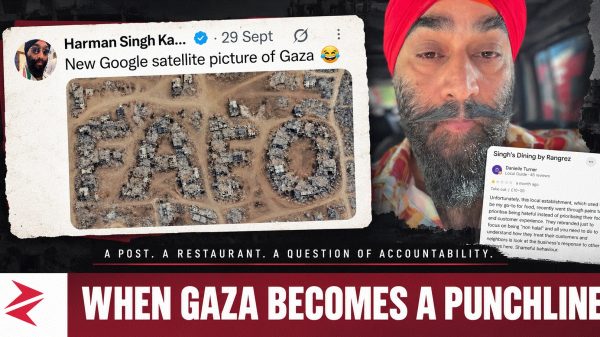
That is exactly what happened in London when the Sikh owner of Rangrez restaurant, Harman Singh Kapoor, placed a sign outside his establishment declaring the place “proudly non-halal.”
Now on the surface this might look like a routine statement about food preparation methods. After all, in the United Kingdom thousands of restaurants serve food that is not halal and nobody notices. But suddenly this one small restaurant in Southall became the center of a heated storm involving protests, vandalism, threats, arrests, and viral political arguments that spread across the internet within hours.
The situation escalated so dramatically that the restaurant — after operating for sixteen years — eventually closed its doors in February 2026.
And that is where the real sadness of the story begins.
Shaadi, Cricket, Food — And Now Conflict
Anyone who has lived in the Indian subcontinent understands something very simple.
Our cultures overlap everywhere.
Just like we celebrate weddings with music and dance, just like we play street cricket with shoes as wickets and a plastic bat, just like we drink chai ten times a day — food traditions too have deep religious meanings behind them.
For Sikhs, jhatka meat is preferred because the animal is killed instantly.
For Muslims, halal meat follows a different ritual process.
For centuries these traditions existed side by side across Punjab without turning into street confrontations.

That is why this situation feels particularly tragic.
Because a debate that once belonged to religious practice has suddenly become a political spectacle.
What Actually Happened
Supporters of Kapoor argue that his family faced intense harassment.
According to viral posts circulating online, protesters gathered outside the restaurant, blocking the entrance, throwing eggs, making threatening calls, and allegedly issuing serious threats against the family.
But critics present a completely different story.
They claim the restaurant owner had already been posting aggressive messages online and publicly threatening to defend himself with a kirpan, the ceremonial Sikh dagger.
Under UK law Sikhs are allowed to carry a kirpan as an article of faith. However, authorities can intervene if they believe the blade is being displayed in a threatening context.
That is what reportedly led to the arrest.
And this is where the debate split into two irreconcilable narratives.
One side saw a man defending his religious tradition.
The other saw a provocateur escalating tensions.