










































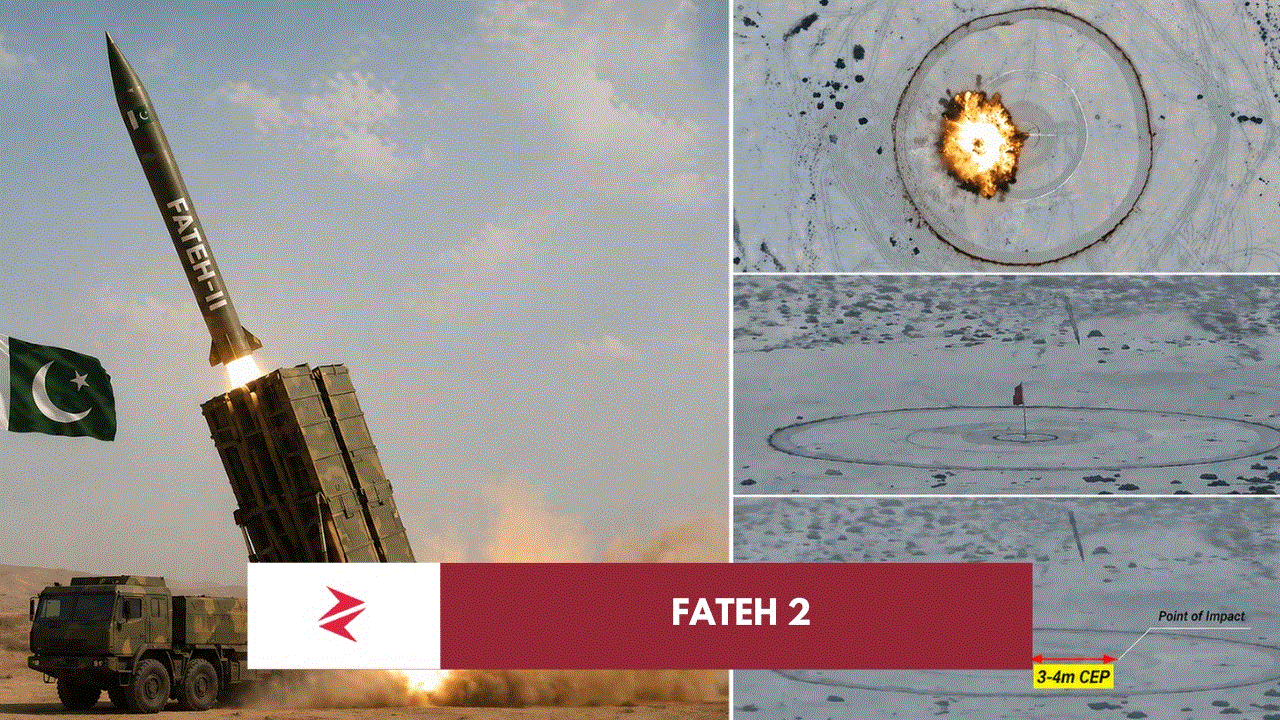
People obsessing over whether the Fateh-II “missed” the exact center of the target are exposing that they do not understand modern missile warfare at all.
Pakistan’s latest Fateh-II training launch was not about theatrics. It was about demonstrating something far more serious: that Pakistan now fields a battlefield precision-strike system capable of hitting static and semi-mobile operational targets hundreds of kilometers away with accuracy reportedly in the single-digit meter class. If the publicly discussed CEP estimates of roughly 4–10 meters are even broadly correct, then Fateh-II sits in the same conversation as advanced tactical strike systems fielded by top militaries.
The visual evidence from the latest trial suggests the missile impacted extremely close to the designated strike point—well within the expected circular error range being discussed by defense observers. That is not a miss. That is validation.
What the Fateh-II Test Actually Demonstrated
The Pakistan Army Rocket Force Command stated the launch was conducted to validate technical parameters and sub-system performance of the indigenously developed Fateh-II missile system. The trial was witnessed by senior officers from Strategic Plans Division, Pakistan Army, and strategic organizations, indicating this was not symbolic theater but a formal performance verification event.
What matters here is not merely that the missile flew.
What matters is that Pakistan publicly showcased:
A precision-guided surface-to-surface strike system with extended battlefield reach.
Advanced avionics and navigational aids for terminal accuracy.
Operational confidence sufficient for live training validation despite the system already reportedly being in service.
That last point matters because many observers misunderstand military testing. Operational systems are tested continuously throughout their service life. The United States still test-fires Minuteman missiles despite them being in service for decades. Repeated testing is not evidence of immaturity. It is evidence of readiness.