


































Connect with Zorays

Hi, what are you looking for?

Economy & Markets

Income Thresholds in Pakistan: The Gap Between Estimates and Tax Returns

World Inequality Database figures place Pakistan’s top‑1 % at Rs 4.40 lakh per month, yet tax returns show only 0.2 % earn that level, highlighting a stark…

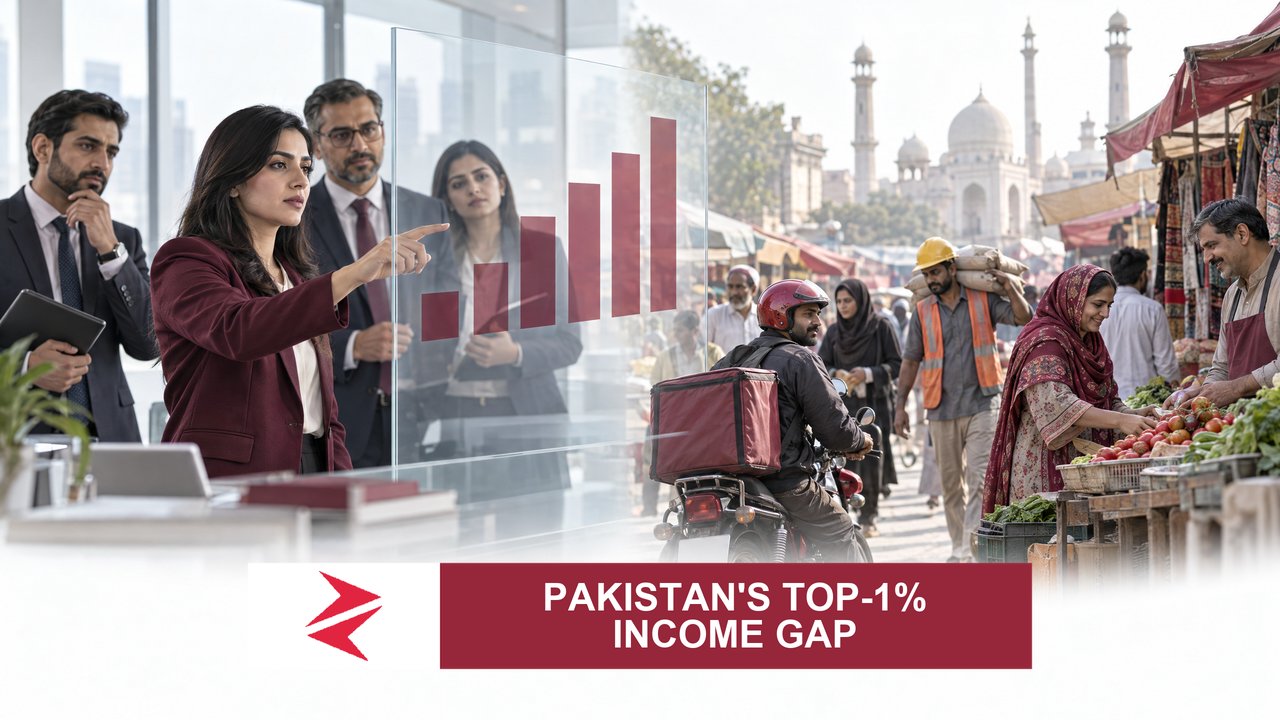
AI-generated editorial illustration: Conceptual editorial illustration for Pakistan's Top‑1% Income Gap. Not a documentary photograph.
Pakistan's Top‑1% Income Gap

When the numbers don’t add up, the public feels the pain. Aneeq Iftikhar cited the World Inequality Database (WID) saying the monthly income needed to sit in Pakistan’s top 10 % is Rs 1.21 lakh, the top 5 % Rs 1.89 lakh, the top 3 % Rs 2.61 lakh and the top 1 % Rs 4.40 lakh. Those figures sound alarming, but the same thread points out a stark contradiction: tax‑return data shows only about 155,000 individuals—roughly 0.2 % of the 77 million workers—declared taxable income of Rs 50 lakh a year (about Rs 4.2 lakh a month). That is far below the WID‑derived 1 % estimate.

Who is really earning the top‑1 %?

The WID numbers are presented as per‑adult, pre‑tax amounts. Iftikhar adds a methodological note: in a one‑earner married household the earner would need roughly double the per‑adult figure for both partners to count in the same group. He illustrates this with a concrete example—an annual household income of Rs 2.4 million (Rs 2 lakh per month) for a single earner with four dependents. Split between two adults, each is counted at about Rs 1 lakh, placing the household just under the top 10 % line of Rs 1.21 lakh. The same logic shows that a monthly income of Rs 10 lakh would sit comfortably inside the top 1 %.

The policy illusion

Policymakers routinely tout rising middle‑class incomes while ignoring that the official tax‑return picture tells a different story. If only 0.2 % of workers earn the Rs 4.2 lakh‑a‑month mark, the tax base is dramatically narrower than the WID estimate suggests. That discrepancy fuels a false narrative of broad‑based prosperity and weakens the public’s demand for progressive taxation, social safety nets, and targeted subsidies.


READ:  Megacities Without Farms: The Fragility of Modern Urban Civilization

Pages: 1 2 3

Click to comment

Leave a Reply

Your email address will not be published. Required fields are marked *

You May Also Like

Politics & Governance

President Trump nominates career diplomat Natalie Baker as U.S. ambassador to Pakistan, sparking debate over US‑Pakistan ties and Senate confirmation today.

Sports

Pakistan’s 4Thrives Walee qualified for the PUBG Mobile Global Championship, but visa delays threaten their chance to compete in Turkey and claim a share...

Economy & Markets

Pakistan’s regional trade deficit rose 26% to $4.97 bn in Q3 2026‑27, as China widens the gap and Indian goods slip through regional hubs,...

World Affairs

Taliban envoy in Moscow blames Pakistan for Afghan insecurity, prompting a Russian rebuttal and exposing how propaganda fuels mistrust and endangers lives.

Sports

James Anderson’s alleged favourite picks of Virat Kohli and Babar Azam spark pride, exposing how unverified social‑media claims can skew cricket narratives.

Technology & AI

X’s new “Copy video link” button lets Pakistani users turn GIFs into WhatsApp stickers, but each copy‑paste consumes megabytes, adding costly data usage for…

Business & Startups

Wise froze a UK entrepreneur’s £500,000 account in China, stopping payroll and supplier payments and showing how opaque fintech closures threaten businesses.

Advertisement