
































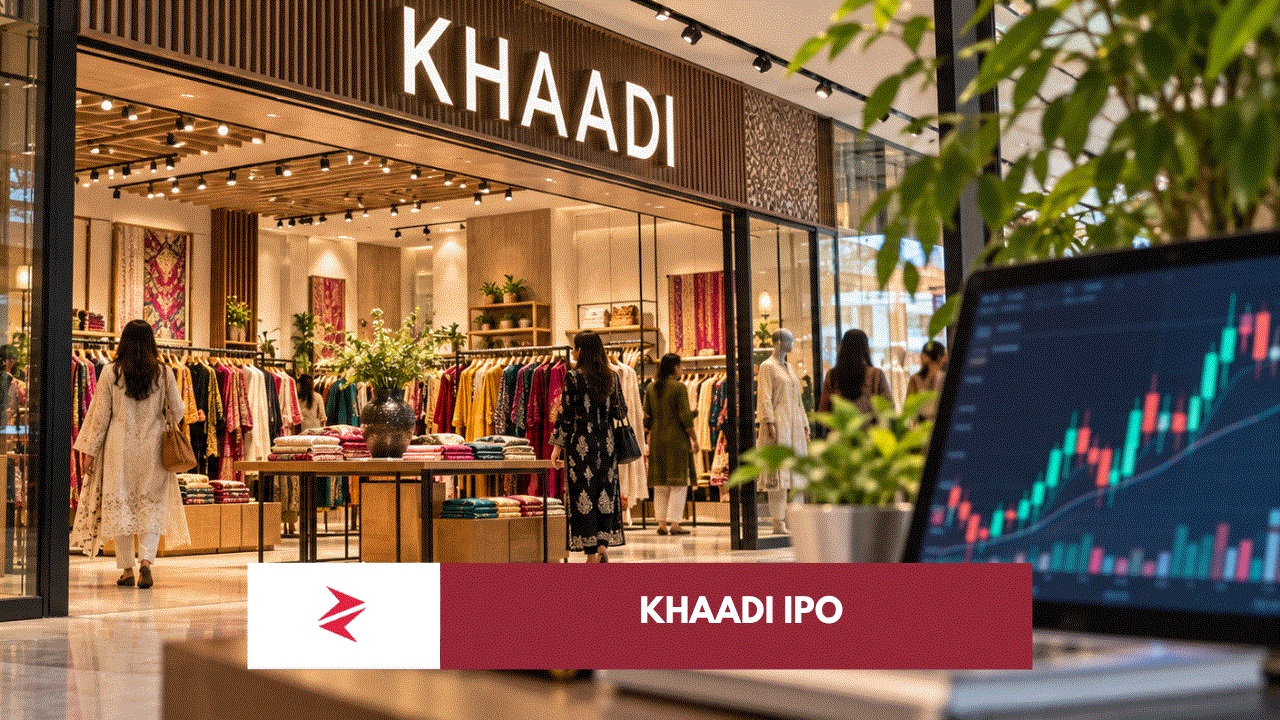
Khaadi approaching the Pakistan Stock Exchange is the kind of development Pakistan should welcome: a recognisable domestic brand inviting investors to participate in an enterprise they can understand beyond a ticker symbol. But the enthusiasm already surrounding its proposed listing exposes an uncomfortable habit in our investing culture, where familiarity with a product becomes confidence in a share price, and confidence becomes a buying decision before the financial statements have received the attention routinely given to a clothing sale. Knowing the brand helps explain the business; it does not establish a margin of safety.
The sensible Pakistani response is to support the development of our capital markets while demanding a convincing investment case. A company can deserve recognition for building a brand and still ask too much for its shares. Equally, a capital-intensive expansion can create substantial value if the stores generate returns that justify the investment. The task is to examine the price, the cash requirements and the ownership being offered, without allowing either promotional excitement or automatic cynicism to substitute for analysis.
First, the Rs8.3 billion headline needs to be unpacked
According to Mettis Global’s report on Khaadi’s proposed fundraising, the transaction combines a pre-IPO placement and an upcoming public offering. The entire 500 million shares are not being offered through the public IPO, and the maximum Rs8.3 billion is the combined fundraising figure rather than the public tranche alone. Arif Habib Limited is identified as the lead manager and bookrunner. mettisglobal.news
| Component | Reported shares | Reported price range | Implied gross proceeds |
|---|---|---|---|
| Pre-IPO placement | 250 million | Rs12.40–15.20 | Rs3.10–3.80 billion |
| Public IPO | 250 million | Rs12.40–18.00 | Rs3.10–4.50 billion |
| Combined transaction | 500 million | Different ranges apply to each tranche | Rs6.20–8.30 billion |
Source: Mettis Global. Proceeds are calculated from the reported share quantities and prices, before transaction expenses; the ranges should not be mistaken for confirmed final pricing.
This distinction matters because an offer size measures the shares being sold, whereas a company’s equity valuation measures the value assigned to all its outstanding shares. Neither figure automatically tells investors how much cash will enter the operating business: the final offer documents must establish the allocation between newly issued shares and any existing shareholders’ sales, together with expenses and the precise use of proceeds.
The pre-IPO pricing also deserves attention. A public investor buying at Rs18 would pay approximately 18.4% more than someone buying at Rs15.20, calculated as \(18/15.20-1\). That is a meaningful difference, although it does not establish unfair treatment by itself. Timing, restrictions, lock-ins and contractual rights can differ between transactions; investors should compare those conditions rather than assume that every share purchase occurred on identical terms.
The investment story depends heavily on forecast earnings
The supplied Mettis Global screenshot presents both reported profits and management expectations, which must remain separate. It shows profit after tax of approximately Rs1.4 billion for 2024, Rs1.7 billion for 2025 and Rs1.6 billion for the first half of 2026, alongside targets exceeding Rs3.1 billion for 2026 and Rs4.8 billion for 2027. The screenshot is an attachment reproducing a news report, rather than an independent audit opinion. image(1)
| Profit measure | Figure | Evidence classification |
|---|---|---|
| Calendar 2024 profit after tax | Rs1.4 billion | Historical result reproduced in reporting |
| Calendar 2025 profit after tax | Rs1.7 billion | Historical result reproduced in reporting |
| First-half 2026 profit after tax | Rs1.6 billion | Interim result reproduced in reporting |
| Calendar 2026 profit after tax | More than Rs3.1 billion | Management forecast |
| Calendar 2027 profit after tax | More than Rs4.8 billion | Management forecast |
Source: supplied Mettis Global screenshot, corroborated by Nukta’s reporting. Rounded figures should be reconciled with the issuer’s financial statements before publication of any investment recommendation.
Nukta’s account of the proposed offering reports a post-money multiple of approximately 10 times projected 2026 earnings and approximately 6.5 times projected 2027 earnings. These are different earnings bases, and the lower multiple depends on the forecast being achieved. Nukta
The arithmetic illustrates the issue. Ten times Rs3.1 billion implies an equity value near Rs31 billion, while 6.5 times Rs4.8 billion implies approximately Rs31.2 billion. Those calculations suggest a broadly consistent valuation reference, but they do not establish the exact market capitalisation at every possible offer price; that requires the final post-issue share count and pricing assumptions.

At an illustrative fixed equity value of Rs31 billion, the sensitivity looks like this:
| Annual profit assumption | Implied P/E |
|---|---|
| Rs4.8 billion | 6.5x |
| Rs4.0 billion | 7.8x |
| Rs3.1 billion | 10.0x |
| Rs2.5 billion | 12.4x |
Author’s calculations. This is a valuation sensitivity exercise, not a share-price target or forecast.
The investor is therefore buying more than a familiar clothing business; part of the proposition is a substantial improvement in earnings. The correct question is how much of that improvement comes from sustainable sales productivity, how much from margins or financing conditions, and how much remains dependent on expansion that has yet to demonstrate its full economics.
The claim circulating online that established PSX companies trade at 6x–7x earnings should also be tested stock by stock. An unnamed basket of “blue chips” is not a reliable valuation benchmark, especially when trailing earnings, forward estimates and unusually strong cyclical profits are mixed together. A lower multiple can represent an opportunity, but it can also reflect earnings that investors expect to decline.
Experience stores need to produce financial returns, not merely impressive photographs
The second supplied image carries a stylised “n” logo and the headline “Outlets to turn into ‘Experience Stores’.” Its central graphic shows 31 outlets, with 18 experience stores already operational and 13 undergoing conversion, while the accompanying text states that annual capital expenditure of Rs3.5 billion is planned from 2027 onwards. These are claims displayed in the supplied graphic, with the store-conversion plan also described in the retrieved reporting. image(2)