























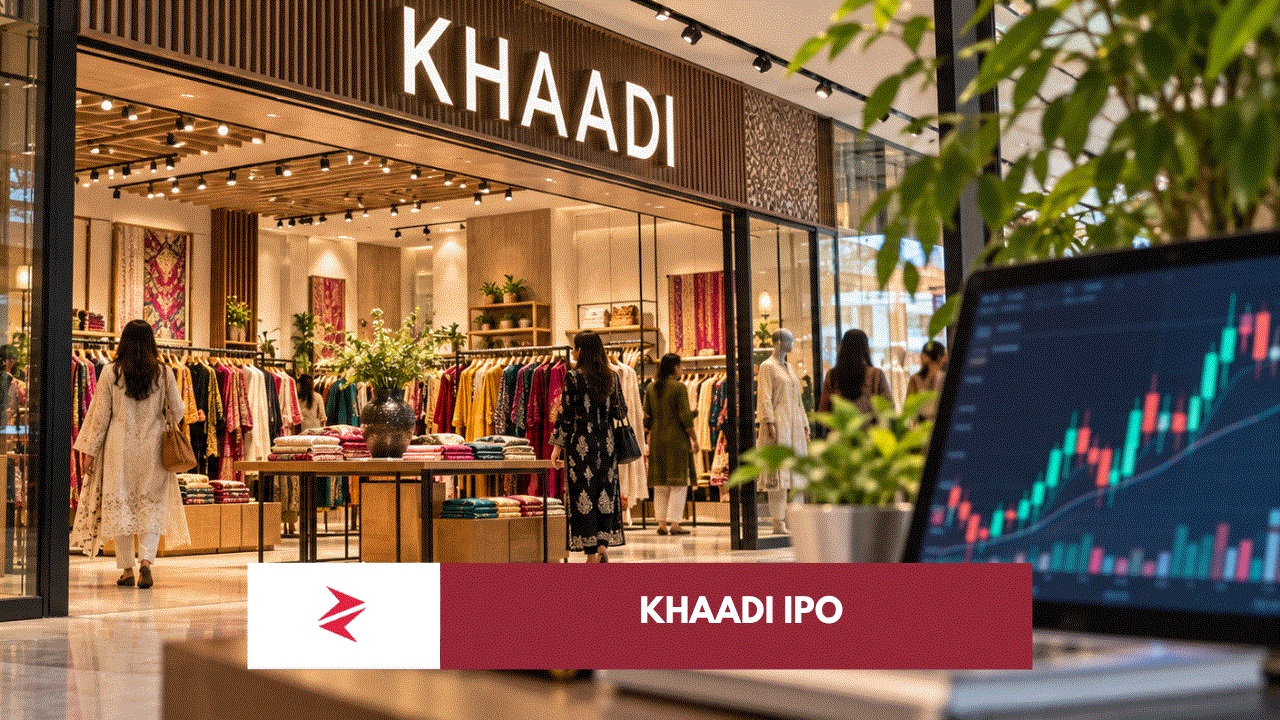
One detail should not be exaggerated: the reported approximately 45,000-square-foot figure refers to Khaadi’s largest store, not a confirmed size for every planned experience store. Turning a flagship’s dimensions into an assumption about the entire network would distort the capital-intensity argument. Nukta
The expansion nevertheless creates a serious cash-flow question. Using the supplied figures, planned annual capital expenditure of Rs3.5 billion is approximately 73% of the Rs4.8 billion 2027 profit target. That comparison is useful for scale, but profit minus capital expenditure is not a complete free-cash-flow calculation: depreciation, inventory movements, supplier payments, taxes, leases and other cash-flow items must be reconciled.
A larger store can improve the business if it raises sales productivity, broadens profitable categories and generates additional cash at an attractive return on invested capital. It can disappoint if higher rent, staffing, fit-out and inventory requirements absorb the extra sales. A café can strengthen the customer experience, but shareholders still need to know whether the overall format earns enough to justify the capital committed.
| Investor question | Evidence that would strengthen the case |
|---|---|
| Are converted stores more productive? | Comparable-store sales and sales per square foot |
| Does the format improve profitability? | Store contribution after occupancy and operating costs |
| Is expansion economically attractive? | Conversion cost, incremental cash generation and payback period |
| Are profits converting into cash? | Operating cash flow reconciled with earnings |
| Is inventory becoming a burden? | Stock ageing, turnover and markdown information |
| What cash obligations sit behind the format? | Lease commitments, debt and related-party arrangements |
These are analytical questions, not allegations about Khaadi’s disclosures or operations.
Khaadi’s official financial-reporting page provides a June 2026 half-year report. That is a better starting point for financial scrutiny than treating a promotional summary as a complete investment document. khaadipakistan.com
Service Long March Tyres offers a lesson about demand—not a guaranteed price path
The comparison with Service Long March Tyres is useful because it separates interest during an offering from investment returns afterwards. Arif Habib Limited’s transaction account records Rs7.775 billion raised through its pre-IPO and IPO, with approximately 16.7 times oversubscription in the initial bookbuilding portion. Those figures demonstrate substantial demand at that stage; they do not guarantee subsequent returns. Arif Habib Limited(AHL)
Calling the share sideways rather than in a downtrend requires a defined observation period and a verified price chart. Saying it “will go up eventually” goes further still, turning an expectation into a promise that the available evidence cannot support. A sound business can remain range-bound, recover or disappoint, depending on earnings delivery, valuation and market conditions.
For Khaadi, the lesson is to resist treating oversubscription as an independent investment thesis. Bookbuilding tells investors something about demand under particular conditions; the shareholder’s eventual return depends on the price paid and the business performance that follows.
What has been Pakistan’s largest IPO—and its highest IPO valuation?
This question needs a definition before it needs a winner. A private-company capital raise, a government divestment, a domestic IPO and a later international share sale are different transactions. Combining them produces impressive headlines and unreliable comparisons.
Pakistan’s Privatisation Commission records Rs12.161 billion for HBL’s 2007 IPO, representing 51.75 million shares and a 7.5% stake. That exceeds Khaadi’s proposed maximum combined fundraising in nominal rupees, although HBL’s transaction involved government-owned shares rather than fresh capital raised for expansion. The Commission separately records a much larger HBL share sale in 2015; that later sale should not be relabelled as its initial public offering. Privatisation Commission

| Transaction | Proceeds or target | Necessary qualification |
|---|---|---|
| HBL, 2007 | Rs12.161 billion | Government IPO divestment, including additional shares |
| Interloop, 2019 | Rs5.025 billion | Described at the time as Pakistan’s largest private-sector IPO |
| Service Long March Tyres, 2026 | Rs7.775 billion | Combined pre-IPO and IPO proceeds |
| Khaadi, proposed | Rs6.2–8.3 billion | Combined target; public tranche targets Rs3.1–4.5 billion |
Sources: Privatisation Commission, contemporaneous Interloop reporting and Arif Habib Limited. These are historical comparisons, not a single uniformly defined ranking. Privatisation Commission
For valuation, HBL provides a substantial verified benchmark. A Senate record confirms that 51.75 million shares represented 7.5% of the bank and were sold at Rs235 each. That implies 690 million total shares and an offer-price equity valuation of approximately Rs162.15 billion. This is an author calculation from the recorded share terms, not the amount raised. 29-03-2011_S_
I would not label that the highest IPO valuation in Pakistan’s entire history without a complete review of relevant offers and their capital structures. What it establishes clearly is that Rs8.3 billion of proposed fundraising should not be mistaken for a record company valuation, and that “largest-ever” needs a carefully stated category.
The Philippines comparison is revealing—but the moving parts matter
The Philippines transaction behind the current debate is Mynt, the parent of GCash. Reuters reported on October 2 that its offering was priced to raise approximately $845 million, with proceeds potentially reaching 60.9 billion Philippine pesos if the additional allotment were fully exercised. The approximately $973 million figure circulating online therefore represents an expanded potential deal, rather than the base offering alone. reuters.com
| Comparison | Approximate amount | Qualification |
|---|---|---|
| Khaadi combined maximum | $30 million | Reported maximum including pre-IPO placement |
| Mynt base offering | $845 million | Priced offering |
| Mynt expanded potential offering | About $970 million | Dependent on additional allotment |
| Expanded Mynt/Khaadi ratio | About 32x | Illustrative proceeds comparison, not company valuation |
The expanded dollar figure is approximate and exchange-rate sensitive. The transactions differ in sector, structure and investor base.