





















Pakistan’s food sector is rarely analyzed correctly. It is either romanticized as a defensive staple play or dismissed as a low-margin commodity business. Unity Foods sits at the center of that confusion.
What looked like a vertically integrated edible oil and wheat-linked growth story has now evolved into something more complex — and more instructive.
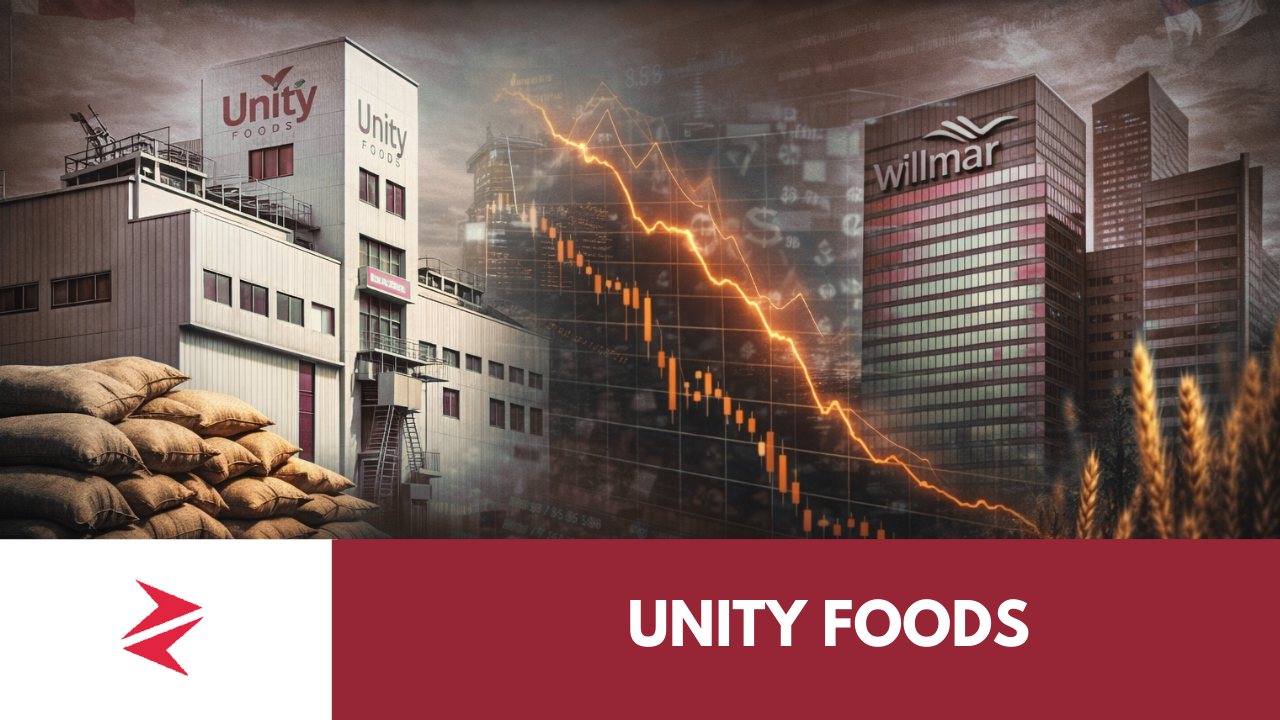
The Bloomberg disclosure that Wilmar International booked a $150 million loss tied to Unity Foods
Food Giant Wilmar Hit by Mill was not just a headline event. It was a structural signal.
To understand it properly, we must separate three layers:
-
Ownership mechanics
-
Governance and capital structure
-
Cash-flow reality vs reported profitability
Let’s break it down.
The Ownership Structure Most Investors Never Read
In March 2024, Wilmar Pakistan Holdings Pte. Ltd. and related parties announced a public offer to acquire up to 277,070,908 shares at PKR 24.89 per share.
At that time:
• Wilmar Pakistan Holdings held 259,535,950 shares (21.74%)
• Unity Wilmar Agro held 166,153,085 shares (13.92%)
• Muhammad Farrukh held 120,855,029 shares (10.12%)
• Fehmida Amin held 93,364,120 shares (7.82%)
Collectively, the acquirers already controlled 53.59% before the offer.


The offer was priced at PKR 24.89, justified as the 180-day weighted average.
Today, the stock trades dramatically below that level.
That divergence is not noise. It is capital misallocation repricing itself.