















































Connect with Zorays

Hi, what are you looking for?

Business & Startups

Building Rapport on LinkedIn: Why Trust Beats Broadcasting in 2026

Learn how LinkedIn company pages build rapport through relevance, consistency and trust, turning passive visibility into credible business relationships.

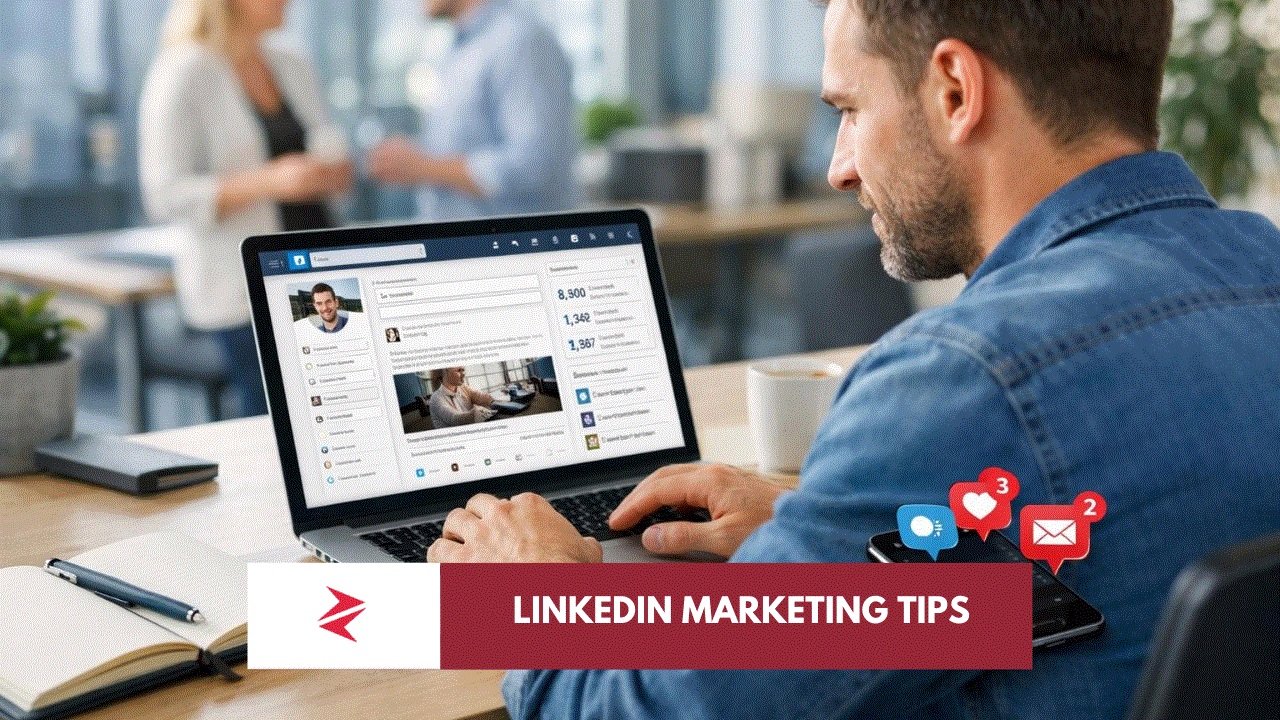
Pakistani business professional building audience rapport through a LinkedIn company page

Most companies do not have a LinkedIn content problem. They have a relationship problem disguised as a posting schedule.

They publish corporate announcements, employee photographs, product updates and carefully polished slogans, yet the Page still feels empty because the audience is being spoken at rather than understood. The business may be visible, but visibility without recognition is little more than digital noise. Posting more of that noise does not produce trust; it merely makes the distance between the company and its audience more obvious.

A LinkedIn company page should not operate like a noticeboard on which management pins announcements and walks away. It should operate as a relationship surface: a professional environment where visitors quickly understand who the company serves, what problems it understands, whether its claims are credible and whether continuing the interaction will be worth their time. The accompanying LinkedIn rapport course describes this distinction precisely by arguing that rapport is not decorative friendliness but the mechanism through which online trust becomes possible.

That distinction matters enormously in Pakistan, where founders, exporters, technology companies, consultants, manufacturers and service businesses increasingly use LinkedIn to reach clients well beyond their immediate physical networks. A company in Lahore may be speaking to a procurement manager in Riyadh, an investor in Dubai, a development professional in Islamabad or a potential technology partner in London. None of these people will build confidence merely because the company posts frequently. They will build confidence when the Page repeatedly demonstrates that it understands their context.

The Old LinkedIn Advice Is No Longer Enough

Much of the older LinkedIn marketing material circulating online still quotes a platform population of 150 million members, claims that LinkedIn was 277 percent more effective for lead generation than other platforms, or recommends fixed morning posting schedules as though every professional audience behaves identically. Those claims appear in the earlier source material, but they should not be presented as current evidence without their original studies, dates and methodological context.

READ:  AI Infrastructure: Pakistan Is About to Waste Its Cheapest Competitive Advantage

That is where a genuine EEAT upgrade begins: not by decorating an old article with newer terminology, but by separating durable principles from expired statistics.

The durable principle is that professional recommendations, visible interaction and repeated usefulness can influence how audiences perceive a company. The obsolete layer is the assumption that figures published during an earlier stage of LinkedIn’s growth can be casually reused in 2026. LinkedIn now reports a community exceeding 1.3 billion members, with more than 70 million companies listed, while its platform records millions of feed views and thousands of professional connections every minute.

A company page is therefore no longer competing merely against a handful of local competitors. It is competing inside a vast global stream of professional information in which generic corporate language is almost instantly forgettable.

What Rapport Actually Means on LinkedIn

Rapport is often confused with sounding friendly, adding emojis or writing conversational captions. Those may influence tone, but rapport is deeper than tone.

Rapport is the relationship feeling produced when a reader senses recognition, respect and psychological safety. Recognition tells the reader, “This organisation understands people in my position.” Respect tells the reader, “They are not wasting my time.” Safety tells the reader, “I can continue paying attention without being immediately pressured into a sale.”

Advertisement. Scroll to continue reading.

A useful distinction can be made between three elements:

Element What it contributes What the reader experiences
Tone Gives the message its voice “This sounds formal, direct, warm or technical.”
Content Delivers information or evidence “This tells me something useful.”
Rapport Creates the relationship context “This organisation appears to understand me.”
READ:  I Loathe Tabish Hashmi’s Comedy—But There Is Still No Proof Geo Punished Him for Kashmir

This is why an aggressively cheerful Page can still feel cold. A caption may contain friendly language, but when it ignores the reader’s actual pressure, knowledge level, role or reason for visiting, the warmth becomes cosmetic.

The clearest mental model from the course is:

Rapport = recognition + fit + consistency + ease.

The audience notices that the message concerns them, sees that it fits their situation, encounters the same dependable standard repeatedly and finds the interaction easy enough to continue.

A Pakistan-Relevant Example

Consider a Pakistani B2B software company targeting operations managers in Karachi, Lahore and Islamabad.

Its Page repeatedly publishes lines such as “Transforming tomorrow through innovative digital excellence.” The statement sounds polished, but it recognises nobody. It says nothing about delayed approvals, disconnected field teams, inventory visibility, reporting failures or the pressure managers face when senior leadership demands answers from fragmented systems.

Now imagine that the company changes its approach and begins publishing practical content explaining how operations teams can reduce approval delays, improve reporting accountability, manage branch-level coordination and identify workflow bottlenecks. It shares a real implementation example, acknowledges the cost of weak coordination and clearly explains what changed after deployment.

The second Page builds rapport because the reader can locate their own professional reality inside the content. If the Page continues to behave with the same clarity and supports its claims with evidence, rapport begins turning into trust. This Pakistan-specific progression is also used in the course to show why precise operational language outperforms hollow “digital transformation” slogans.

Rapport Opens the Door; Trust Keeps It Open

Rapport and trust are connected, but they are not identical.

Advertisement. Scroll to continue reading.

Rapport answers the question, “Do I feel comfortable staying here?” Trust answers, “Can I rely on what this Page says?”

READ:  Global Freelancing: Countries Dominating the Gig Economy

A Page may feel approachable but remain shallow because it offers no evidence. Another may display technical expertise yet remain distant because it never acknowledges the audience’s lived reality. Strong company Pages combine both: the reader feels recognised and is given credible reasons to believe the message.

The trust structure can be understood through three layers:

Trust layer What the audience feels What the company must demonstrate
Recognition “This concerns my work or problem.” Clear audience understanding
Reliability “This Page behaves consistently.” Stable quality, voice and subject focus
Credibility “These claims deserve consideration.” Evidence, experience and specific examples

LinkedIn itself recommends treating a company Page as a dynamic marketing asset rather than a static “About Us” section. Its published guidance says complete Pages receive more weekly views, companies posting at least weekly can see stronger engagement, and visual content generally attracts more interaction than unsupported text alone. These are platform-supplied benchmarks rather than universal guarantees, so businesses should test them against their own audience data.

What Nobody Tells Companies About Consistency

Consistency does not mean repeating the same sales message every Tuesday.

It means giving the audience a stable standard of usefulness. The Page should repeatedly sound as though the same thoughtful organisation is present, even when the subject or format changes. A technical explainer, employee story, customer case study and product announcement may all look different, but they should share a recognisable level of clarity, honesty and audience awareness.

The brain continuously looks for patterns. When one company post is deeply informative and the next is exaggerated, vague or desperately promotional, the audience is forced to reassess the organisation every time. That reassessment creates friction. Friction prevents familiarity, and without familiarity, trust remains expensive.

This is why one viral post cannot manufacture a professional reputation. It can produce reach, but reach is an event. Reputation is a pattern.

LinkedIn’s current feed direction makes this even more important. In March 2026, the platform said it was using more advanced recommendation systems and large language models to improve relevance while reducing generic content, recycled posts, engagement bait, automated comments and artificially coordinated engagement.

The implication is direct: businesses attempting to imitate popular formats without contributing real professional value may find that the content looks active while becoming strategically weaker.

Advertisement. Scroll to continue reading.

Pages: 1 2 3

Click to comment

Leave a Reply

Your email address will not be published. Required fields are marked *

You May Also Like

Sports

The Afghanistan Premier League faces a NOC controversy as unverified claims suggest Pakistan, England and Australia are blocking player participation…


Politics & Governance

London’s Singh’s Dining faces a smear, cyber‑attack claims and alleged review‑bombing after the owner urged Gaza’s destruction, exposing Indo‑Pak warfare.


Opinions

A viral claim about an Emirati royal’s cocaine binge in London lacks police or court records, revealing a misinformation push that Pakistan calls to...


Opinions

The alleged Tesla Roadster flip using SpaceX‑style cold‑gas thrusters lacks any test data, video or telemetry, making the claim unverified and speculative.


Sports

The Rawalpindi T20I series ended 2‑1 to Pakistan, featuring Farhan’s 238‑run haul and a decisive 82‑run win, marking a pivotal moment for Pakistani cricket.


Energy & Environment

A proposed US diesel export ban exposes Britain’s reliance on imported fuel. Here is what the refinery data show and why Pakistan should pay...


World Affairs

Flydubai’s reported Tabuk landing raises questions about emergency codes, conflicting fight claims, Pakistan’s Saudi ties and Israeli military airspace access.

Advertisement