















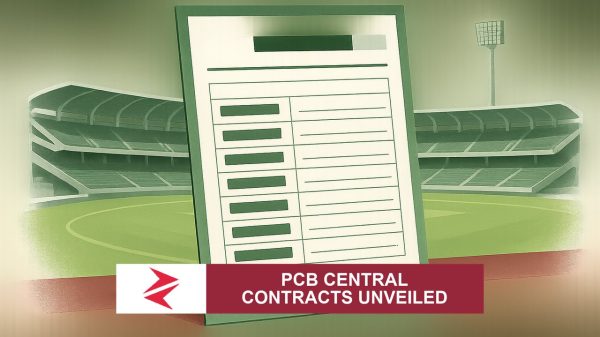



















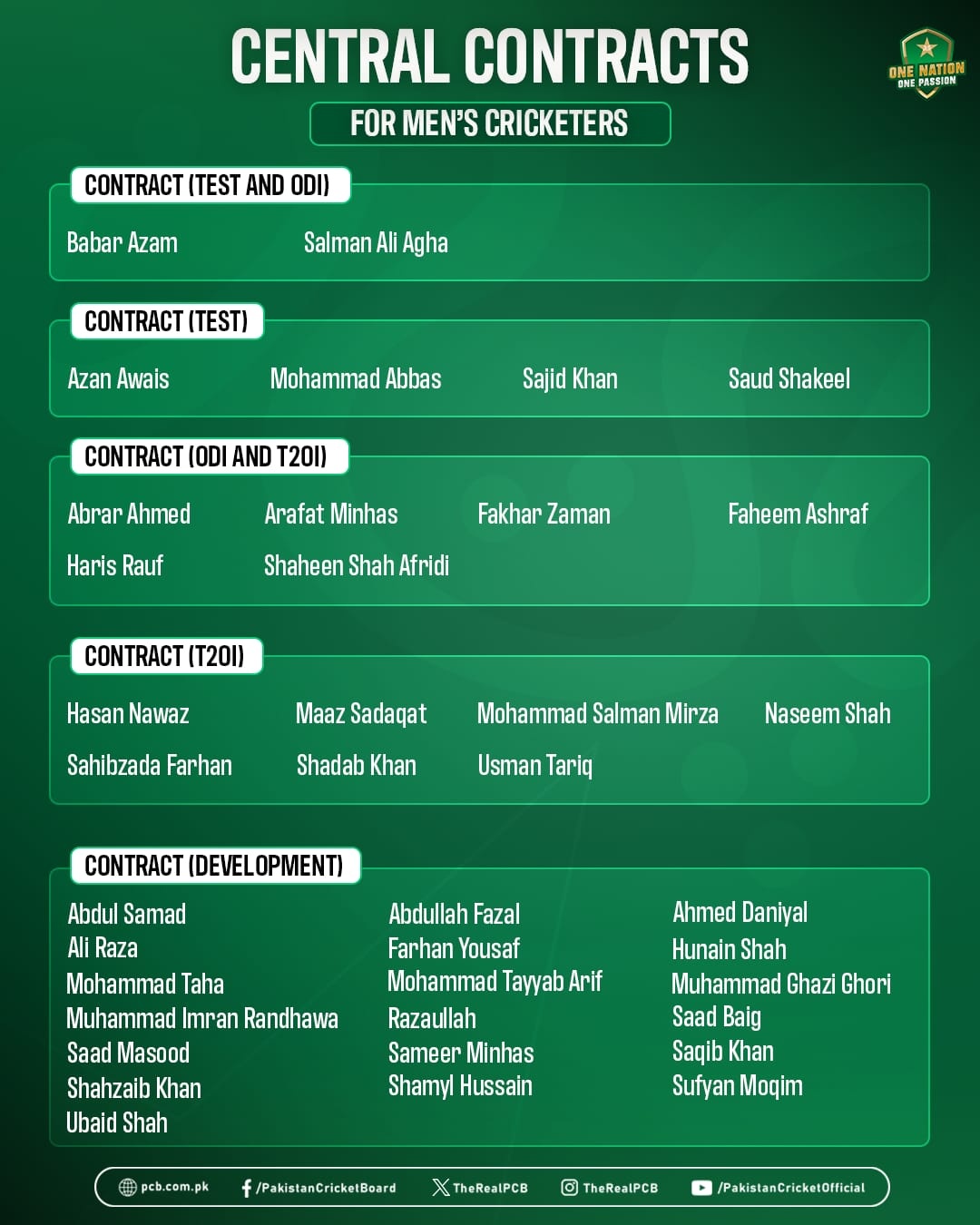
The Pakistan Cricket Board (PCB) has finally lifted the veil on its new central‑contract system, unveiling a format‑specific roster for 38 men’s cricketers that will run until 2027. The announcement, posted on the PCB’s official X account, reads plainly: “PCB announces new central contracts structure for 38 men’s cricketers” (TheRealPCB, 21 Nov 2026). Alongside the terse tweet, an infographic lays out five distinct buckets – Test & ODI, Test only, ODI & T20I, T20I only, and Development – and lists every name that has secured a spot. This is the only verifiable data we have; everything else swirling on social media is opinion, not fact.
What the Contract Grid Actually Looks Like
The PCB infographic divides the 38 contracts as follows:
| Category | Players (as listed) |
|---|---|
| Test & ODI (top tier) | Babar Azam, Salman Ali Agha |
| Test only | Azan Awais, Mohammad Abbas, Sajid Khan, Saud Shakeel |
| ODI & T20I | Abrar Ahmed, Arafat Minhas, Fakhar Zaman, Faheem Ashraf, Haris Rauf, Shaheen Shah Afridi |
| T20I only | Hasan Nawaz, Maaz Sadaqat, Mohammad Salman Mirza, Naseem Shah, Sahibzada Farhan, Shadab Khan, Usman Tariq |
| Development squad | 19 emerging players ranging from Abdul Samad to Ubaid Shah (full list in the infographic) |
That adds up to exactly 38 contracts, confirming the PCB’s headline. The format‑based split is a first for Pakistan, promising to align remuneration with the role each player is expected to fulfil.
Why the Board Switched to Format‑Based Deals
PCB officials have framed the change as a move toward “building depth ahead of key matches” and “matching contracts to roles” – language lifted directly from the X story summary that circulated after the tweet. The logic is simple: a player who is a specialist in the shortest format should not be compensated on the same scale as a Test mainstay, and vice‑versa. In theory, this should incentivise players to hone the skills their board needs most and give fringe talent a clearer pathway via the Development group.
For the ordinary fan, the promise is appealing. A transparent, role‑based pay structure could curb the perception that big names are over‑rewarded while lesser‑known performers scrape by. It also offers a measurable yardstick – if a player is paid as a Test specialist, his performance in the longest format becomes a public benchmark.
The Immediate Public Reaction – Praise, Anger, and the “Big‑Names Dropped” Outcry
Within minutes of the PCB’s post, the cricket‑loving public erupted on X. One user, calling the list “BIG NAMES DROPPED FROM PCB’S CENTRAL CONTRACT LIST,” enumerated eight players they felt were unfairly omitted: Saim Ayub, Mohammad Rizwan, Imam‑ul‑Haq, Abdullah Shafique, Muhammad Haris, Shan Masood, Wasim Jnr, and Khurram Shehzad (CallMeSheri1_, 21 Nov 2026). Another tweet asked bluntly, “What’s the reason of dropping Rizwan, Abdullah and Junior?” (CallMeSheri1_, 21 Nov 2026). These are raw public sentiments, not verified facts, but they reveal a deep anxiety that the new system may be weaponising exclusion.
Even supporters of the format‑based model admitted a paradox. A fan wrote, “No central contract for Akif Javed, Wasim Jnr, Abd Shafiq & A‑Jamal is shambolic. Agha and Babar get 4.8 million a month despite no performances while some of the most deserving players don’t even get the D category” (Omershehzad07, 21 Nov 2026). The 4.8 million figure is uncorroborated, yet the comment underscores a lingering perception that the top tier remains a “pay‑for‑name” club.