







































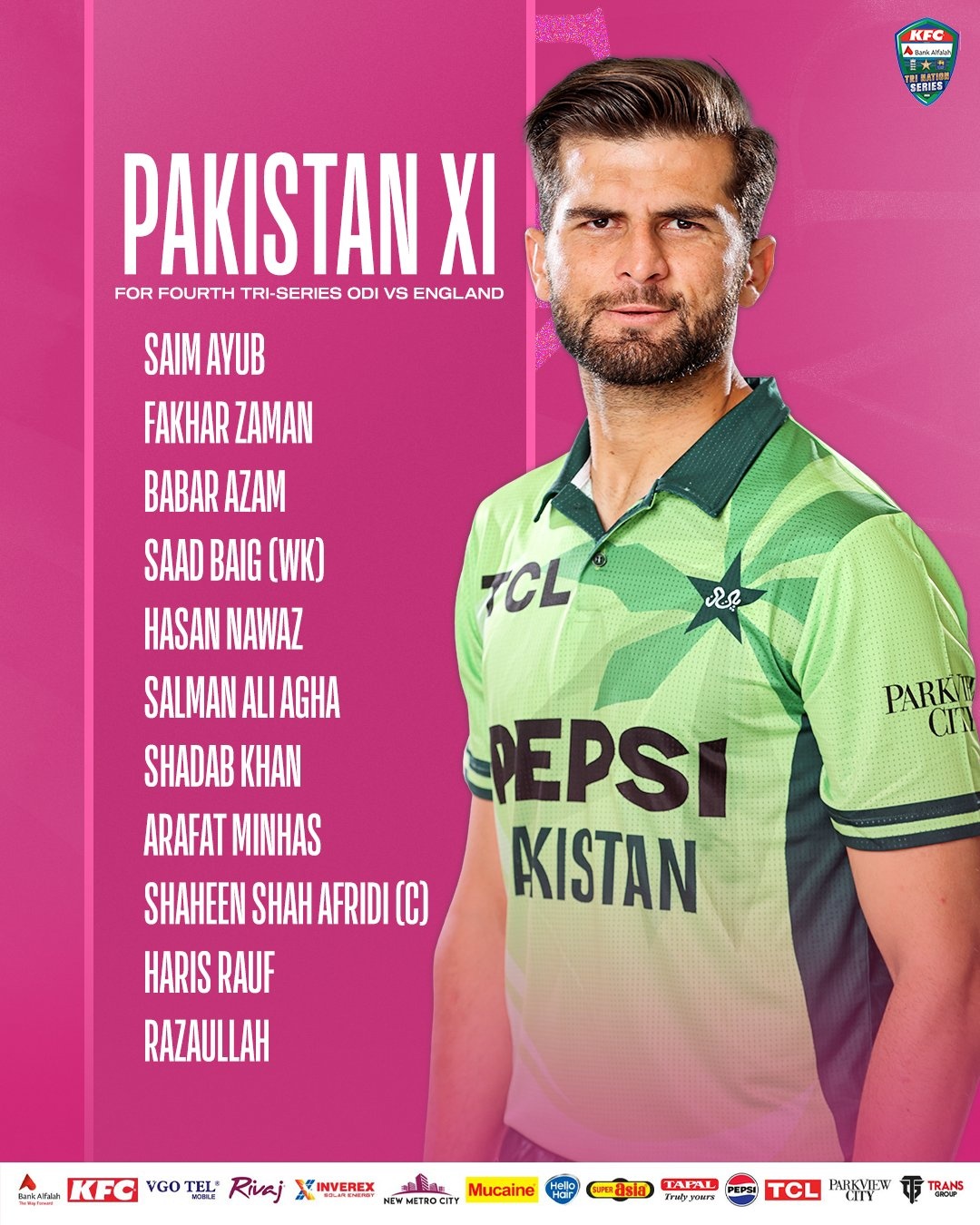
When the Pakistan Cricket Board (PCB) announced on its official X account that spinner Sufiyan Muqeem was being sent back to domestic cricket and left‑handed batter Maaz Sadaqat was being drafted in as injury cover, the message was clear: the board is willing to trade a proven bowler for a hopeful batsman without giving the public a solid justification. The same post confirmed that youngster Razaullah made his ODI debut in today’s clash against England at Gaddafi Stadium. This is not a tactical nuance for pundits to debate; it is a decision that directly affects the livelihoods of the players, the expectations of the fans, and the credibility of the institution that is supposed to safeguard Pakistan cricket.
The Hard‑Knock Reality of the Swap
The PCB’s X post read, “Two changes to our team for today, with Razaullah making his ODI debut #PAKvENG | #PinkDay | #CricketKaJashan,” while a separate user‑generated tweet quoted the board’s own wording: “MAAZ SADAQAT IN ODI SQUAD. – Sufiyan Muqeem has been released from the tri‑series squad to play domestic cricket.” Those two lines are the only verifiable facts we have – a spinner is out, a batter is in, and a rookie bowler gets his first cap. No official statement explained why Lahore’s pitches are “spin‑unfriendly,” nor did the board provide any performance metrics to justify discarding a bowler who has been part of the tri‑series setup.
Why the Decision Backfires
Cricket in Pakistan is more than a sport; it is a daily conversation on street corners, a source of pride for a nation that has repeatedly proved its mettle on the world stage. By swapping a specialist spinner for a relatively untested batter, the PCB risks alienating two crucial constituencies. First, the spin‑bowling community – a pipeline that has produced legends from Saqlain Mushtaq to Shadab Khan – sees its hard‑earned progress discarded on a whim. Second, ordinary fans who have saved every rupee to buy a ticket for a Saturday at Gaddafi Stadium feel cheated when the team they support appears to be a laboratory experiment rather than a competitive unit.