






























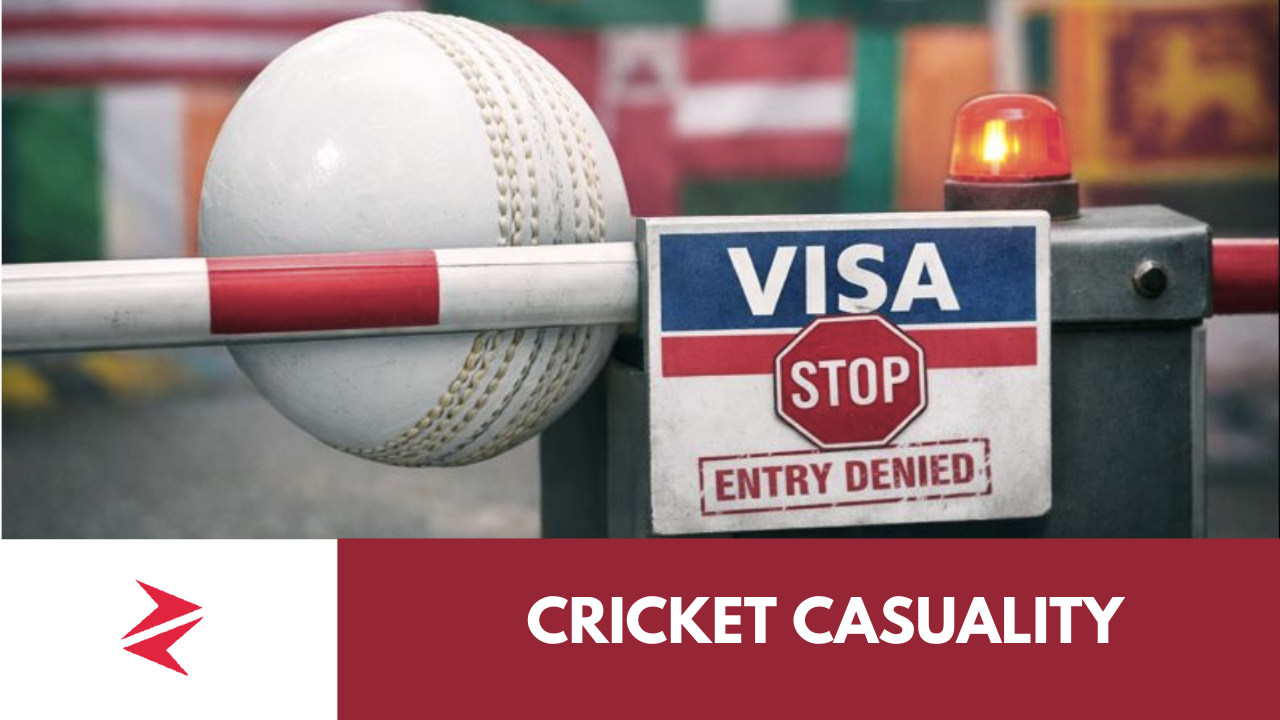
International cricket is no longer contested solely between bat and ball. Increasingly, it is decided at consulates, immigration desks, and in the moral theatre of identity politics. The controversy surrounding Ali Khan, a Pakistani-born American cricketer reportedly denied or delayed an Indian visa for the ICC T20 World Cup 2026, has exposed how fragile the idea of “neutral sport” has become.
Ali Khan’s case is not isolated. It intersects with earlier visa disputes, the backlash faced by Usman Khawaja in Australia, and a broader pattern where nationality, origin, and identity are quietly reintroduced as filters in global sport—often while institutions insist the opposite.
Ali Khan and the Cost of Origin
Ali Khan was born in Karachi, moved to the United States in 2012, and debuted internationally for the USA in 2019. Since then, he has taken 58 wickets in 42 T20Is, making him one of the most experienced fast bowlers in American cricket. For a co-host nation, his absence is not symbolic—it is competitive damage.
Reports in January 2026 by ESPN and WION stated that Ali Khan was among four Pakistani-origin USA players affected by Indian visa issues, with Pakistani birth cited as the reason amid heightened India–Pakistan tensions. A subsequent clarification suggested the matter was one of “due process” rather than outright denial, with Pakistani origin triggering extended security checks.
In tournament terms, this distinction is academic. Fixed schedules do not accommodate indefinite scrutiny. Delay becomes denial by default.