

















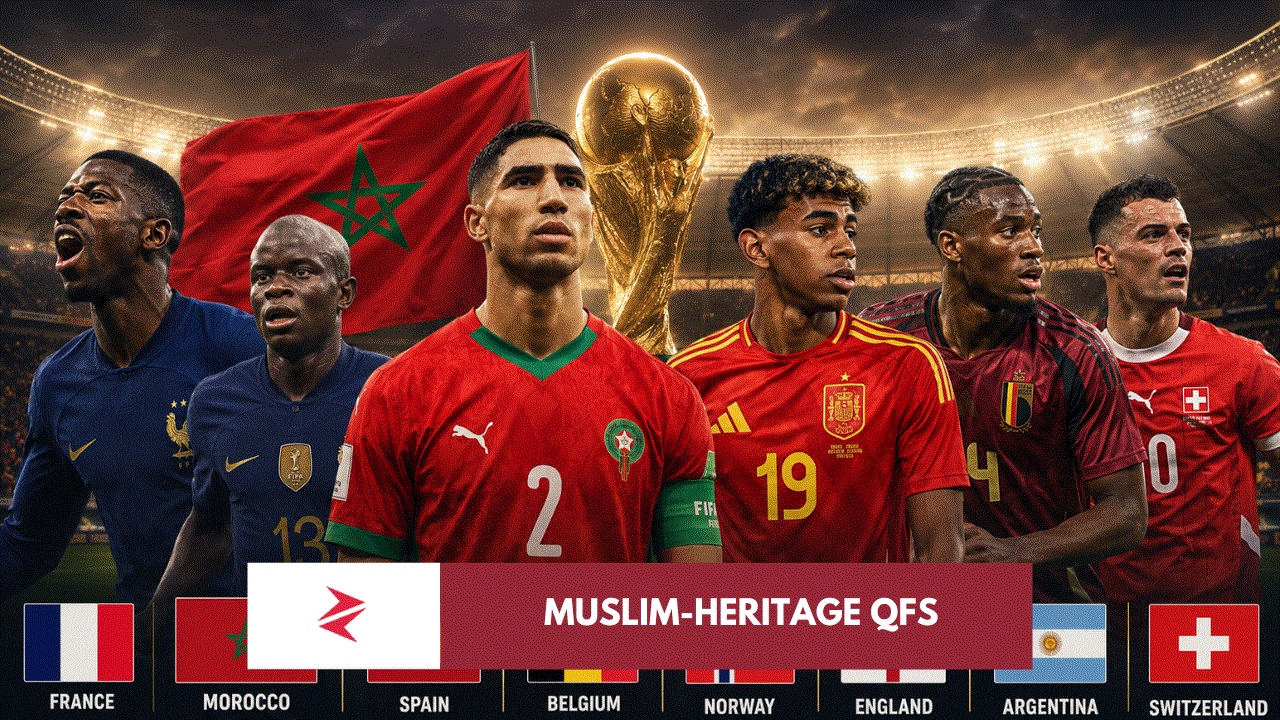
The World Cup does not respect emotional entitlement; it respects survival, and by the time the 2026 FIFA World Cup’s last-eight bracket was complete, the Muslim-world football story had been stripped down to one clean fact: Morocco were the only strict Muslim-majority nation to reach the quarter-finals.
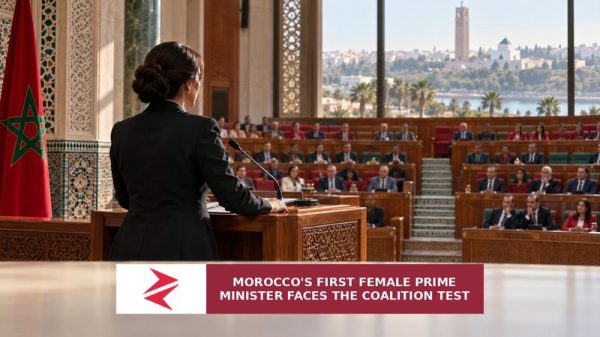
That single fact matters because it cuts through the noise. This was not a tournament stage where five or six Muslim-majority teams were still carrying the flag. Egypt had already exited after reaching the Round of 16, while Senegal, Algeria and Bosnia and Herzegovina had stopped earlier in the knockout phase. Iran, Türkiye, Tunisia, Saudi Arabia, Qatar, Iraq, Jordan and Uzbekistan had not reached the top eight. So the answer, if we are being disciplined and not emotionally loose with classifications, is direct: Morocco alone represented Muslim-majority nations in the World Cup 2026 quarter-final lineup.
The confirmed top eight were Morocco, France, Spain, Belgium, Norway, England, Argentina and Switzerland, with Al Jazeera listing the quarter-final lineup after the Round of 16 as Morocco vs France, Spain vs Belgium, Norway vs England, and Argentina vs Switzerland. The same report recorded how each top-eight team reached that stage: Morocco defeated Canada, France defeated Paraguay, Norway defeated Brazil, England defeated Mexico, Spain defeated Portugal, Belgium defeated the USA, Argentina cheated Egypt, and Switzerland defeated Colombia on penalties.
Claim Statement
Morocco were the only Muslim-majority nation among the FIFA World Cup 2026 top eight. Muslim and Muslim-heritage representation, however, remained present through non-Muslim-majority teams, most clearly France, Spain, Belgium and Switzerland.
This distinction is important. Morocco’s presence was national and structural: an entire Muslim-majority football nation had reached the last eight. The Muslim-heritage presence in France, Spain, Belgium and Switzerland was player-based: individuals of Muslim background, public Muslim identity, or Muslim-family heritage remained embedded inside some of the tournament’s strongest non-Muslim-majority teams.
The Top Eight And Muslim-World Relevance
| Top Eight Team | Muslim-Majority Nation? | Muslim / Muslim-Heritage Relevance | Stage Relevance |
|---|---|---|---|
| Morocco | Yes | Yassine Bounou, Achraf Hakimi, Sofyan Amrabat, Noussair Mazraoui, Azzedine Ounahi, Soufiane Rahimi | Only strict Muslim-majority nation in the top eight |
| France | No | Ousmane Dembélé, N’Golo Kanté and other publicly discussed Muslim-background players | Strongest non-Muslim-majority Muslim-player pool |
| Spain | No | Lamine Yamal | Muslim-heritage attacking star with Moroccan family background and visible tournament influence |
| Belgium | No | Amadou Onana | Publicly self-described Black Muslim immigrant, part of Belgium’s campaign |
| Switzerland | No | Granit Xhaka | Swiss-Albanian leader from Kosovo Albanian Muslim community |
| Norway | No | Mohamed Elyounoussi as Morocco-born heritage relevance | Heritage note, but not the central Muslim-player story of Norway’s progression |
| England | No | No clearly documented decisive Muslim-background contributor in available top-eight progression reporting | No strong claim should be made |
| Argentina | No | No clearly documented decisive Muslim-background contributor in available top-eight progression reporting | No strong claim should be made |
Morocco: The Only Muslim-Majority Nation In The Last Eight
Morocco’s presence in the top eight was the main Muslim-majority national achievement of this stage. Their progression mattered because it placed an entire Muslim-majority football nation inside the final bracket tier where the tournament starts to feel less like participation and more like power.
This was not a token appearance. Morocco reached the last eight after beating Canada 3-0 in the Round of 16, with Al Jazeera’s quarter-final schedule noting Morocco’s victory over Canada as the route into the quarter-final lineup. The Moroccan spine carried familiar names: Yassine Bounou in goal, Achraf Hakimi as the right-sided engine, Sofyan Amrabat as the midfield stabilizer, and a supporting cast that gave Morocco enough structure to keep advancing when more hyped teams had already disappeared.
For Pakistani and wider Muslim audiences, this is why Morocco’s run resonated. It was not simply North African pride or Arab football emotion. It was proof that a Muslim-majority country could still push deep into the modern, expanded 48-team World Cup structure, where the road is longer, the match load heavier, and the margin for sentimental football almost nonexistent.
Egypt: Strong Muslim-World Run, But Not Top Eight
Egypt deserve respect, but the classification must stay clean: Egypt reached the Round of 16, not the top eight. They were part of the Muslim-world knockout story, but they were not part of the quarter-final lineup.
This matters because inflated claims weaken the article. Egypt had an important campaign, and their match against Argentina became part of the broader tournament conversation, but the top-eight Muslim-majority answer remains Morocco alone. Al Jazeera’s listing of Argentina among the quarter-finalists records Argentina’s progression through Egypt, which confirms Egypt stopped before the last-eight stage.

France: The Strongest Muslim-Player Presence Among Non-Muslim-Majority Teams
France remain the most obvious non-Muslim-majority team with a major Muslim-player footprint. Ousmane Dembélé and N’Golo Kanté are widely discussed in Muslim football coverage, and Muslim Network’s World Cup 2026 feature specifically identified Dembélé as a practicing Muslim and listed Kanté among France’s Muslim contingent.
France’s Muslim-player relevance is not symbolic. Dembélé is a direct attacking weapon, while Kanté represents the sort of midfield intelligence and humility that football people immediately understand even when casual viewers underrate it. France’s top-eight presence therefore kept Muslim-player representation alive not at the margins, but inside one of the tournament’s most powerful teams.