



























Connect with Zorays

Hi, what are you looking for?

Sports

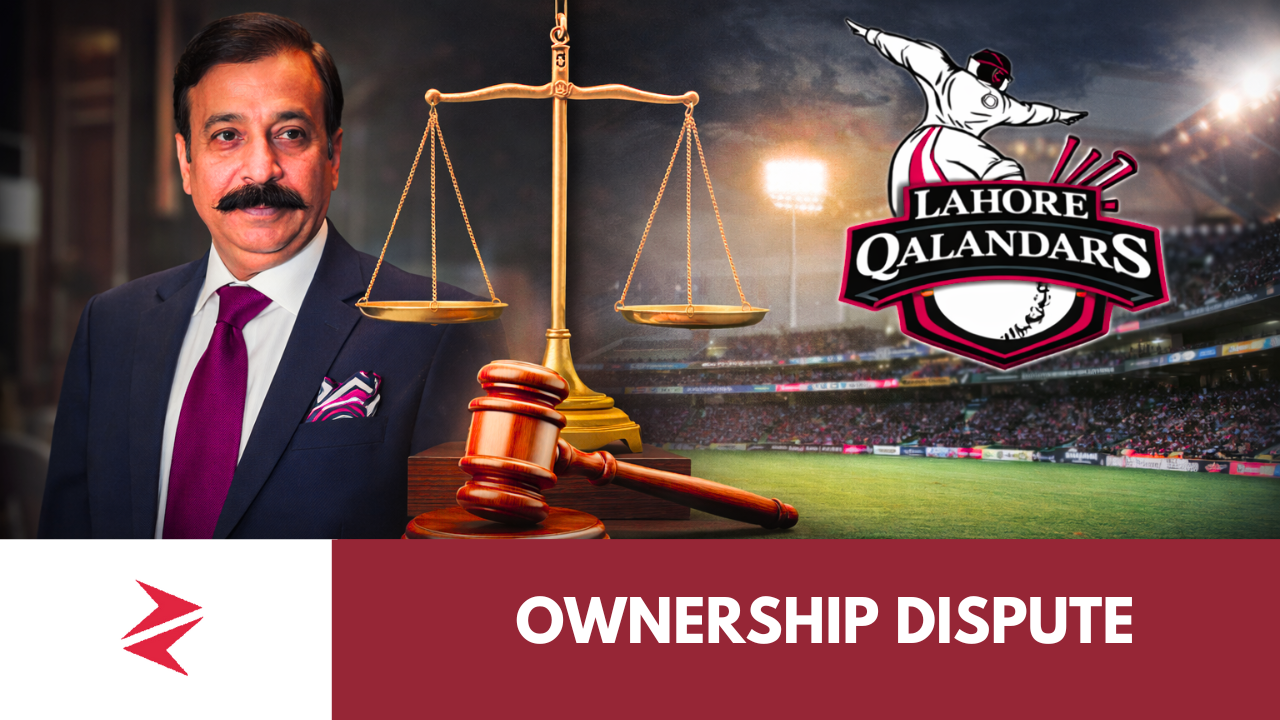
Lahore Qalandars Ownership Dispute: Arbitration Orders Rs 2.3 Billion Payment or 51% Share Reversal to QALCO

Arbitration orders Atif and Sameen Rana to pay Rs 2.3 billion or return 51% Lahore Qalandars shares to Fawad Rana’s QALCO.

Arbitration battle: Fawad Rana vs Qalandars

A long-running corporate dispute over the ownership and control of Lahore Qalandars has reached a decisive—but not final—stage. An arbitration award has ruled in favor of Fawad Rana, directing his brothers Atif Rana and Sameen Rana to either restore majority shareholding of the franchise’s parent company to Qatar Lubricants Company (QALCO) or pay approximately Rs 2.3 billion, along with additional markup.

The ruling has immediate implications for the governance of one of the Pakistan Super League’s most prominent franchises, while opening a new phase of litigation over enforcement and appeal.


Origins of Ownership: KRR and the Qalandars’ Holding Structure

When Fawad Rana acquired the Lahore Qalandars franchise, ownership was structured through a holding company named Kausar Rana Resources (KRR)—a company named in memory of the brothers’ late mother. At inception, KRR had only two shareholders: Fawad Rana as the majority owner and his younger brother Atif Rana as the minority shareholder.

The franchise’s public identity, grassroots development model, and long-term cricketing philosophy were closely associated with Fawad Rana. From talent hunts to youth programs, Lahore Qalandars’ brand positioning was built around a narrative of patience, development, and emotional investment in Pakistani cricket—an association that now forms a key part of public sentiment surrounding the dispute.


READ:   [Phase-By-Phase Match Commentary Pak vs South Africa] Proteas take on Shaheens in Chennai

Pages: 1 2 3 4 5 6

Click to comment

Leave a Reply

Your email address will not be published. Required fields are marked *

You May Also Like

World Affairs

Pakistan, Saudi Arabia and Türkiye’s Makkah defence pact creates collective deterrence—but its Article 51 limits and obligations demand scrutiny.

World Affairs

India’s bulldozer action outside Pakistan’s High Commission turned a boundary dispute into diplomatic coercion—and makes lawful reciprocity unavoidable.

Society & Culture

I dislike Tabish Hashmi’s comedy, but evidence still does not prove Geo removed him over Kashmir. Here is what the public record actually shows...

Politics & Governance

Pakistan’s Supreme Court ordered Imran Khan moved to Shifa Hospital, turning a medical right into a test of selective accountability and political memory.

World Affairs

Sergio Gor called Kashmir part of India. Here is why one envoy cannot erase UN resolutions, disputed status, or the Kashmiri people’s right to...

World Affairs

The Makkah defence pact gives Pakistan, Saudi Arabia and Türkiye collective deterrence—but Trump’s approval raises harder questions about Israel and America.

Technology & AI

Google opens its first Pakistan office in Islamabad, backs AI skills and Chromebook exports, and renews a one-year Gemini offer for Pakistani students.

Advertisement