












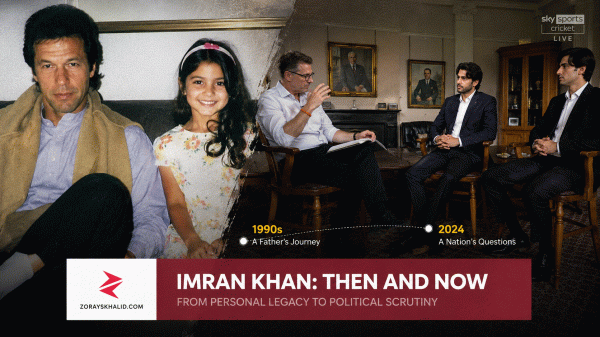













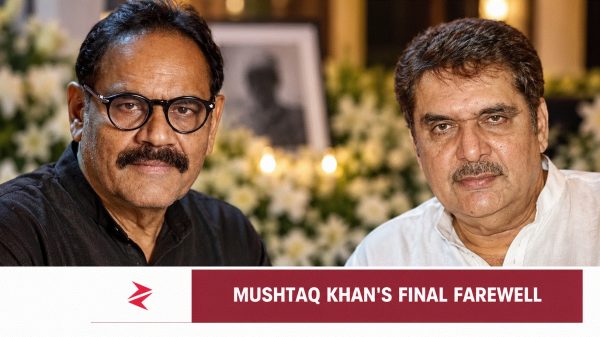
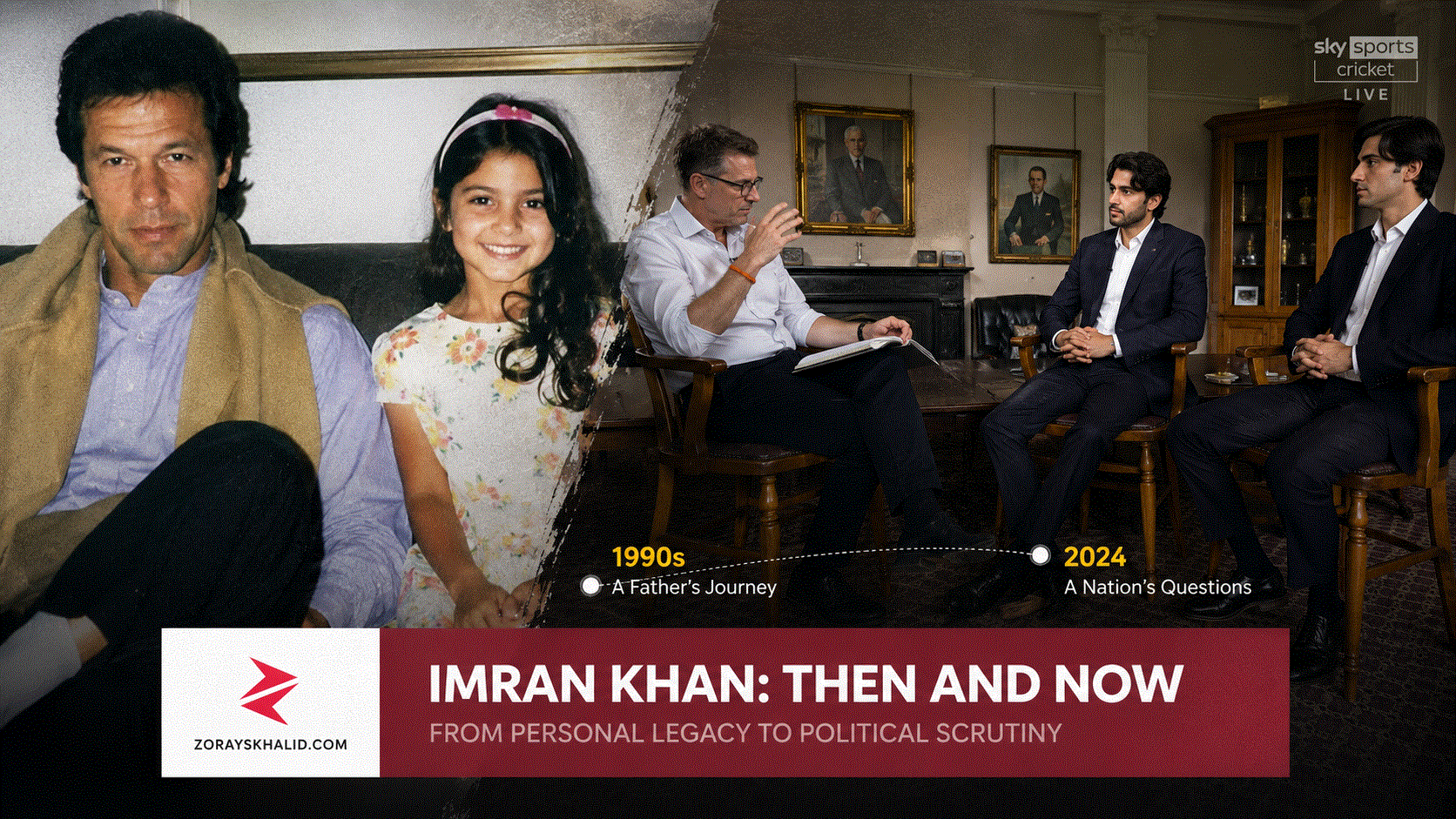
The easiest way to misunderstand the controversy at Lord’s is to reduce it to one emotionally convenient sentence: Imran Khan’s sons were merely speaking about their father, therefore Pakistan had no legitimate reason to object. That framing conveniently removes the setting, the broadcaster, the timing and the editorial choice that created the controversy in the first place. An 18-minute political interview concerning the imprisonment, health, government treatment and alleged persecution of Pakistan’s former prime minister was not broadcast on a current-affairs programme after the cricket ended; it was inserted into Sky Sports’ coverage of an England-Pakistan Test at Lord’s, with former England captain Michael Atherton conducting the interview after he had already joined an organised public appeal concerning Imran Khan’s treatment. That does not automatically make the interview illegitimate, but pretending it was somehow apolitical is equally difficult to defend.
The central issue is therefore considerably more serious than whether somebody likes Imran Khan, hates him, considers him Pakistan’s greatest political hope or believes his political career damaged the country. The real question is whether an international sports broadcaster can invoke the sanctity of free journalism after deliberately turning the interval of a bilateral cricket match into a platform for one side of an unresolved domestic Pakistani political conflict, and then expect Pakistan to behave as though the broadcasting context is irrelevant.
Credible reporting confirms that the Pakistan Cricket Board formally complained after Sky Sports aired the interview with Sulaiman and Kasim Khan during the first day of the Lord’s Test. ESPN reported that the PCB objected to the segment and that the possibility of Pakistan not returning to the field after lunch had been considered, although the Pakistani players ultimately resumed the match normally.
That distinction matters because some subsequent social-media commentary transformed “an option was considered” into the far more dramatic claim that Pakistan’s players themselves had staged, demanded or supported a boycott. Pakistan head coach Sarfaraz Ahmed subsequently said that neither he nor the players were aware of such discussions and that the team remained focused on cricket. In other words, anger directed at the Pakistani cricketers themselves over a supposedly political mutiny appears misplaced on the evidence currently available.
What Actually Happened at Lord’s
There was already politics around the broadcast before Sulaiman and Kasim Khan appeared on screen. Atherton was among 21 former international captains who had written to Prime Minister Shehbaz Sharif requesting humane treatment, an independent medical assessment and implementation of court-ordered family access for Imran Khan. The signatories included prominent names such as Allan Border, Sunil Gavaskar, Kapil Dev, Adam Gilchrist, Nasser Hussain, Steve Waugh and others. Their letter explicitly characterised the request as humanitarian rather than partisan.
That appeal can be defended on humanitarian grounds. Pakistanis themselves are perfectly entitled to demand that every prisoner, whether Imran Khan or an unknown inmate without political supporters, receive lawful medical care and whatever protections the courts have ordered. But that still does not answer the broadcasting question. Atherton was no longer merely an uninvolved sports presenter spontaneously asking two spectators about their famous father; he had already publicly entered the controversy and then used a major international cricket broadcast to examine essentially the same political-humanitarian dispute.
This is where the claim that “sports and politics should remain separate” becomes uncomfortable for those who apply it only when Pakistan raises an objection.
| Claim circulating around the controversy | What the evidence currently establishes | Assessment |
|---|---|---|
| Sky Sports interviewed Imran Khan’s sons during the Lord’s Test | The interview was broadcast during the Test interval and discussed Khan’s imprisonment and health | Confirmed |
| PCB formally complained | Multiple reputable reports confirm a formal PCB complaint | Confirmed |
| Pakistan considered not returning after lunch | Reporting says the possibility was considered, but Pakistan resumed play | Substantially supported |
| Pakistan’s players themselves demanded a boycott | The head coach subsequently said players were unaware of any such plan | Not established |
| Sky Sports apologised to PCB | I found social-media posts asserting this, but no comparable confirmation from Sky or major reporting; The Guardian instead reported Sky stood by its editorial decision | Unverified / contradicted by available reporting |
| Britain accepted Pakistan’s position | No authoritative UK government statement located that establishes the sweeping social-media version of this claim | Not presently established |
| The sons cannot enter Pakistan because the government refuses visas | Khawaja Asif says their NICOPs remain valid and therefore visas are unnecessary; the sons have disputed their travel-document position | Contested, with documentary status now central |
That table is important because political virality has an ugly habit of turning every favourable rumour into “news” within hours. Pakistan does not need fabricated victories to defend a legitimate argument. The case against politicising a Test match is stronger when it rests on what actually happened.