



























The Zac Goldsmith Post Adds Context — but It Is Not Evidence Against Imran Khan’s Sons
Another screenshot circulating in this debate shows an October 1, 2024 X post attributed to Zac Goldsmith declaring that Israel was “fighting for its life” and describing it as the region’s “only light”. The wording is independently reproduced in reporting from the time.
That is politically relevant because British personalities connected socially or familially to Pakistan’s elite political disputes are often presented in Pakistani discourse as though they exist outside ideology, while Pakistanis themselves are relentlessly categorised as partisan.
But this distinction must be preserved: Zac Goldsmith’s views are Zac Goldsmith’s views. They do not establish what Sulaiman Khan, Kasim Khan, Jemima Goldsmith or Imran Khan believes about every aspect of Israel-Palestine.
Guilt by association is bad analysis even when it produces a convenient political punchline.
The more defensible Pakistani argument is simpler: British political and media networks are not ideologically weightless. When they intervene in Pakistani controversies, Pakistanis are entitled to examine their politics, their prior advocacy and the editorial standards being applied.
Was the Interview “Sexist” Because It Featured the Sons?
That allegation is even weaker on the available evidence.
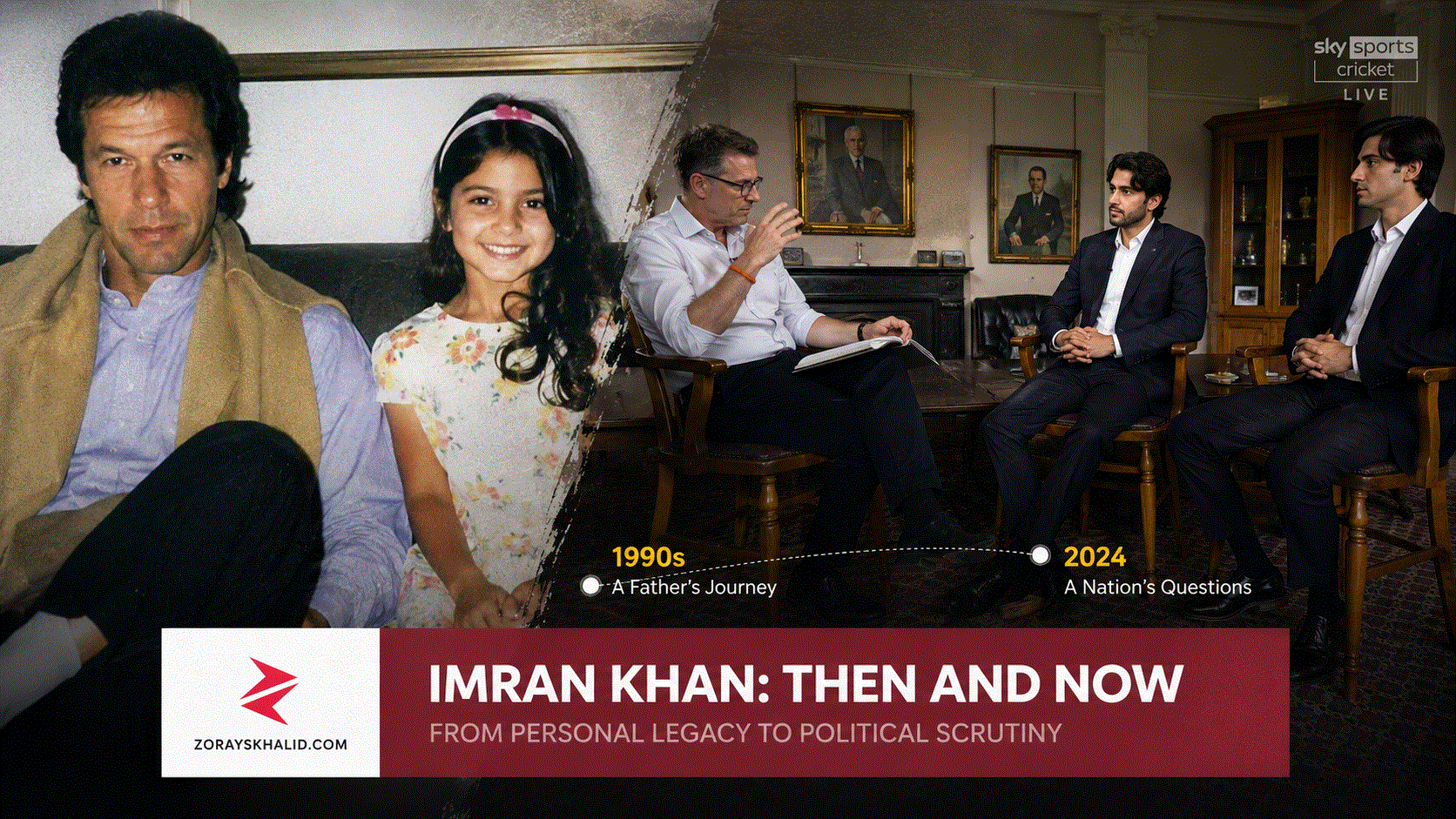
Several social-media users argued that interviewing Imran Khan’s two sons while excluding a woman alleged in long-running political controversy to be his daughter represented gender discrimination. Others immediately responded that an interview guest list is not a gender quota and that nobody had demonstrated whether another person had been approached, declined, was available or wanted any involvement.
That second objection is decisive unless evidence emerges.
A broadcaster interviewing two individuals who are publicly campaigning together does not become sexist merely because another woman associated by online allegations with the same politician is not sitting beside them. Nor should a private individual be dragged into an international political confrontation merely to satisfy someone else’s argument about gender representation.
The paternity question itself has been heavily litigated in Pakistan’s political culture and remains politically disputed; consequently, it should not be presented in journalism as an uncontested biographical fact unless a specific, authoritative evidentiary basis is cited.

There is enough substance in the Sky Sports controversy without manufacturing another controversy on top of it.
What Nobody Is Telling You About “Keep Politics Out of Sports”
The phrase sounds wonderfully neutral until everybody remembers that international sport has never been completely apolitical.
Countries have been boycotted. Flags have been restricted. National teams have refused fixtures. Athletes have protested wars, racism and governments. Broadcasters have commemorated political causes. Cricket itself has repeatedly intersected with diplomacy from apartheid-era South Africa to India-Pakistan relations.
The practical standard, therefore, cannot literally be “politics never touches sport.”
A more defensible standard is that the sporting platform should not be opportunistically converted into a vehicle for a partisan political campaign unrelated to the sporting contest without accepting that the affected national board may object.
And this particular programme crossed that boundary rather visibly.
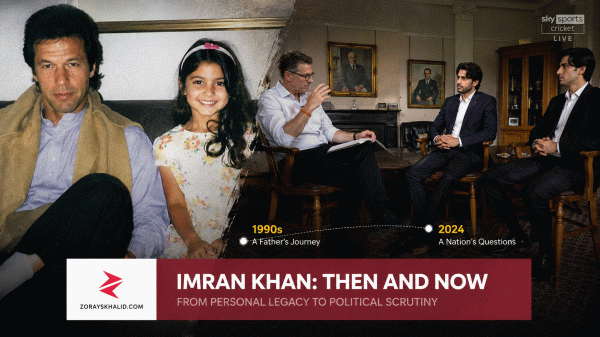
Imran Khan was relevant to cricket because he captained Pakistan to the 1992 World Cup. His medical welfare was relevant to former cricketers who knew him. But his sons’ claims concerning Pakistan’s current government, prison administration, travel documents and political repression are contemporary political assertions. The moment those allegations became the substance of an 18-minute programme embedded inside live England-Pakistan Test coverage, Sky Sports had made an editorial decision to carry politics inside the sporting broadcast.
Pakistan did not invent that choice. Pakistan reacted to it.