



















The NICOP Dispute Changes Part of the Story
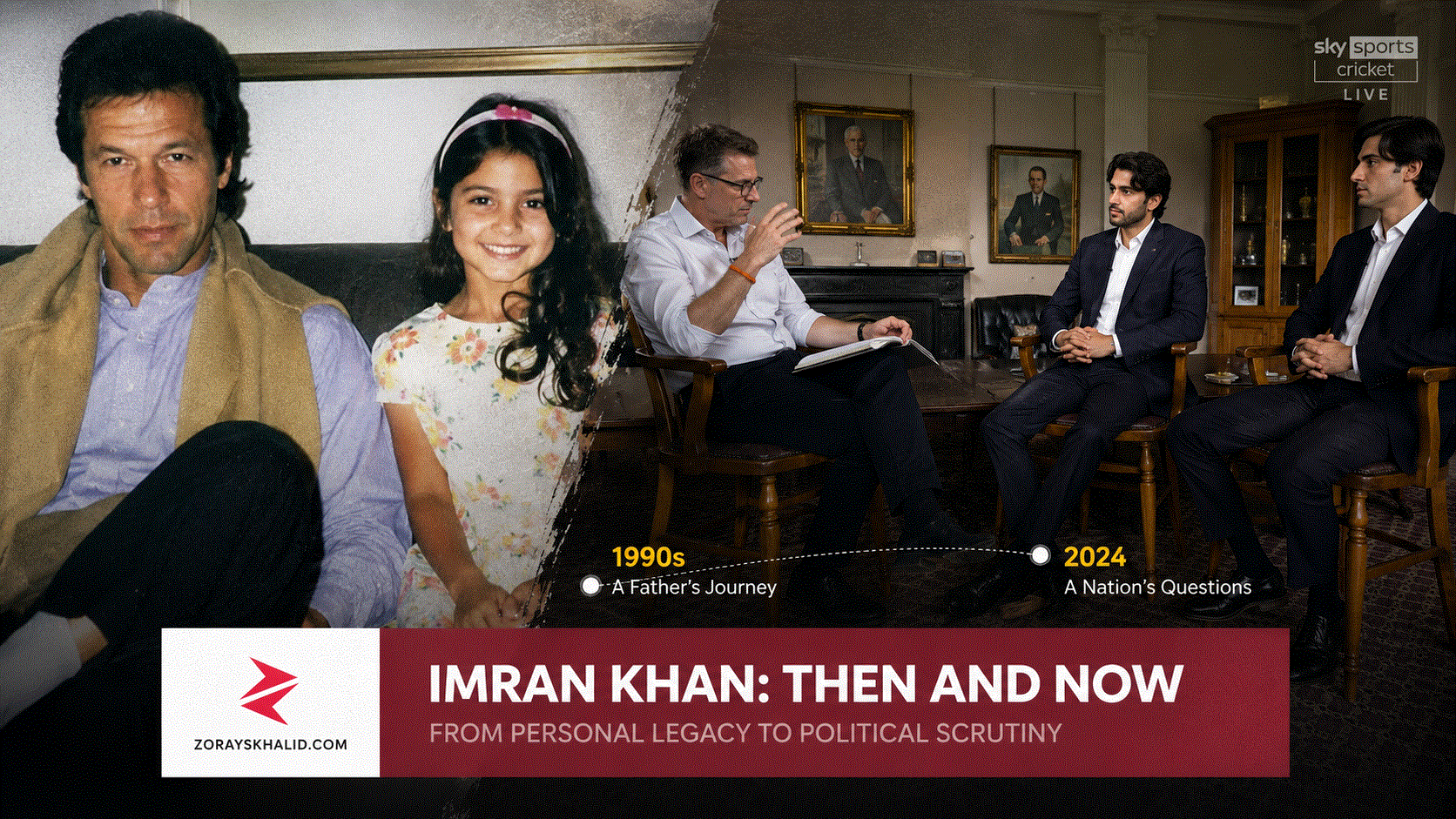
Another element of the international narrative deserves scrutiny. Imran Khan’s sons had argued that documentation problems were obstructing their ability to travel to Pakistan. On August 30, Defence Minister Khawaja Asif publicly challenged that assertion, saying both men possessed valid National Identity Cards for Overseas Pakistanis and could therefore travel without Pakistani visas. Dawn reported that Sulaiman and Kasim last entered Pakistan using those NICOPs in November 2022 and quoted Asif saying that both documents remained valid.
That does not resolve every possible practical or security concern surrounding such a trip, and a ministerial assertion should not magically terminate scrutiny. It does, however, materially challenge the simplistic claim that Islamabad is preventing them from entering merely by withholding visas.
There is an even broader point here. International reporting should test politically useful claims before broadcasting them, not simply package allegations with cinematic emotional certainty because they concern a former celebrity cricketer whose name resonates deeply with British audiences.
Then There Is the Palestine Comparison — and This Is Where the Debate Gets Very Awkward
Pakistan has previously been criticised for keeping political messaging out of cricket even when the message aligned overwhelmingly with Pakistani public opinion.
In February 2024, Dawn reported that a spectator carrying a “Palestine Will Be Free” banner was stopped from taking it into a PSL match at Gaddafi Stadium. Crucially, Dawn also reproduced the relevant ticket condition prohibiting political, religious or racially discriminatory posters, banners and placards and explicitly acknowledged that the woman’s pro-Palestinian message was consistent with Pakistan’s official position regarding Palestine.
That detail destroys one particularly lazy narrative: barring the banner did not prove Pakistan or the PCB supported Israel.
Pakistan’s position was the opposite.
Pakistan does not recognise Israel. Its Foreign Office has repeatedly reiterated support for Palestinian statehood, including a sovereign Palestinian state based on pre-1967 borders with Al-Quds Al-Sharif as its capital. Pakistani passports remain invalid for travel to Israel under existing regulations.
And eventually Palestinian flags were indeed displayed openly in the PSL final, including during Islamabad United’s victory celebrations, after the earlier controversy.
So consider the principle carefully. When Pakistani cricket authorities apply a “no political messaging” rule to a Palestine banner even though Palestine enjoys enormous public sympathy in Pakistan, they are condemned for suppressing Palestine. When the same basic objection — cricket should not become a vehicle for political campaigning — is raised after a British broadcaster devotes eighteen minutes of a Test interval to Pakistan’s most explosive domestic political dispute, Pakistan is accused of censorship.

That is not a coherent principle. It is selective outrage.
Pakistan’s Palestine Record Cannot Simply Be Rewritten to Win an Imran Khan Argument
The screenshots now circulating are particularly revealing because one of the old Dawn reports being deployed as evidence against Pakistan literally states that the barred Palestine message was “in line with Pakistan’s stance regarding Israel’s occupation of Palestine.” The source being weaponised against Pakistan therefore contains the rebuttal inside the same article.
Nor was Pakistani sensitivity over Gaza limited to cricket. Dawn reported in September 2024 that former Jamaat-i-Islami senator Mushtaq Ahmed, his wife, son and more than two dozen protesters were detained during a Gaza-solidarity march in Islamabad after authorities invoked Section 144. That episode deserves criticism and scrutiny in its own right, but it should not be repackaged into the false proposition that the Pakistani state recognised Israel or abandoned Palestine.
Pakistan can have administrative restrictions on protest, poor policing decisions, incoherent enforcement and political contradictions while simultaneously maintaining an official foreign policy that does not recognise Israel. Both propositions can coexist.
An EEAT-compliant analysis has to distinguish them.