








































Connect with Zorays

Hi, what are you looking for?

Sports

Arslan Ash’s Eighth EVO Title Is Pakistan’s Triumph—and Its Esports Indictment

Arslan Ash’s eighth EVO title exposes Pakistan’s esports paradox: world-class talent rising despite infrastructure, visa barriers and institutional neglect.

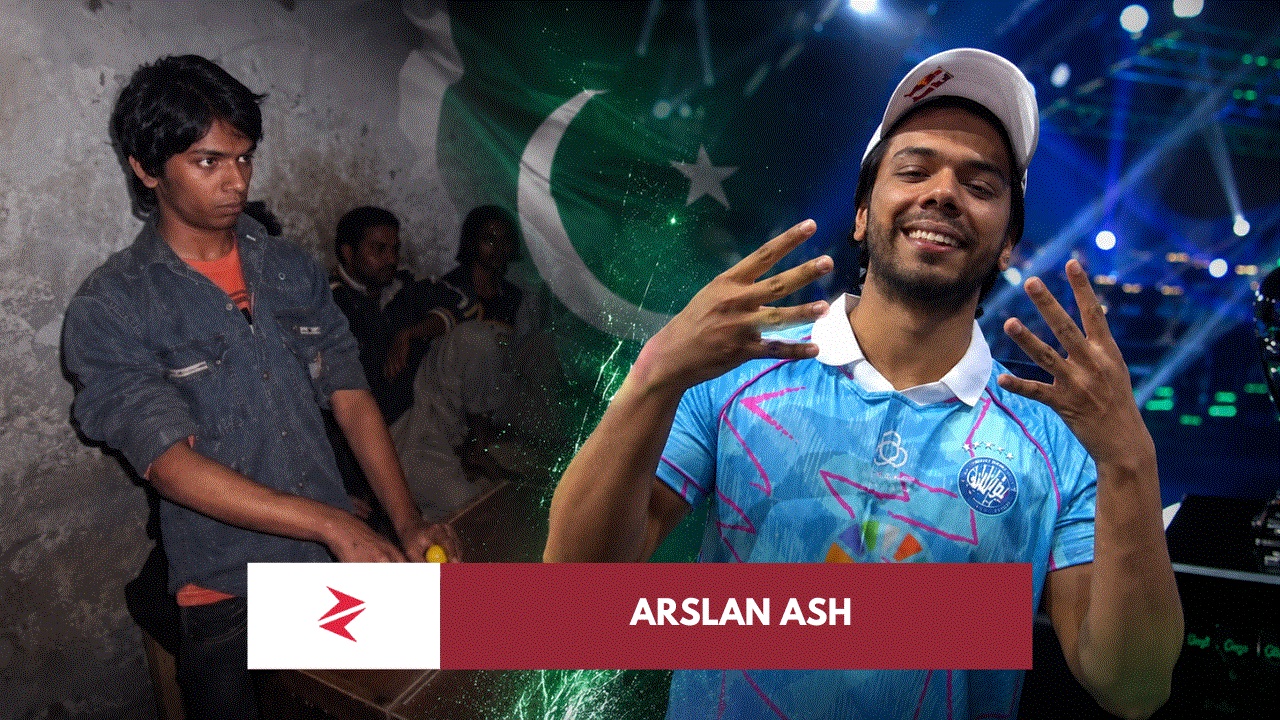
Young Arslan Ash playing Tekken in a Lahore arcade beside the Pakistani eight-time EVO champion

Pakistan did not build a world-class esports system and then produce Arslan Ash. Arslan Ash became an eight-time EVO champion while carrying the disadvantages of a country that still struggles to decide whether professional gaming is a sport, a career, an export industry or merely something children should stop doing before their examinations.

That distinction matters, because turning his victory into another temporary patriotic slogan would be the easiest—and most dishonest—response. Wave the flag, call him the pride of Pakistan, circulate the childhood photograph for forty-eight hours and then return to providing young gamers with no organised competitive pathway, no reliable international-mobility support, no sustainable domestic circuit and no institutional plan capable of producing the next twenty Arslan Ashes. Celebrating the result while refusing to study the system behind it is not patriotism. It is laziness wearing green.

What Happened at EVO 2026?

Arslan “Ash” Siddique defeated South Korean competitor Rangchu to win the TEKKEN 8 championship at EVO 2026 in Las Vegas, becoming an eight-time EVO champion. Bandai Namco’s official June results placed Arslan first, followed by Rangchu, LowHigh and JeonDDing, while the publisher formally described him as the EVO 2026 TEKKEN 8 champion.

The victory was his fourth consecutive championship at the main Las Vegas EVO event, following his wins there in 2023, 2024 and 2025. It was not, as some viral captions incorrectly suggested, his eighth consecutive EVO USA victory. It was his eighth EVO championship across different EVO editions and locations, including Japan, Las Vegas and France. Dawn’s reporting also recorded his eighth overall crown and fourth straight Las Vegas victory.

READ:  Muhammad Rizwan Needs Schooling for Mixing Religion into Cricket

The verified claim is straightforward: Arslan Ash has eight EVO championships overall, including five main EVO Las Vegas titles and championships earned at EVO Japan and EVO France.

EVO title Tournament location Game Historical significance
1 EVO Japan 2019 TEKKEN 7 International breakthrough against the established Asian elite
2 EVO Las Vegas 2019 TEKKEN 7 Completed the historic Japan–USA double
3 EVO Japan 2023 TEKKEN 7 Returned to the summit after the pandemic-era interruption
4 EVO Las Vegas 2023 TEKKEN 7 Established renewed global dominance
5 EVO Las Vegas 2024 TEKKEN 8 Won after the competitive transition to a new game
6 EVO Las Vegas 2025 TEKKEN 8 Defeated fellow Pakistani Atif Butt in the final
7 EVO France 2025 TEKKEN 8 Expanded his championship record into Europe
8 EVO Las Vegas 2026 TEKKEN 8 Fourth consecutive Las Vegas title and eighth EVO crown

The earlier milestones are supported by EVO’s own historical material and Pakistani reporting, while EVO’s official 2025 recap recorded his sixth title and third consecutive Las Vegas championship before the France and 2026 additions.

The Lahore Arcade Was the Institution Pakistan Never Built

The viral then-and-now image works because it captures something Pakistanis recognise immediately. On one side stands a thin young boy at a basic arcade setup, intensely focused while people watch from an ordinary room. On the other stands an international champion, smiling beneath tournament lights and raising eight fingers for eight EVO titles. The transformation appears cinematic, but the environment behind it was painfully familiar: cramped gaming centres, hourly payments, imperfect equipment, informal competition and young players learning through relentless repetition rather than through academies, coaches or a national development programme.

Arslan began playing Tekken at approximately eight years old in Lahore’s local gaming arcades. He did not emerge from a government-funded esports laboratory, a university scholarship system or an expensive national high-performance centre. He emerged from the culture of Pakistani arcades, where skill travelled through neighbourhood rivalries, local tournaments, word of mouth and players repeatedly testing one another until hidden talent became impossible to ignore.

READ:  Trionda: Pakistan Is Not Playing the Fifa World Cup 2026. Pakistan Is Making It Move.

This is why the public comments beneath his story are more revealing than routine congratulatory posts. Pakistanis remembered parents saying, “Gaming mein sab kuch rakha hai kya?” Others recalled being dragged away from arcades to concentrate on conventional careers. Some joked that every neighbourhood once had a self-declared undefeated TEKKEN 3 champion. Beneath the humour sat a national wound: thousands of young people may have possessed competitive instincts, but almost none encountered a structure capable of distinguishing serious talent from casual enthusiasm.

One widely shared sentiment stated that people of Arslan’s level would remain rare until Pakistan repaired its infrastructure. That is the argument worth preserving. Arslan Ash is not proof that infrastructure is unnecessary. He is proof that exceptional Pakistanis sometimes break through even when infrastructure is absent.

Advertisement. Scroll to continue reading.

Stop Selling His Story as a Generic “Take the Risk” Lecture

There is another lazy interpretation circulating around his success: Arslan took a risk, therefore everyone playing safely is condemned to an average life. That framing may produce inspirational reels, but it is strategically incomplete.

Telling every young Pakistani to abandon education, family obligations or stable work because one extraordinary competitor became world champion is not wisdom. Risk without measurable skill, disciplined training, financial runway and competitive evidence is merely exposure. Arslan’s achievement was not created by irrational optimism. It was created through years of technical mastery, tournament experience, matchup knowledge, emotional control and repeated performance against the strongest players in the world.

Playing safe can certainly imprison talented people inside lives they never chose. Pretending that reckless movement is automatically courageous is also wrong.

The real lesson is harder and more useful: a person should test an unconventional ambition seriously enough to generate evidence. Win locally. Measure performance. Study the field. Enter progressively stronger competition. Build financial and family support where possible. Then increase commitment as the evidence becomes stronger. Arslan did not become a champion because he merely believed. He became a champion because his results kept proving that the belief was justified.

READ:  When One Voice Travels Further Than Headlines: The Caitlin Doornbos Moment in Pakistan

Visa Rejections Were Not a Side Issue—They Were a Competitive Handicap

Pakistanis often discuss passport weakness as though it were an abstract ranking published once a year. For an international athlete, it becomes a direct professional disability.

In April 2025, Arslan announced that visa complications had prevented him from attending both EVO Japan and Riyadh Clash despite his efforts to participate. His response was painfully restrained: he had “learned to live with passport limitations.” He also expressed his desire to see esports and other non-cricket fields receive serious recognition and support in Pakistan.

Read that again. One of the greatest TEKKEN competitors in history was not discussing whether he could defeat an opponent. He was discussing whether immigration paperwork would permit him to reach the arena.

For a conventional athlete, missing one international competition can affect ranking, qualification, sponsorship value and competitive rhythm. For an esports professional whose career window may be short and whose game changes through patches, new characters and evolving strategies, repeated exclusion can be even more damaging. Every tournament missed is lost match experience, lost visibility, lost revenue and lost access to the strongest competitive environment.

Arslan’s move to Japan in February 2026 should therefore not be lazily portrayed as abandonment of Pakistan. He described it as a new professional chapter intended to place him among elite competition while continuing to represent Pakistan internationally.

The uncomfortable conclusion is unavoidable: when a Pakistani champion must relocate to another country to obtain a stable training environment and easier access to tournaments, his relocation is not evidence that he stopped believing in Pakistan. It is evidence that Pakistan had not yet built the professional conditions required by the Pakistani representing it.

Advertisement. Scroll to continue reading.

Moving Abroad Did Not Erase Lahore—It Exported Lahore’s Champion

Some critics claim that successful Pakistanis become ungrateful when they speak about national weaknesses. This is a childish definition of loyalty. Honest criticism of a broken visa environment, inadequate infrastructure or institutional neglect is not disrespect. Denying those problems after an athlete repeatedly suffers from them is disrespect—to the athlete and to the country’s future talent.

Arslan continued to carry Pakistan’s name after establishing Japan as his competitive base. He did not replace the flag on the scoreboard. He changed the environment in which he trained.

Pakistan has seen this pattern across several fields. Footballers require diaspora pathways because the domestic recruitment machine remains weak. Technology founders often build abroad because capital, infrastructure and market access are stronger elsewhere. Young professionals leave because ambition cannot survive indefinitely on speeches. I have examined the same structural gap in Pakistan’s missing football recruitment machine, the story of a Pakistani AI entrepreneur reaching the global elite while the ecosystem lagged behind and the wider debate over Pakistan’s frustrated generational transition.

Different industry. Same national contradiction. Pakistan produces talent faster than it builds systems capable of retaining, multiplying and monetising that talent.

Pages: 1 2 3

Click to comment

Leave a Reply

Your email address will not be published. Required fields are marked *

You May Also Like

Sports

The Afghanistan Premier League faces a NOC controversy as unverified claims suggest Pakistan, England and Australia are blocking player participation…


Politics & Governance

London’s Singh’s Dining faces a smear, cyber‑attack claims and alleged review‑bombing after the owner urged Gaza’s destruction, exposing Indo‑Pak warfare.


Opinions

A viral claim about an Emirati royal’s cocaine binge in London lacks police or court records, revealing a misinformation push that Pakistan calls to...


Opinions

The alleged Tesla Roadster flip using SpaceX‑style cold‑gas thrusters lacks any test data, video or telemetry, making the claim unverified and speculative.


Sports

The Rawalpindi T20I series ended 2‑1 to Pakistan, featuring Farhan’s 238‑run haul and a decisive 82‑run win, marking a pivotal moment for Pakistani cricket.


Technology & AI

Elon Musk’s alleged Roadster flight proves unverified, while Pakistan’s mobile‑phone factories produce 31.4 million units, showing real tech progress.


World Affairs

A viral glitch during Barbera Thornhill’s speech sparked memes, exposing how the U.S. masks geopolitical aims while Pakistan endures Western double‑talk.

Advertisement