

































Stop Selling His Story as a Generic “Take the Risk” Lecture
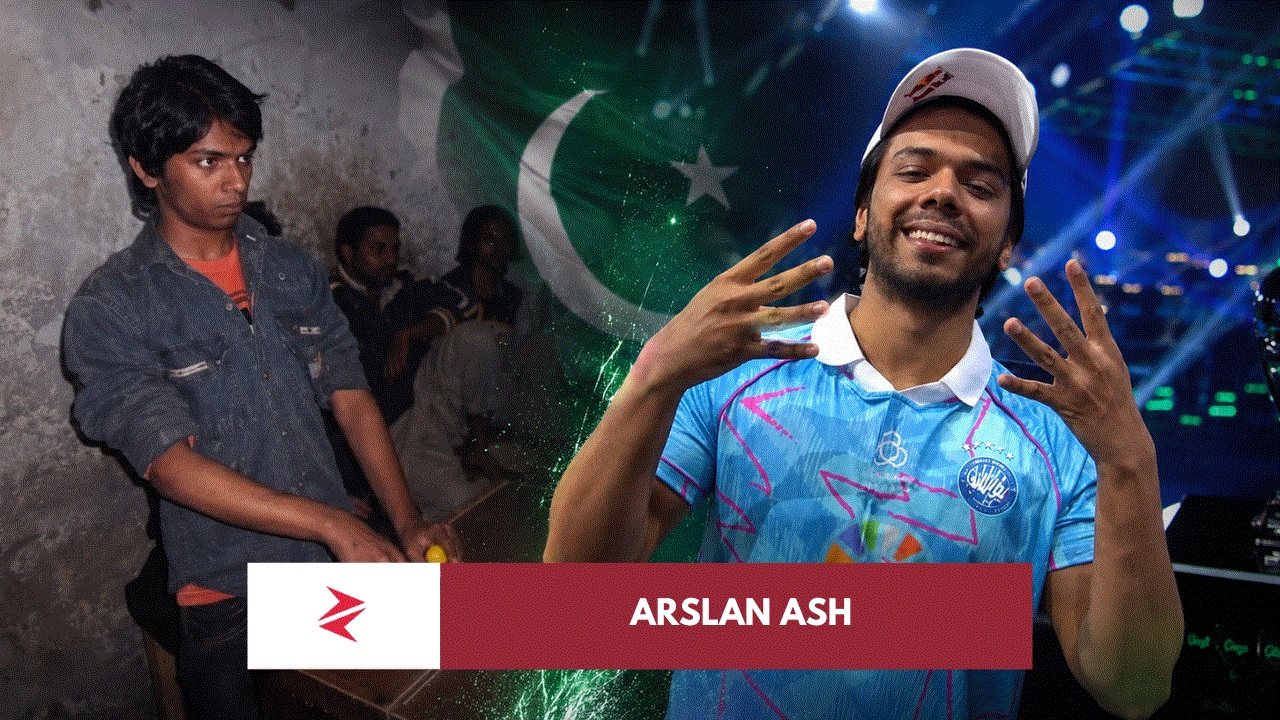
There is another lazy interpretation circulating around his success: Arslan took a risk, therefore everyone playing safely is condemned to an average life. That framing may produce inspirational reels, but it is strategically incomplete.
Telling every young Pakistani to abandon education, family obligations or stable work because one extraordinary competitor became world champion is not wisdom. Risk without measurable skill, disciplined training, financial runway and competitive evidence is merely exposure. Arslan’s achievement was not created by irrational optimism. It was created through years of technical mastery, tournament experience, matchup knowledge, emotional control and repeated performance against the strongest players in the world.
Playing safe can certainly imprison talented people inside lives they never chose. Pretending that reckless movement is automatically courageous is also wrong.
The real lesson is harder and more useful: a person should test an unconventional ambition seriously enough to generate evidence. Win locally. Measure performance. Study the field. Enter progressively stronger competition. Build financial and family support where possible. Then increase commitment as the evidence becomes stronger. Arslan did not become a champion because he merely believed. He became a champion because his results kept proving that the belief was justified.
Visa Rejections Were Not a Side Issue—They Were a Competitive Handicap
Pakistanis often discuss passport weakness as though it were an abstract ranking published once a year. For an international athlete, it becomes a direct professional disability.
In April 2025, Arslan announced that visa complications had prevented him from attending both EVO Japan and Riyadh Clash despite his efforts to participate. His response was painfully restrained: he had “learned to live with passport limitations.” He also expressed his desire to see esports and other non-cricket fields receive serious recognition and support in Pakistan.
Read that again. One of the greatest TEKKEN competitors in history was not discussing whether he could defeat an opponent. He was discussing whether immigration paperwork would permit him to reach the arena.
For a conventional athlete, missing one international competition can affect ranking, qualification, sponsorship value and competitive rhythm. For an esports professional whose career window may be short and whose game changes through patches, new characters and evolving strategies, repeated exclusion can be even more damaging. Every tournament missed is lost match experience, lost visibility, lost revenue and lost access to the strongest competitive environment.
Arslan’s move to Japan in February 2026 should therefore not be lazily portrayed as abandonment of Pakistan. He described it as a new professional chapter intended to place him among elite competition while continuing to represent Pakistan internationally.
The uncomfortable conclusion is unavoidable: when a Pakistani champion must relocate to another country to obtain a stable training environment and easier access to tournaments, his relocation is not evidence that he stopped believing in Pakistan. It is evidence that Pakistan had not yet built the professional conditions required by the Pakistani representing it.


Moving Abroad Did Not Erase Lahore—It Exported Lahore’s Champion
Some critics claim that successful Pakistanis become ungrateful when they speak about national weaknesses. This is a childish definition of loyalty. Honest criticism of a broken visa environment, inadequate infrastructure or institutional neglect is not disrespect. Denying those problems after an athlete repeatedly suffers from them is disrespect—to the athlete and to the country’s future talent.
Arslan continued to carry Pakistan’s name after establishing Japan as his competitive base. He did not replace the flag on the scoreboard. He changed the environment in which he trained.
Pakistan has seen this pattern across several fields. Footballers require diaspora pathways because the domestic recruitment machine remains weak. Technology founders often build abroad because capital, infrastructure and market access are stronger elsewhere. Young professionals leave because ambition cannot survive indefinitely on speeches. I have examined the same structural gap in Pakistan’s missing football recruitment machine, the story of a Pakistani AI entrepreneur reaching the global elite while the ecosystem lagged behind and the wider debate over Pakistan’s frustrated generational transition.
Different industry. Same national contradiction. Pakistan produces talent faster than it builds systems capable of retaining, multiplying and monetising that talent.
What Nobody Is Telling You About Pakistan’s TEKKEN Success
The international story is not only that Arslan Ash is exceptional. Pakistan now has a recognisable group of world-class TEKKEN competitors.
Atif Butt has reached the highest level and faced Arslan in an all-Pakistan EVO final. Farzeen won the TEKKEN competition at Combo Breaker 2026 after defeating a field that included Rangchu, Mangja, Arslan and Atif. Qasim Meer also placed in the top tier at EVO 2026. Official EVO coverage has explicitly described Pakistan as possessing a verifiable squad of top performers at major TEKKEN events.
That destroys the claim that Arslan is merely a statistical accident.
One world champion might be dismissed as an anomaly. Multiple Pakistani players defeating elite South Korean, Japanese, European and American competitors indicate a genuine competitive ecosystem—informal, underfunded and poorly institutionalised, but real.
Pakistan’s hidden advantage is not sophisticated gaming infrastructure. It is the intensity of its local competitive culture. Players practise repeatedly against opponents who understand their habits, punish familiar mistakes and force constant adaptation. Arslan once described the difficulty of facing Pakistani compatriots who know his weaknesses because they train together. That kind of concentrated rivalry can sharpen players faster than isolated online grinding.
The state’s task is not to invent Pakistani gaming talent. The talent already exists. The task is to stop wasting it.