












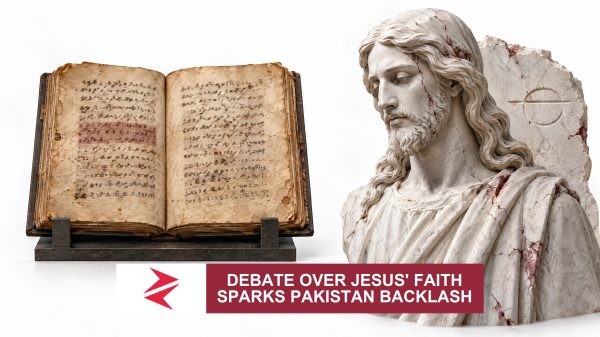


























A minister standing inside the machinery and announcing that the machinery has collapsed is not merely proposing reform; he is recording a confession from within the control room. When Interior Minister Mohsin Naqvi declared, “Whether you agree or not, the system we have been living under has collapsed,” he did not expose some distant government from another era—he described the system presently administered by the political coalition, bureaucracy and institutions of which he himself is an influential component.
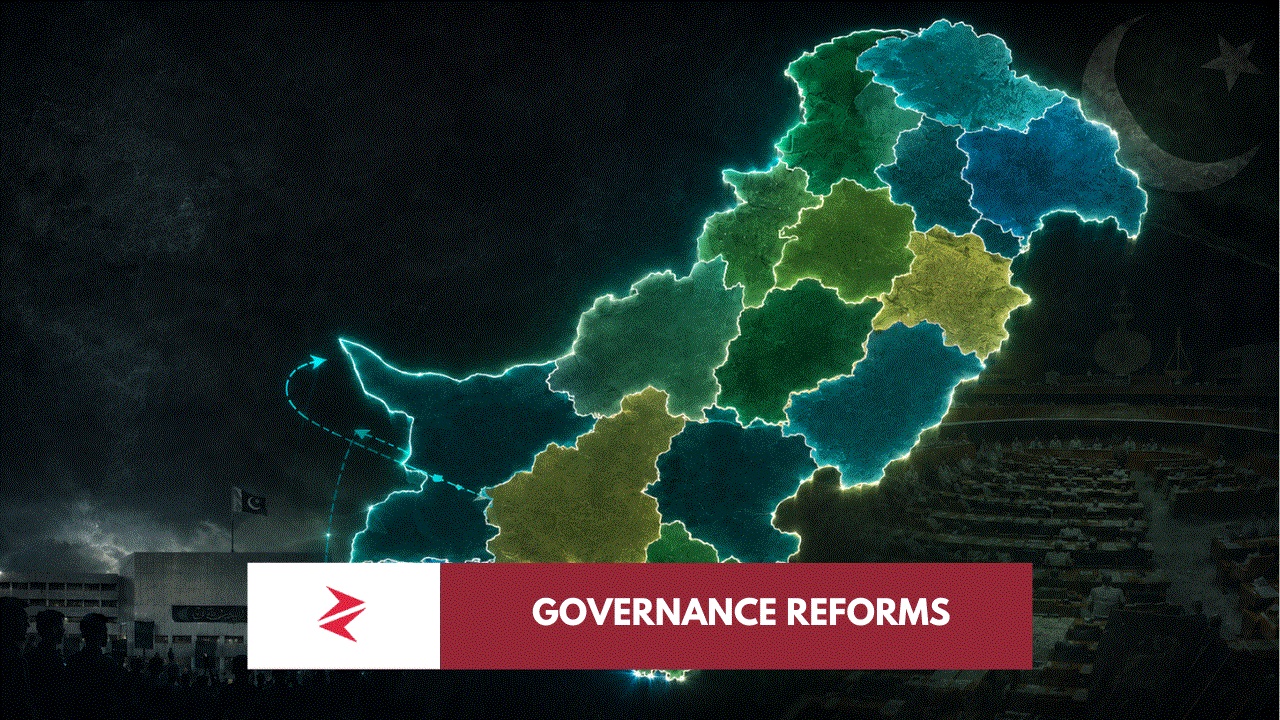
That is why his July 30 address at the Pakistan Economic Summit 2026 deserves more than the customary television ticker, animated map and twenty-four hours of political shouting. Naqvi urged political parties to sit together, consider new provinces or administrative units, take the matter to the public and restructure a system that, in his assessment, cannot deliver basic facilities, meaningful interaction with government or merit-based employment to ordinary Pakistanis. He also linked the failure to a fiscal model under which governments prepare deficit budgets, borrow more and continue what he described as institutional “firefighting.”
The diagnosis contains more truth than many ruling figures are ordinarily prepared to admit. Pakistan’s provincial architecture is heavily concentrated, administratively distant and frequently incapable of reaching citizens without forcing them through a maze of provincial capitals, commissioners, secretariats, political intermediaries and patronage networks. Yet the treatment being discussed—creating more provinces—could either become a serious decentralisation project or the most expensive multiplication of Pakistan’s existing political disease.
Core claim: Pakistan may need smaller administrative units, but it does not need additional chief ministers, governors, assemblies, secretariats and patronage networks unless political, administrative and financial authority is first transferred to elected local governments.
What Mohsin Naqvi’s Statement Actually Means
Naqvi currently serves as an independent senator and federal minister, with his Senate tenure listed from March 2024 to March 2030. His position gives his remarks political weight, but no formal government bill, boundary commission, financial model or published transition plan accompanied the reported speech. It therefore remains unclear whether he was presenting a personal diagnosis, testing public reaction or signalling a proposal already being discussed within the state.
That distinction matters because Pakistan has seen too many “national debates” launched through speeches and anonymously circulated maps instead of legislation, research and public consultation. The maps now spreading online—some depicting approximately 18 units, others 30, 40 or even 70—are not established government plans. They often contain generic labels such as Northern Punjab, Central Sindh or Western Balochistan while omitting historically rooted names, economic boundaries, water systems, linguistic realities and the constitutional complications surrounding Gilgit-Baltistan and Azad Jammu and Kashmir.
Drawing borders is easy. Deciding who receives Indus water, how NFC resources are divided, where provincial capitals are located, how Senate seats are recalculated, which civil servants are transferred, which high court receives jurisdiction and who inherits provincial assets and liabilities is where the colourful map becomes a political minefield.
Pakistan’s Scale Problem Is Real
Pakistan’s 2023 digital census counted 241.49 million people across the four provinces and Islamabad Capital Territory. Punjab alone contained almost 127.69 million residents—more than half of the counted national population—while Sindh had 55.70 million, Khyber Pakhtunkhwa 40.86 million, Balochistan 14.89 million and Islamabad 2.36 million. These numbers establish a genuine administrative imbalance, particularly where one provincial capital is expected to supervise populations larger than those of many sovereign countries.
| Administrative unit | 2023 population | Share of counted population | Governance implication |
|---|---|---|---|
| Punjab | 127.69 million | 52.87% | Extreme population concentration makes provincial-level administration remote from many southern, western and northern districts. |
| Sindh | 55.70 million | 23.06% | Karachi’s metropolitan scale and interior Sindh’s distinct service-delivery problems cannot be managed through one centralised political arrangement alone. |
| Khyber Pakhtunkhwa | 40.86 million | 16.92% | Mountain geography, merged districts and distant population centres require deeper administrative devolution. |
| Balochistan | 14.89 million | 6.17% | Population is smaller but scattered across Pakistan’s largest territorial province, making physical access a central governance challenge. |
| Islamabad Capital Territory | 2.36 million | 0.98% | Direct federal administration has not automatically guaranteed coherent metropolitan government. |
Note: Percentages are calculated from the Pakistan Bureau of Statistics’ 2023 total of 241,499,431.
The argument for smaller units therefore cannot simply be dismissed as treason, division or hostility toward provincial identity. Punjab’s sheer population, Balochistan’s territory, Karachi’s megacity complexity, Hazara’s longstanding demands and South Punjab’s distance from Lahore all raise legitimate administrative questions. Pakistanis living hundreds of kilometres from a provincial capital should not have to activate a political contact merely to access routine state services.

But scale is only one part of the failure. The harder question is whether a new province would genuinely bring power closer to a citizen—or merely place another provincial elite between the citizen and Islamabad.
What Nobody Is Telling Pakistan About the Cost
Every full province can produce another governor, chief minister, cabinet, assembly, secretariat, public service commission, advocate general, bureaucracy, development authority, protocol fleet, ministerial residence, security structure and eventually demands for separate judicial and administrative infrastructure. Without strict institutional redesign, Pakistan would not decentralise power; it would reproduce the same expensive provincial state several more times.
That danger is especially serious while the country is operating under severe fiscal constraints. Pakistan’s federal budget for 2026–27 projected total expenditure of Rs18.77 trillion while development spending remained compressed by debt obligations, security costs and IMF-linked fiscal targets. Creating permanent new layers of government without abolishing redundant structures would transfer the cost directly to taxpayers who are already financing a state that routinely struggles to provide clean water, functional schools, policing, municipal transport and basic justice.
The political incentive is equally dangerous. More provinces mean more tickets, ministries, Senate bargaining positions, development funds and government appointments. For ordinary citizens, that could mean closer administration. For political cartels, it could mean fresh territory to distribute among families, electables, contractors and bureaucratic allies.
Pakistan has repeatedly mistaken the expansion of offices for the expansion of governance. A new secretariat is photographed immediately; a functioning drainage system takes years. A new chief minister takes oath in an afternoon; reforming land records, police accountability, procurement and municipal taxation requires institutional discipline. This is the same elite-capture problem examined in The Problem Is Not Pinky Alone. The Problem Is the Walk: corruption survives because the structure rewards access, immunity and proximity to power, not because Pakistan has an insufficient number of official buildings.
The Constitution Already Identifies the Missing Government
The most important fact in this debate is also the one provincial political classes prefer to hide: Pakistan’s Constitution already requires each province to establish local government and devolve political, administrative and financial authority to elected local representatives under Article 140A. Local government elections are to be conducted by the Election Commission of Pakistan.
In other words, the Constitution already offers a mechanism for bringing the state to the citizen’s doorstep. Provinces have repeatedly weakened, delayed, redesigned or financially starved that mechanism because empowered mayors, district councils and municipal governments threaten the control exercised by chief ministers, provincial legislators and bureaucracies over development money.
This is why Karachi’s crisis cannot be reduced to the emotional slogan of “make Karachi a province” without confronting the deeper architecture discussed in The Real Issue with Karachi: Governance Without Power. A separate province with a powerless mayor could still reproduce centralisation—only with Karachi’s provincial secretariat replacing Sindh’s. A genuinely empowered metropolitan government controlling transport, land-use planning, waste management, municipal taxation, emergency services and accountable urban policing could transform daily life without waiting for an entirely new provincial constitution.
The same logic applies to Lahore, Peshawar, Quetta, Multan, Faisalabad, Hyderabad, Sukkur, Gwadar, Swat and every district that currently begs provincial headquarters for routine approvals. If local government is not trusted with money and authority, why should Pakistanis believe that provincial elites suddenly want to decentralise power by creating more provincial elites?