














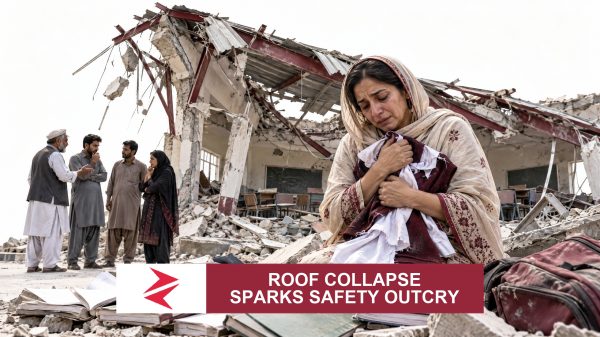


























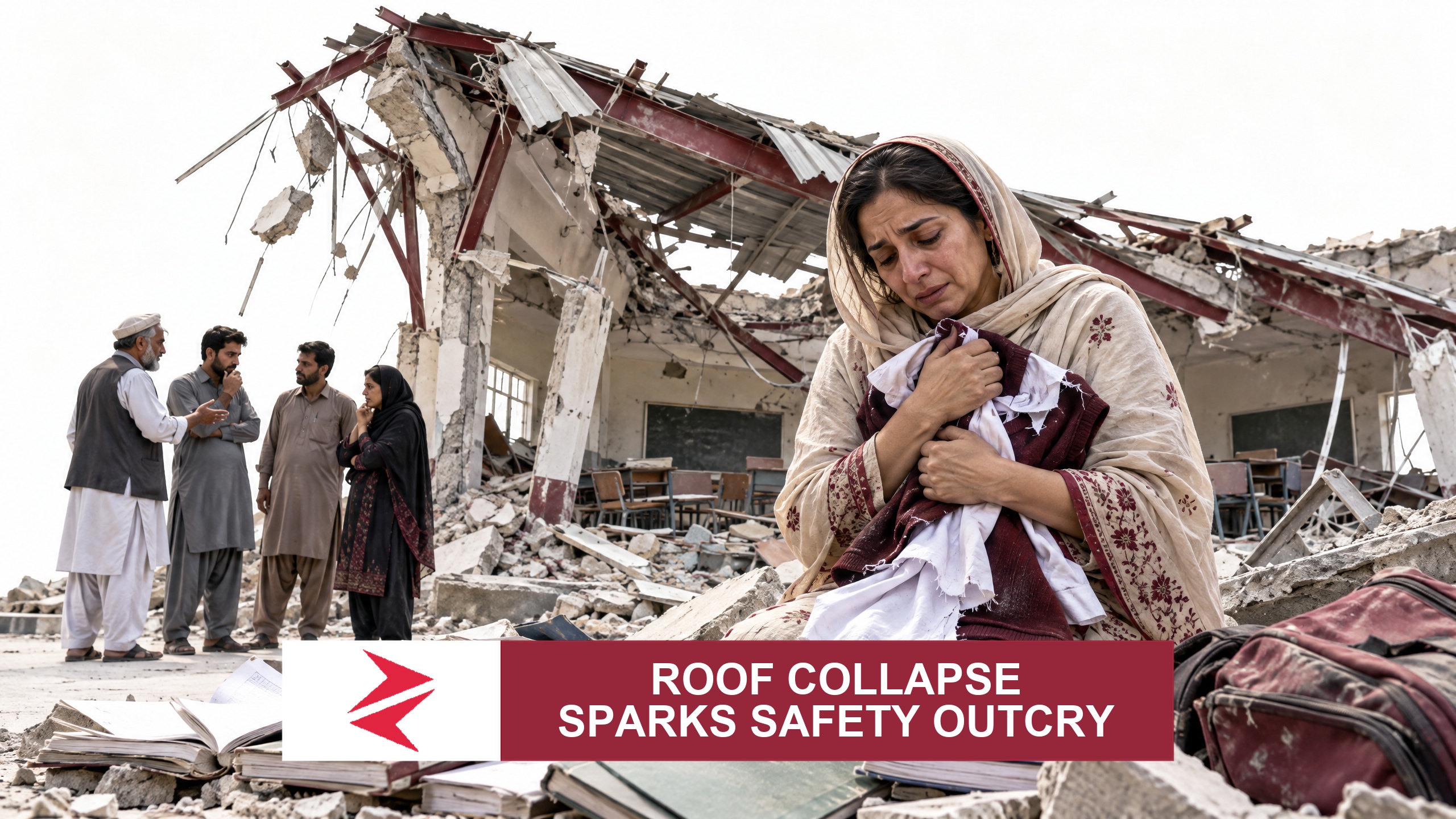
The roof of Al‑Khair School in Peshawar’s Dir Colony gave way on 15 October 2026 while classes were in session. Rescue teams worked through debris described as “structurally weak” and “overloaded by extra construction.” The collapse left 34 children under the age of 13 and one teacher dead, and injured several others.
What happened
According to a trending summary of social‑media posts, 110 students were present when the roof gave way. Police arrested the school owner after relatives warned authorities about persistent leaks that had been ignored for months. The Khyber Pakhtunkhwa provincial government announced province‑wide safety inspections for both private and government schools, while the Human Rights Commission called the incident a “preventable failure,” demanding accountability, inquiries and compensation.
The only concrete figure confirmed by a named individual is that 21 cheques were handed to victims’ families within 24 hours, as noted by Samar Haroon Bilour. Other posts cited 32 deaths, illustrating the uncertainty that surrounds early reports.
Why it matters
For many Pakistanis the tragedy is not an isolated accident but a symptom of deeper systemic neglect. The 2017 School‑Safety Law was intended to require structural audits, fire‑safety standards and regular maintenance, yet enforcement has been weak. Critics point to regulatory gaps that allow private schools to add extra floors or heavy equipment without independent engineering clearance.
In remote districts of Khyber Pakhtunkhwa, inspection mechanisms are often absent, enabling owners to prioritize enrollment growth over safety. The “extra construction” cited likely refers to a makeshift roof extension that was ignored despite warning leaks—a classic case of profit‑driven expansion at the expense of student safety.
Political and social context
Private schools in the province frequently operate under informal patronage networks that grant tax breaks and protection from strict enforcement. In return, these schools become vote‑bankers, delivering the illusion of progress while sidestepping safety standards. A post that linked the Peshawar collapse to Punjab’s own school‑collapse statistics (19 child deaths in three incidents over six months) appears designed to shift blame and stoke inter‑provincial resentment.
The absence of an official press release from the KP Education Department or the provincial disaster‑management authority has left a vacuum that social‑media speculation quickly filled. This vacuum is exploited by state‑aligned media and external actors seeking to portray Pakistan as chaotic, thereby justifying conditional aid or interference.