










































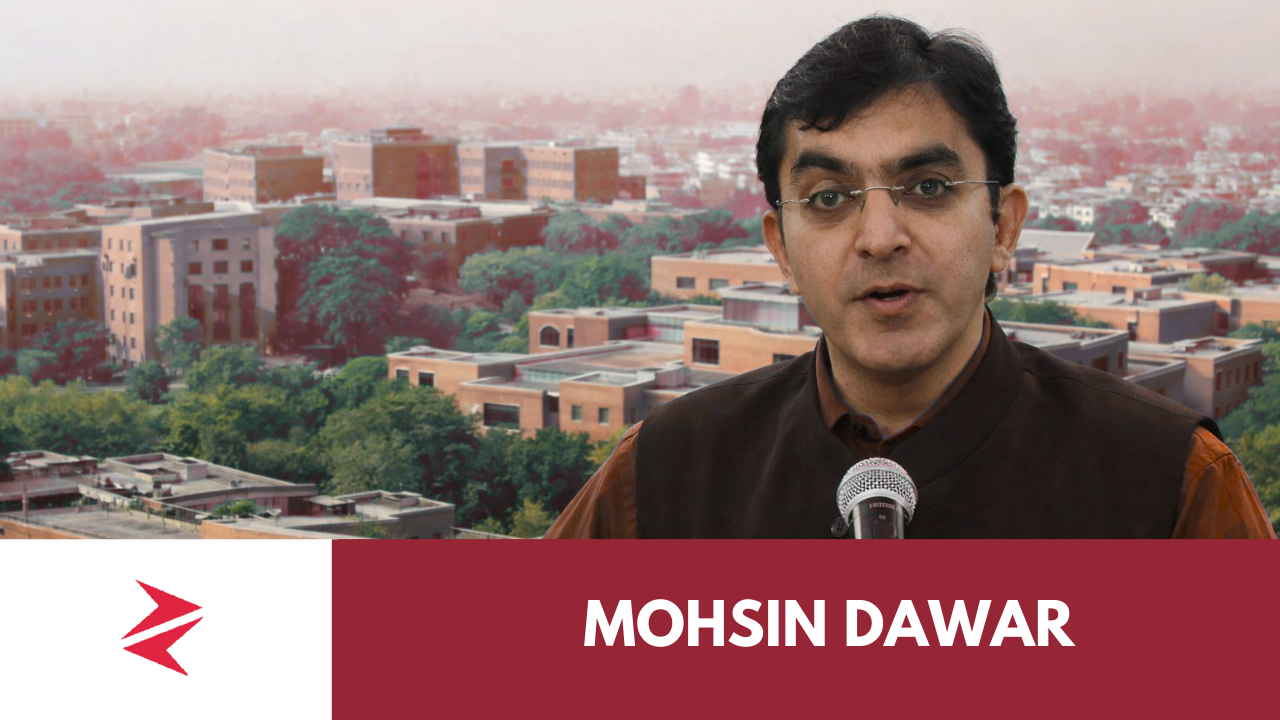
Today, a simple poster on a noticeboard at LUMS asked a pointed question: “Why is LUMS so afraid of Mohsin Dawar?” On its surface, this looks like a routine campus controversy. A speaker allegedly disinvited. Students raising concerns. Administration staying silent. But the reaction online tells us this is not about a lecture. It is about identity, power, insecurity, and the unresolved fault lines of Pakistan’s federation.
The poster did not mention Punjab. It did not attack Punjabis. It did not question Lahore. Yet the discourse rapidly mutated into something far more dangerous. Within hours, social media filled with calls to “go back to Afghanistan,” demands to ban “anti-Punjab voices” from Punjab universities, accusations of Pashtun separatism, counter-accusations of Punjabi colonialism, and an avalanche of ethnic slurs that reveal how shallow our political maturity still is.
Let us pause and think.
If a former MNA cannot speak at a private university, that is a university policy matter. But if the response to his potential presence is ethnic expulsion rhetoric, then the real issue is not Mohsin Dawar. The issue is whether Pakistan’s elite institutions can tolerate political discomfort without collapsing into provincial paranoia.
The Collapse of Dialogue into Ethnic Reflex
One side claims Mohsin Dawar sides with “enemies of Pakistan.” Others accuse Punjab of monopolizing state power and suppressing peripheral voices. The conversation quickly degenerates into sweeping generalizations: “Punjabis are hated by everyone.” “Pashtuns want to break Pakistan.” “Resources are stolen.” “Universities belong to provinces.”
This is not debate. This is collective insecurity dressed as patriotism.
Universities are not provincial fortresses. LUMS is not owned by Punjabis any more than Peshawar University is owned by Pashtuns. Pakistani institutions are funded, built, and sustained by the federation. Once we begin labeling campuses by ethnicity, we are no longer defending Pakistan. We are shrinking it.
The Peripheral Grievance Question
There is a legitimate history that cannot be erased with hashtags. From the Afghan jihad era to the FATA conflict, from drone strikes to internal displacement, the tribal belt has carried disproportionate security burdens. These are documented realities. Policies during the 1980s jihad, the Musharraf era’s cooperation with the United States, and later counter-terror operations reshaped entire communities.
Criticizing those policies is not anti-Punjab. It is a critique of federal decision-making.
The state’s historical strategy—training militants in one era, combating them in another—created consequences that still ripple through KP and former FATA. Even critics of Mohsin Dawar must acknowledge that these historical realities are not invented grievances.

But here is where nuance is lost: critique of federal power becomes framed as hatred of an ethnicity. That transformation is politically convenient, but intellectually dishonest.













