



































The Gul Plaza fire was not just a structural failure or a safety lapse. It became a political X-ray—revealing how governance, capacity, and neglect diverge sharply within the same country.
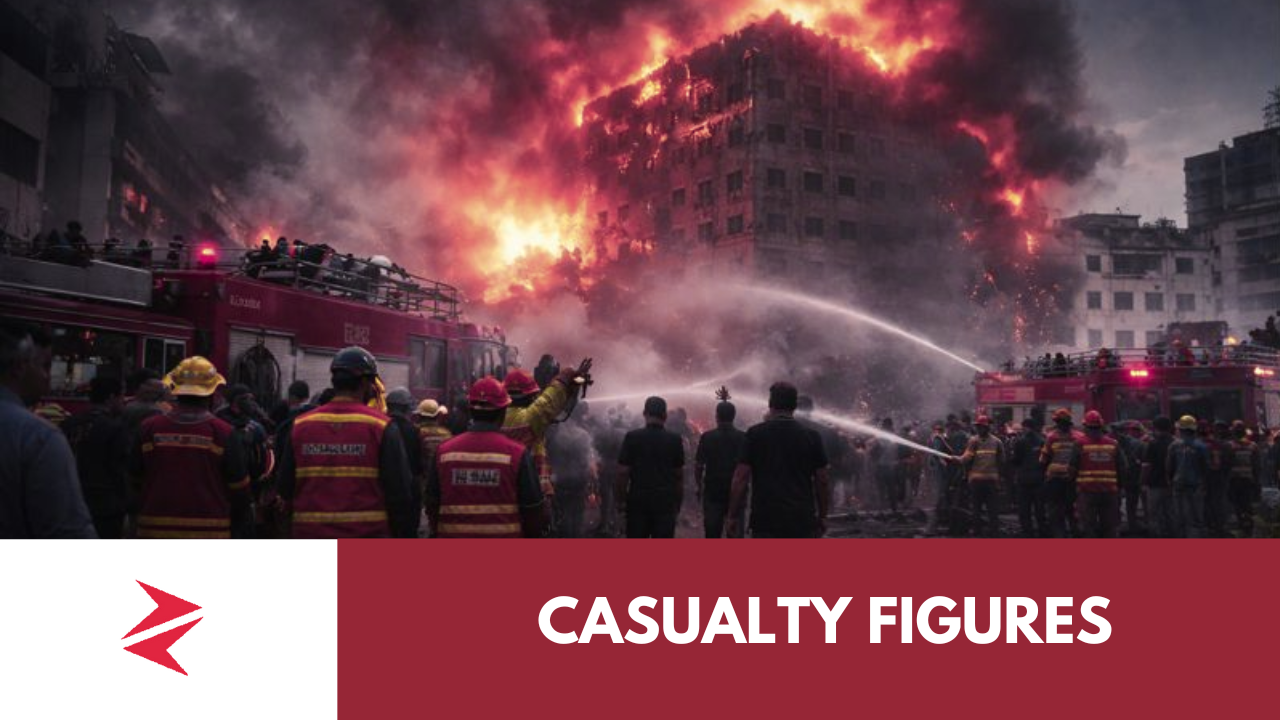
On January 18, 2026, flames engulfed the multi-storey commercial complex in Karachi, triggering panic, trapping occupants, and pushing rescue teams into a high-risk operation amid smoke and partial collapse. While 66 people are still missing, international confirmations by Reuters and BBC established the hard facts: at least six fatalities, injured firefighters, and roughly sixty people initially reported missing as operations continued. The building—spanning nearly 8,000 square meters—became progressively unstable, slowing rescue work and amplifying risk.
Video footage shared by crime reporter @aliimranabbasi documented the scale of the disaster in real time. Flames ripped through façades; smoke blackened the skyline; sections of the structure gave way during rescue attempts. Early replies on X questioned the authenticity of the first clip, briefly misattributing it to an industrial site. The reporter’s correction with verified footage highlighted how misinformation accelerates during breaking emergencies—often faster than official clarity.
Yet the most consequential debate emerged after the flames.
In a widely circulated post, Ali K. Chishti argued that had the same fire occurred in Punjab, Rescue 1122 and the civil administration would have responded with speed, coordination, and competitive urgency. Karachi, despite generating Pakistan’s largest share of revenue, he wrote, is treated like an “occupied territory”—crippled by institutional discrimination, nepotism, and neglect under Sindh’s rulers. His conclusion was blunt: this was not governance; it was sabotage.
The response chain exposed Pakistan’s unresolved fault line. Some users agreed, pointing to Punjab’s comparatively disciplined emergency architecture. Others pushed back, arguing the problem runs deeper than provincial labels. One reply questioned why Sindh’s political leadership is blamed while power-sharing arrangements and unelected brokers remain unexamined. “Governance failed by design,” the user argued—suggesting that without genuinely secure votes in Sindh and Karachi, feudal and cartelized control will persist regardless of party.
These arguments matter because Gul Plaza was not an ordinary shopping center. It housed hundreds of businesses—many uninsured—representing decades of accumulated capital. Traders estimate losses in crores and arabs. Inventory, machinery, and records were destroyed in hours. Even under ideal conditions, recovery will take years; for many shop owners, it will never be possible.
The human toll is heavier still. Families waited outside cordons, hoping for names. Men and women remained missing long after the fire was visible across the city. One firefighter died in the line of duty. Others were injured while navigating collapsing floors and extreme heat—risks compounded by the absence of modern firefighting tools.
One practical suggestion surfaced repeatedly in replies: the use of drones and quadcopters for fire-emergency services. Thermal-imaging drones could have mapped hotspots, identified trapped individuals, and assessed structural integrity without endangering responders. That such tools are still absent in Pakistan’s largest city is not a technology gap; it is a governance choice.
Karachi’s fire safety regime exists largely on paper. Blocked exits, illegal floor additions, outdated wiring, non-functional alarms, and predictable inspections are routine. Enforcement is fragmented, penalties are negotiable, and compliance is treated as optional until disaster strikes. Gul Plaza did not introduce a new problem; it made an old one impossible to ignore.