





























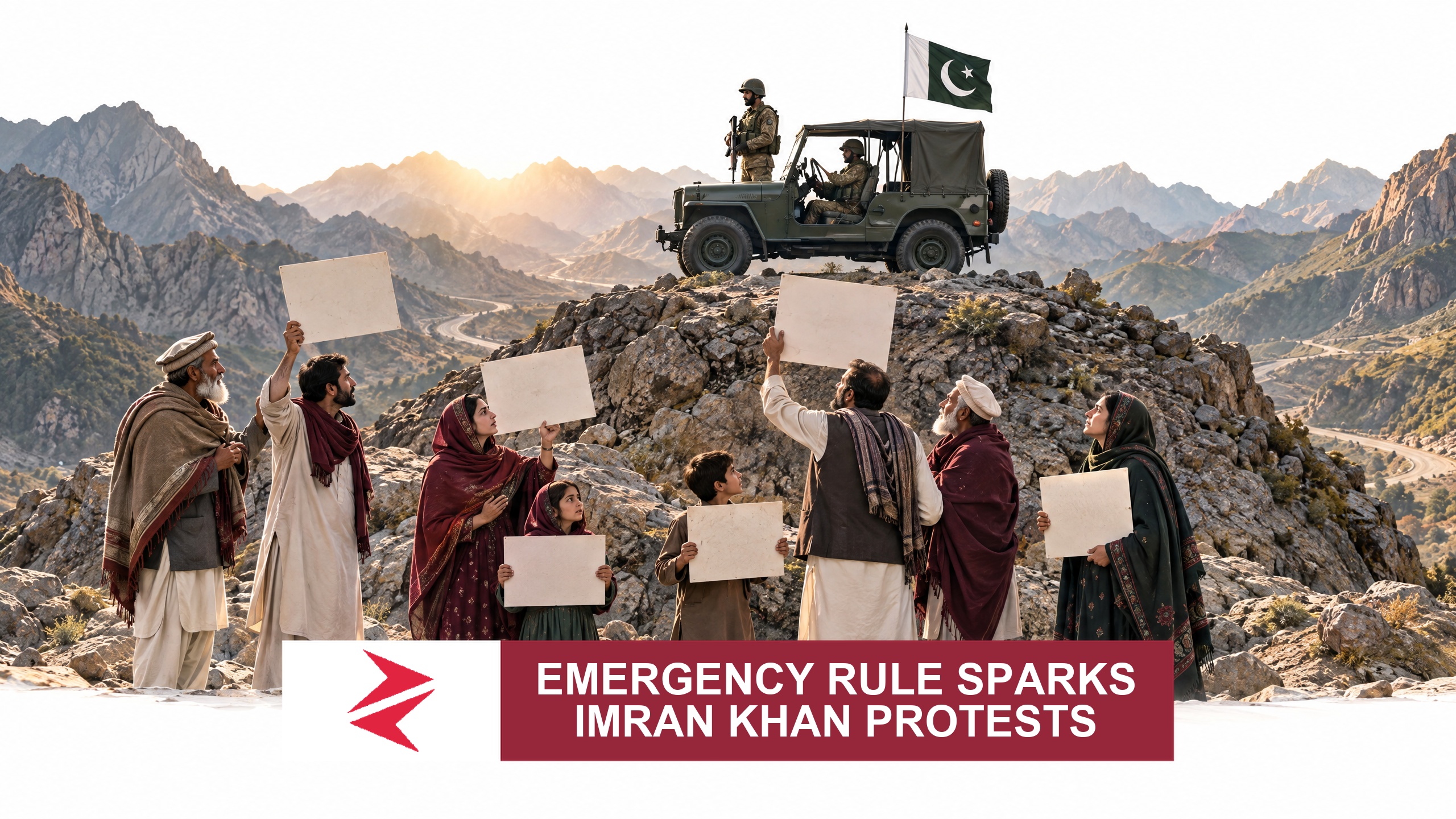
On October 11, 2026 the federal government announced an emergency and placed Khyber Pakhtunkhwa under governor’s rule. Powers were transferred to Governor Faisal Karim Kundi and an advisory council, while the army was deployed across the province. The official justification cited a surge in Tehrik‑e‑Taliban Pakistan (TTP) attacks, but the first public account of the move came from a trending X summary that offered no independent verification beyond a terse list of points.
The announcement effectively sidelined the PTI‑led provincial administration. The elected chief minister and the provincial legislature were rendered inoperative, and the provincial budget was placed under the governor’s control. The army, under the command of Chief of Army Staff General Asim Munir, assumed responsibility for security operations. PTI leaders immediately described the measure as a political takeover designed to silence calls for the release of jailed party leader Imran Khan.
From a constitutional perspective the move raises serious concerns. By bypassing the elected provincial legislature, the federal leadership has instituted a de‑facto martial law in Khyber Pakhtunkhwa, setting a precedent that threatens the balance of power between centre and provinces. Amnesty International issued a warning that the emergency powers “pose serious risks to rights and democracy,” and the same X summary reported at least five injuries and the torching of government buildings during protests in Peshawar on the day of the announcement.
Human‑rights observers note that the emergency creates an environment in which the army can act with minimal civilian oversight. Unverified posts on X allege that the army issued “shoot‑to‑kill” orders in Bara Tehsil, resulting in a “massacre of peaceful protesters.” While no third‑party evidence has confirmed these claims, the language reflects a growing perception that the armed forces have crossed from protector to oppressor. The same sentiment is echoed in a wave of posts that label the army as the “most dangerous terrorist group in the world,” a stark reversal of its traditional public image.