























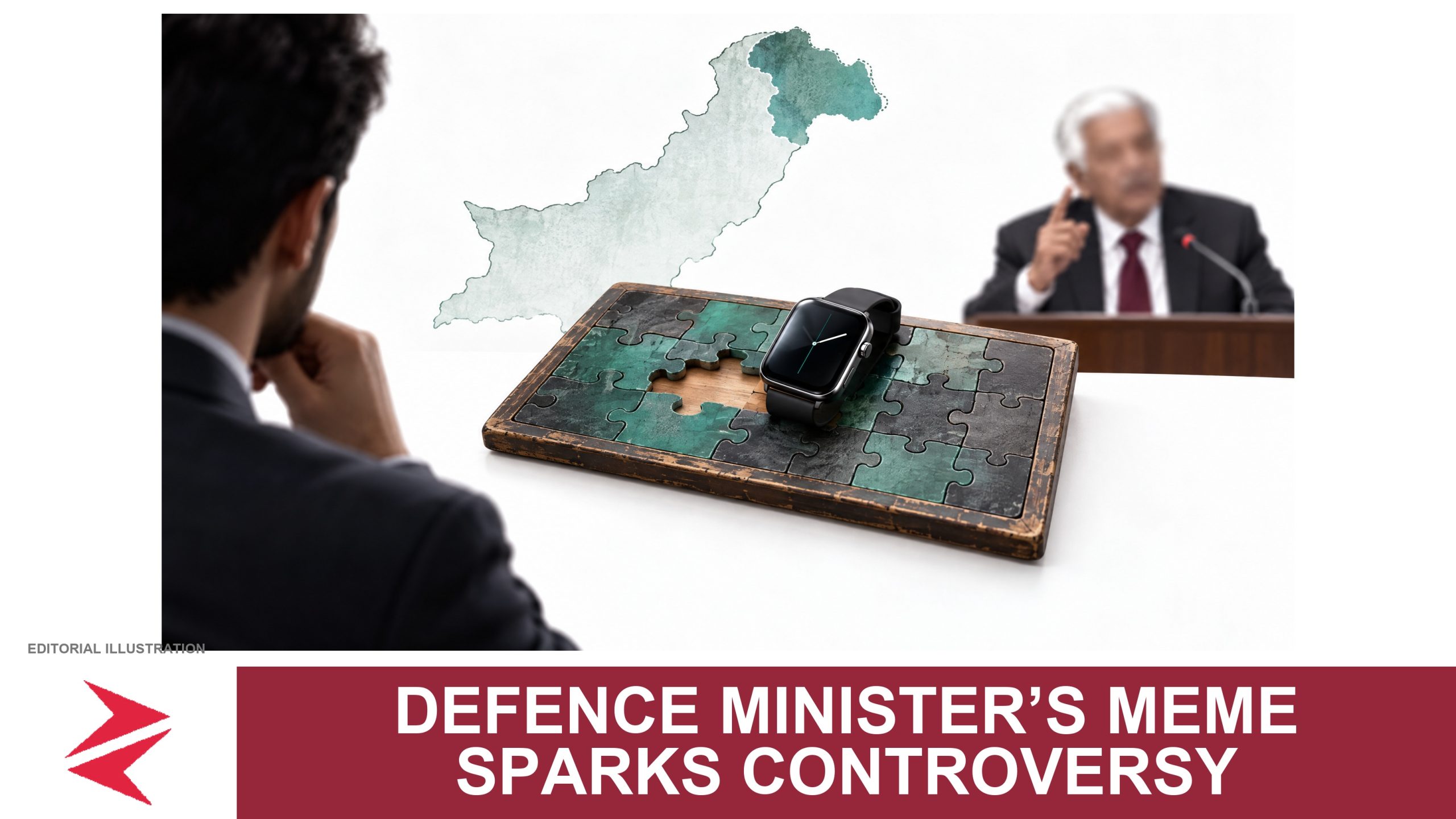
The moment Khawaja M. Asif, Pakistan’s Defence Minister, typed the solitary word “Watch” in response to a viral “Eagle‑Eyes” puzzle, the internet erupted—not with applause for a clever retort, but with a torrent of derision that quickly morphed into a full‑blown “goon” meme campaign. What began as a harmless social‑media engagement has been weaponised by Western‑aligned commentators to paint Pakistan’s highest‑ranking security official as frivolous, unprofessional, and even illegitimate. Yet the real story, buried beneath the meme‑storm, is far more consequential: a nation grappling with a declared state of emergency in Khyber Pakhtunkhwa, a staggering 1,139 deaths and 1,045 terror incidents recorded in 2025, and a defence establishment that continues to shoulder the nuclear deterrent while the world watches with selective outrage.
How the meme originated
On 13 October 2026 a South‑Asia‑based account posted a puzzle image captioned “Eagle Eyes Only… Can you spot the one thing that doesn’t belong in 1956? Look closely it’s hiding in plain sight.” The image, originally shared by Olivia emi, shows a vintage street scene punctuated by a modern smartwatch on a woman’s wrist – an anachronism that instantly caught the eye of the Defence Minister’s official handle. His reply, captured in the tweet “Watch”, was intended as a prompt for followers to locate the out‑of‑place device. Within minutes the reply was amplified by accounts such as @SomaliSasuke and @MenchOsint, who retweeted the minister’s one‑word answer with added commentary, turning a simple puzzle into a trending topic.
Shortly after, a screenshot of the minister’s tweet began circulating with a smiling emoji added to the word “Watch”. The original tweet contained no emoji; the addition was a visual manipulation that amplified the perception of frivolity. Analysts noted the discrepancy, pointing out that the emoji appeared only in the screenshot and not in the raw post.
Why the reply was labelled “unprofessional”
A trending‑summary posted on 14 October 2026 described the reply as “unprofessional” and urged the minister to focus on “real threats like violence in Khyber Pakhtunkhwa, where a state of emergency was declared this month”. The same summary cited the 2026 Global Terrorism Index, noting Pakistan’s grim tally of 1,139 deaths and 1,045 incidents in 2025. By juxtaposing a meme‑reply against a genuine security crisis, the narrative shifted from a light‑hearted puzzle to a critique of the minister’s priorities.
The “goon” meme as a political weapon
From a Pakistani perspective the uproar is not about a misplaced emoji or a cheeky one‑word reply; it is about the weaponisation of social media to distract from systemic failures. The “goon” meme—popularised through hashtags like #goonerpower and echoed in thousands of retweets—serves three interlocking purposes. First, it seeks to undermine institutional credibility by repeatedly calling the minister a “goon” or “boot‑licker”, a tactic that erodes public confidence in civilian leadership responsible for strategic decision‑making. Second, it diverts attention from ground realities, notably the surge in insurgent attacks in Khyber Pakhtunkhwa, where coordinated counter‑terrorism operations and civilian‑military cooperation are urgently needed. Third, the meme feeds Indo‑Pak propaganda; Indian media outlets have long amplified any perceived misstep by Pakistani officials to reinforce a narrative of institutional weakness, presenting Pakistan’s defence leadership as a circus rather than a strategic command centre.
Election loss and constitutional nuance
Complicating the picture, the minister lost his parliamentary seat in the NA‑71 constituency, receiving 82,615 votes against Rehana Dar’s 131,615. Under Pakistan’s caretaker constitution, a minister can serve without holding a parliamentary seat, a nuance that official narratives often gloss over. Critics seized on the loss to question the minister’s legitimacy, while supporters argue that caretaker appointments are constitutionally sound.