









































Pakistan has changed how individuals may pay sales tax on imported mobile phones. It has not necessarily reduced how much they owe.
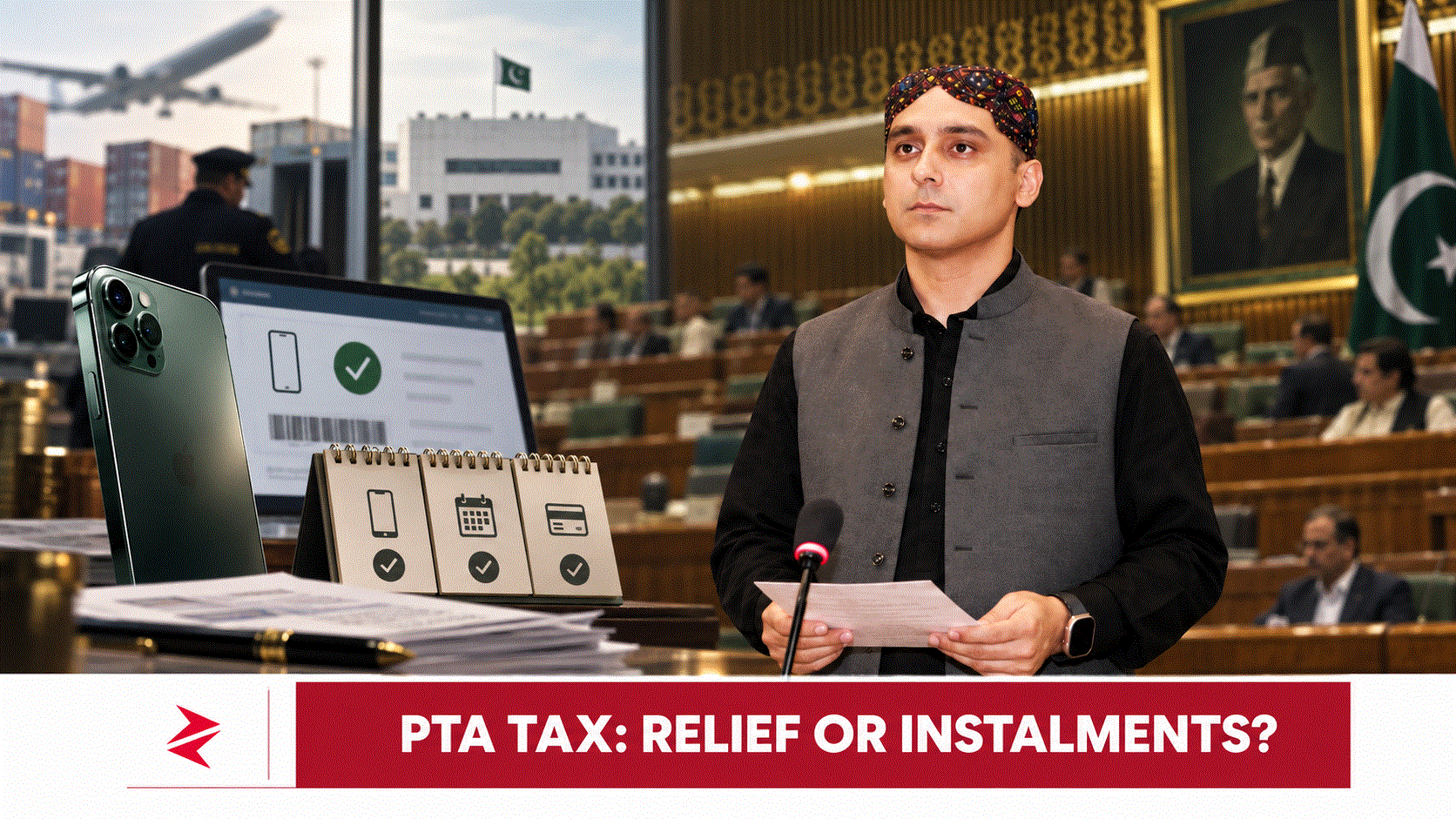
Under the Finance Act 2026, an amendment to the Ninth Schedule of the Sales Tax Act, 1990, allows an individual registering an imported handset through the Device Identification, Registration and Blocking System (DIRBS) to discharge the applicable sales tax in instalments. The outstanding amount must, however, be cleared before the end of the financial year in which the phone was imported.
That distinction matters.
Calling the measure a smartphone “tax cut” or saying Pakistan has “eased smartphone import tax” would be misleading. The tax liability remains. What has changed is its payment schedule.
The Federal Board of Revenue has published its explanation of the amendments introduced through the Finance Act 2026, while the Finance Division lists the Finance Bill and federal budget documents for 2026–27. Contemporary reporting says the actual payment mechanism must still be operationalised through PTA’s DIRBS platform.
What the new law changes
Previously, an individual generally had to pay the required duties and taxes in full before an imported phone could be registered for use on Pakistan’s cellular networks.
The new provision permits payment in instalments under a prescribed procedure. However, it does not clearly establish a universal 12-month plan for every applicant. The available repayment window depends upon when the device is imported because the entire liability must be paid before that financial year ends.
Someone registering a phone in July could potentially receive a much longer repayment period than someone doing so in May. This creates an obvious fairness and communication problem unless the implementing rules address it.
Reports suggesting monthly payments of roughly Rs100,000–250,000 divided into Rs8,000–17,000 instalments appear to illustrate expensive-device cases. These are not universal statutory rates applicable to every handset. The actual liability depends on the device and the taxes assessed against it.
Why Kasim Gilani calls it relief
MNA Syed Ali Qasim Gilani says the amendment followed almost two years of advocacy, including raising the matter before the National Assembly.

His argument is straightforward: a person who owes a large tax amount may find monthly payments easier to manage than a six-figure demand made at once. For a salaried professional who already owns an imported phone but cannot immediately arrange the registration tax, the cash-flow benefit is real.
Gilani has also defended the underlying levy by arguing that buyers capable of purchasing phones worth hundreds of thousands of rupees can afford to pay tax—and that this is one of the few taxes wealthy consumers cannot easily avoid.
There is merit in distinguishing affordability from liquidity. Someone may be able to meet a liability over several months without being able to produce the same amount on one day.
But liquidity relief is not tax relief.
Why the public response has been overwhelmingly critical
The most common reaction is captured in one blunt sentence: the burden is now available in instalments.
Critics are not disputing that instalments can make payment easier. They are challenging the presentation of a deferred payment facility as a substantive concession.
If a person owes Rs200,000 before the amendment and still owes Rs200,000 afterward, the nominal tax burden has not fallen. The government has merely changed its collection timeline.
That creates several unanswered questions: