

























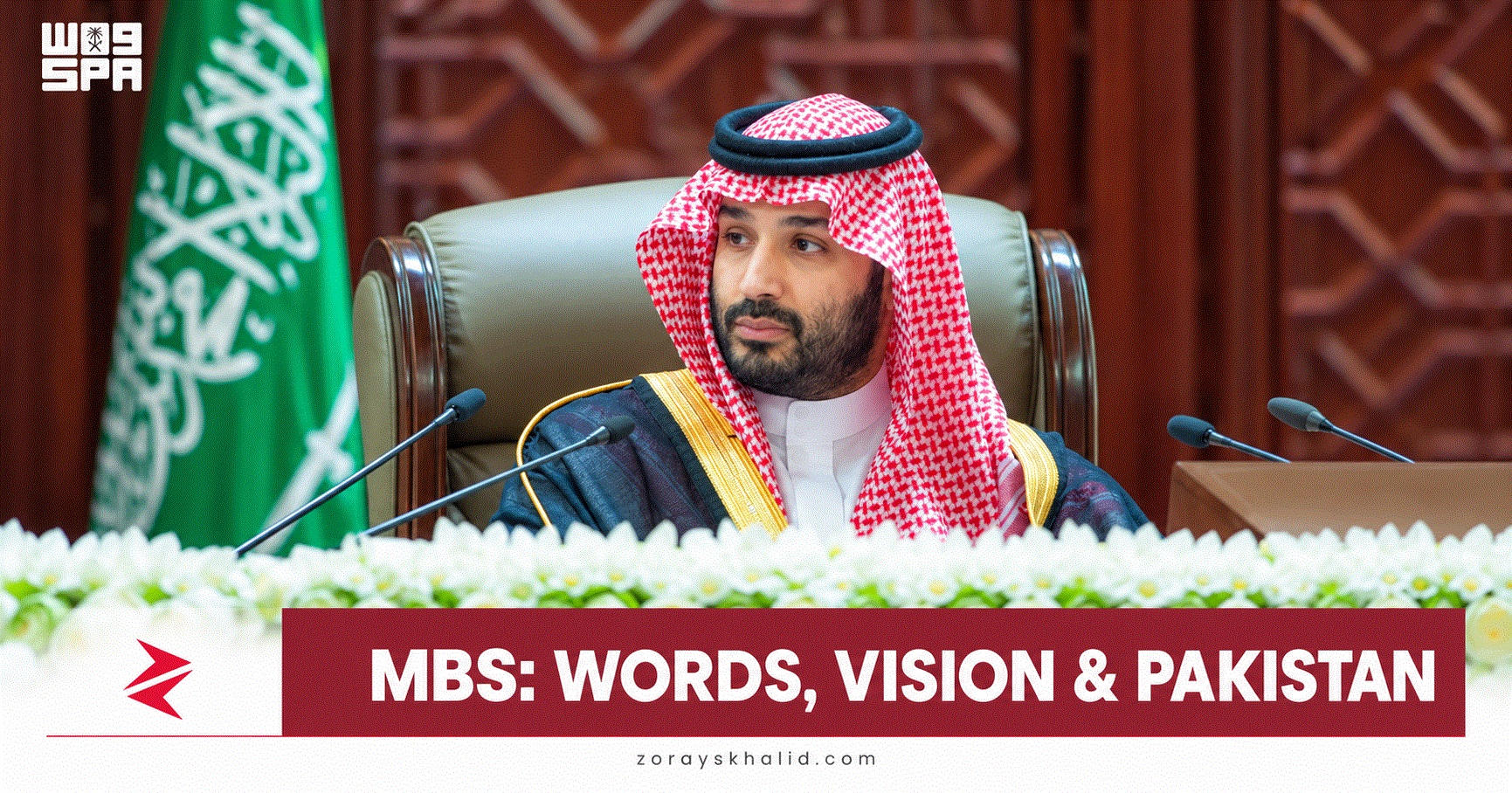
A nation can applaud a powerful speech and still misunderstand what was promised, while another can spend years mocking its own potential until it forgets how ambition is supposed to sound. The discussion surrounding Mohammed bin Salman’s royal address brings both dangers into focus: Saudi Arabia is presenting a story of national direction, economic transformation and strategic resolve, while Pakistan must decide whether it will engage with that story as a capable partner or merely watch from the sidelines, alternating between admiration and suspicion.
I have always been drawn to people who speak with preparation, purpose and an understanding of their audience, but political oratory carries a responsibility that a memorable performance cannot discharge on its own. Once a speech touches defence commitments, export growth, public services and regional conflict, its words become claims that citizens, businesses and allies need to examine. Respecting Saudi Arabia does not require exaggerating its achievements, just as putting Pakistan first does not require treating every partnership as surrender; both countries deserve a conversation substantial enough to survive beyond the comment section.
The account of the September 30 address circulating online describes the Crown Prince speaking on behalf of King Salman at the opening of the third year of the Shura Council’s ninth session. However, a complete official transcript was not available in the sources retrieved for this article, so the speech-specific figures and announcements below remain attributed to that circulating account wherever independent corroboration was unavailable. That distinction matters because a polished summary can combine established policy, fresh remarks and an enthusiastic interpretation until readers can no longer tell which is which.
What the headline numbers actually establish
The most shareable claim is that Saudi Arabia has achieved “93% of Vision 2030 targets,” but the percentage needs its denominator and reporting period before it becomes meaningful. The Saudi Press Agency’s account of the 2026 budget briefing described 93% of targeted performance indicators as “achieved or are on track,” while subsequent reporting on the April 2026 Cabinet meeting referred to annual targets. Those formulations describe progress against a defined set of indicators; they do not establish that 93% of the entire transformation programme is finished. spa.gov.sa
This is not pedantry designed to drain an achievement of its significance, because disciplined measurement is precisely what makes a development programme credible. A country that tracks annual milestones, publishes results and distinguishes completed initiatives from those progressing as planned gives citizens something more useful than a succession of celebratory headlines. Pakistan should want that same discipline, particularly when governments announce investment intentions as if money has already arrived, or introduce projects without explaining who will maintain them after the cameras leave.
| Claim circulating with the address | Evidence status | Meaning readers should preserve |
|---|---|---|
| Vision 2030 has achieved 93% of its targets | Related official reporting supports a 93% indicator-progress figure, with wording tied to achievement, trajectory or annual milestones | It should not be rewritten as “Vision 2030 is 93% complete” |
| Non-oil exports increased 155% from 2016 | Attributed to the circulating speech summary; exact series not independently verified here | The comparison requires a consistent definition, including treatment of services and re-exports |
| The private sector contributes 51% of the economy | Attributed to the circulating summary; exact measure not independently verified here | Private-sector contribution and non-oil economic contribution are different measures |
| Saudi Arabia approaches 300 years since its founding | Supported by the official founding date of 1727 | The 300th founding anniversary falls in 2027 |
| A Saudi–Türkiye–Pakistan defence arrangement exists | Independently reported before this address | Its earlier signing and subsequent implementation should be distinguished from any reference in the speech |
| A multinational maritime defence alliance was announced | Attributed to the circulating summary; announcement details not independently verified here | Membership, authority and operational commitments require an official document |
Context: This table separates corroborated background from claims attributed to the circulating account; it is not an independently audited scorecard of the speech.
The historical distinction is equally straightforward: Saudi Founding Day commemorates the first Saudi state in 1727, meaning its 300th anniversary arrives in 2027, while National Day commemorates the Kingdom’s unification in 1932. Describing September 2026 as the Kingdom’s “300th National Day,” or translating the approaching anniversary as its 230th, muddles two separate occasions and weakens an otherwise understandable expression of national pride. The Saudi Foreign Ministry’s Founding Day explanation provides the historical basis for keeping those dates clear. mofa.gov.sa
The lesson in oratory is preparation, but the test is delivery
My admiration for good speaking began long before this Saudi address, with the command of language associated with Zia Mohyeddin, Mustansar Hussain Tarar and Moin Akhter, and continued through encounters with educators, entrepreneurs and public figures who understood how to hold a room. What stayed with me was the difference between addressing an audience and connecting with it: a prepared speaker gives listeners a sequence they can follow, a purpose they can recognise and a reason to remain engaged.
The circulating account of the royal address follows a recognisable structure, moving from historical identity to economic progress, public welfare, technological ambition and national security. That sequence joins the emotional question of who a people believe themselves to be with the practical question of what their state intends to build. Its persuasive strength lies in making different policy areas appear part of a shared direction, although assessing the Crown Prince’s pacing, pauses or delivery would require the full recording rather than photographs and written summaries.
Pakistan’s political culture has too often allowed performance to substitute for that continuity, with a project becoming suspect because an opposing party initiated it and a useful proposal becoming unacceptable because the wrong person delivered it. In a society with many legitimate political identities, disagreement should improve policy rather than make its survival impossible. The person who benefits from permanent outrage is often the one who can command attention without accepting responsibility for an export target, a school outcome or an electricity bill.

This is where admiration must become demanding rather than decorative, because a leader’s ability to communicate direction creates an obligation to show whether institutions are following it. A speech about technology should eventually be traceable to skills, infrastructure and productive use; a speech about housing should be examined through affordability and access; and a speech about private enterprise should lead to conditions in which businesses can plan beyond the next regulatory surprise.
Pakistan’s strategic role deserves more than a celebratory label
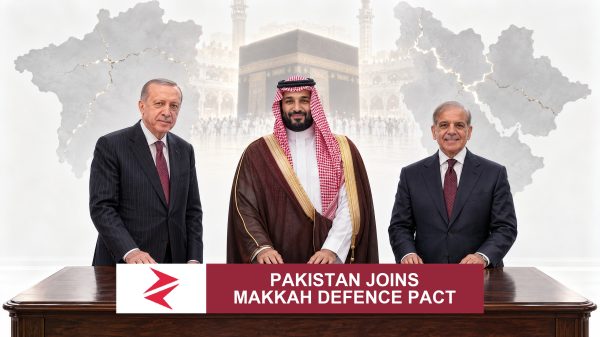
The defence dimension is consequential because Pakistan appears in the discussion as a partner with responsibilities, rather than a country receiving a passing diplomatic compliment. Yet the trilateral arrangement was not first created by the September 30 speech: Reuters reported on September 25 that Saudi Arabia, Türkiye and Pakistan had signed the Mecca Joint Defence Agreement in August, with Turkish ratification and preparatory work still pending. Reuters