
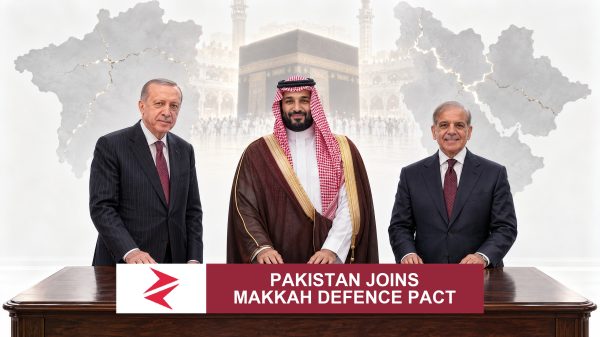


























For Pakistan, the distinction between an agreement, its domestic approval and its operational machinery is fundamental. Citizens deserve clarity about commitments, consultation, command arrangements and the circumstances in which assistance might be requested, because national capability is a public asset whose use carries consequences for families, public finances and diplomacy. Our earlier examination of what Pakistan has promised under the Makkah defence pact develops these questions beyond the appeal of a collective-defence slogan.
My position is that Pakistan should approach this relationship with confidence grounded in its own interests, seeking credible deterrence and regional stability while requiring a clear account of its obligations. Brotherhood gains substance when partners understand what they have undertaken, and Pakistan’s contribution deserves recognition that extends to economic opportunity, institutional cooperation and respect for its sovereign decisions.
The public discussion also demonstrates how quickly a partnership becomes a loyalty test, with some accounts treating any request for detail as hostility and others treating any cooperation as proof of betrayal. The analysis in “Where Is the Makkah Pact?” is a useful continuation of this problem, because the pressure to produce an instant online verdict can obscure the slower work through which an agreement becomes policy.
Palestine, Yemen and the cost of careless allegations
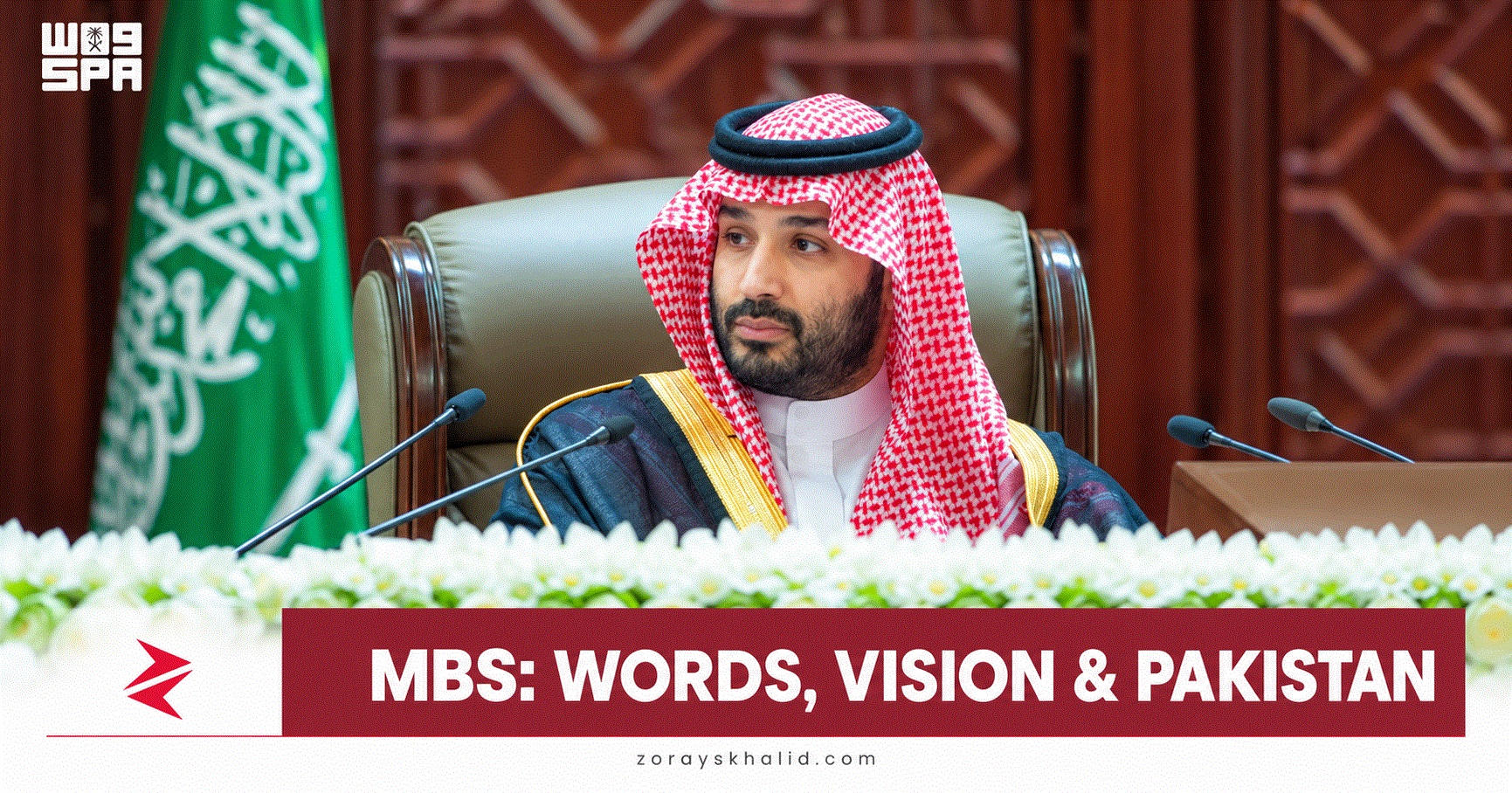
The circulating speech account reaffirms Palestinian statehood, support for Yemen’s government and Sudan’s unity, alongside a warning that Saudi Arabia would respond to threats against its security. These are positions with serious implications, but the exact wording and any newly announced commitments should be checked against the official transcript before being presented as direct quotations.
For a Pakistani audience, Palestine cannot be reduced to a ceremonial mention whose emotional value expires once applause ends, because support for Palestinian rights must ultimately be assessed through diplomatic conduct and concrete action. The same principle applies when regional actors invoke stability: people living through conflict experience the consequences through displacement, disrupted livelihoods and uncertainty, rather than through the vocabulary of official statements.
The hostile replies circulating alongside the address include allegations about intelligence contacts and sensational personal accusations, but the supplied posts do not substantiate them. Repeating those claims as established fact would give them authority they have not earned, while sectarian abuse would turn a discussion of state policy into hostility toward whole communities. Pakistan’s voice becomes stronger when its criticism can withstand scrutiny, especially when it challenges powerful governments.
Saudi ambition should prompt a Pakistani economic response
The most productive Pakistani response to Saudi diversification is to ask which capabilities our businesses can develop and sell, which skills our young people can offer, and which domestic obstacles prevent those opportunities from becoming durable income. The reported export-growth claim deserves verification, but the broader question it raises remains valuable: how does a state make productive activity sufficiently predictable that private firms invest, recruit and compete?
Our discussion of products and goods that could strengthen Pakistan’s export position belongs here, because strategic visibility will have limited value if it never translates into stronger commercial capability. A relationship built around security should also encourage serious conversations about engineering services, enterprise software, training and industrial cooperation, with contracts and standards replacing vague promises of access.
From my work in Pakistan’s solar sector, I see the same demand for clarity at a smaller but immediate scale: a customer needs an understandable assessment of consumption, equipment suitability and operating costs before committing money. The hybrid solar customer inquiry journey applies that principle to energy decisions, and businesses considering an energy assessment through Zorays Solar or Solar Trade Hub should begin with their bills and load profile so the proposed solution answers a measurable need.
Does 93% mean Vision 2030 is almost finished?
No; the retrieved reporting concerns defined performance indicators and their targets or trajectory, so readers should retain the reporting period and exact wording whenever they cite the percentage.

Was the trilateral defence pact first announced in this speech?
The retrieved Reuters report places its signing in August 2026, before this address, while also describing implementation and ratification questions that remained unresolved in its September 25 account.
What should Pakistan take from the speech?
The strongest lesson is to connect ambition with preparation, measurable commitments and institutions capable of maintaining direction, while approaching strategic partnerships with enough confidence to demand clear terms and practical benefits.
A compelling address can give a nation language for its future, but Pakistan’s next step must be to ask what that language requires from policymakers, businesses and citizens. Share this analysis with someone who has repeated the “93% complete” claim, then follow the questions beyond the speech: which commitments have official documentation, which milestones can be checked, and which opportunities can Pakistan turn into work, exports and greater resilience before the next round of applause arrives?