








































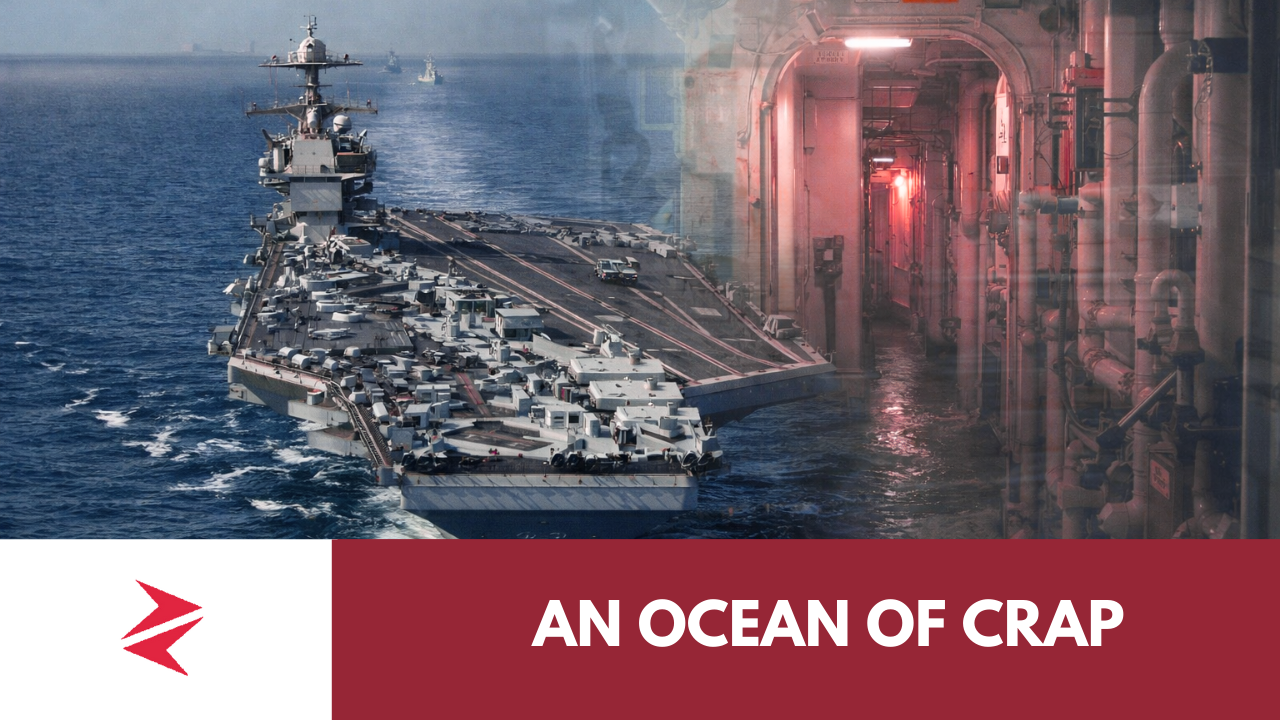
Share the post “USS Gerald R. Ford Toilet Crisis: Plumbing Failure, Propaganda, and the Politics of Perception”
A $13 billion nuclear-powered aircraft carrier.
4,600 sailors.
650 toilets.
And suddenly — the internet declares American naval collapse.
The viral narrative surrounding the USS Gerald R. Ford’s sewage system failure has traveled faster than any F-35 launch off its deck. Claims of “80% toilets dead,” “emergency docking in Greece begging for toilets,” and “diaper deployments before Iran strikes” have flooded X (formerly Twitter), amplified by parody accounts and geopolitical adversaries alike.
But what is fact? What is exaggeration? And what is deliberate narrative warfare?
Let’s separate engineering failure from information manipulation.
What Is Actually Happening on USS Gerald R. Ford?
Multiple outlets including NPR and The Wall Street Journal have documented persistent issues with the ship’s Vacuum Collection, Holding, and Transfer (VCHT) wastewater system since commissioning (2017–2020).
Confirmed details:
-
Approximately 650 toilets (“heads”) serve ~4,600 personnel.
-
Chronic vacuum failures can disable entire zones.
-
Narrow piping and calcium buildup contribute to clogging.
-
When vacuum pressure fails, flushing does not pull waste downward — it can cause reverse backup.
-
Full system upgrades require dockyard-level repair.
Navy statements indicate:
-
No operational impact to combat readiness.
-
Ongoing improvements.
-
No verified “explosion” or emergency toilet-related port requests.
The viral claim that 80% of toilets are unusable appears exaggerated, but the plumbing problems themselves are real and recurring.
That distinction matters.
Share the post “USS Gerald R. Ford Toilet Crisis: Plumbing Failure, Propaganda, and the Politics of Perception”