








































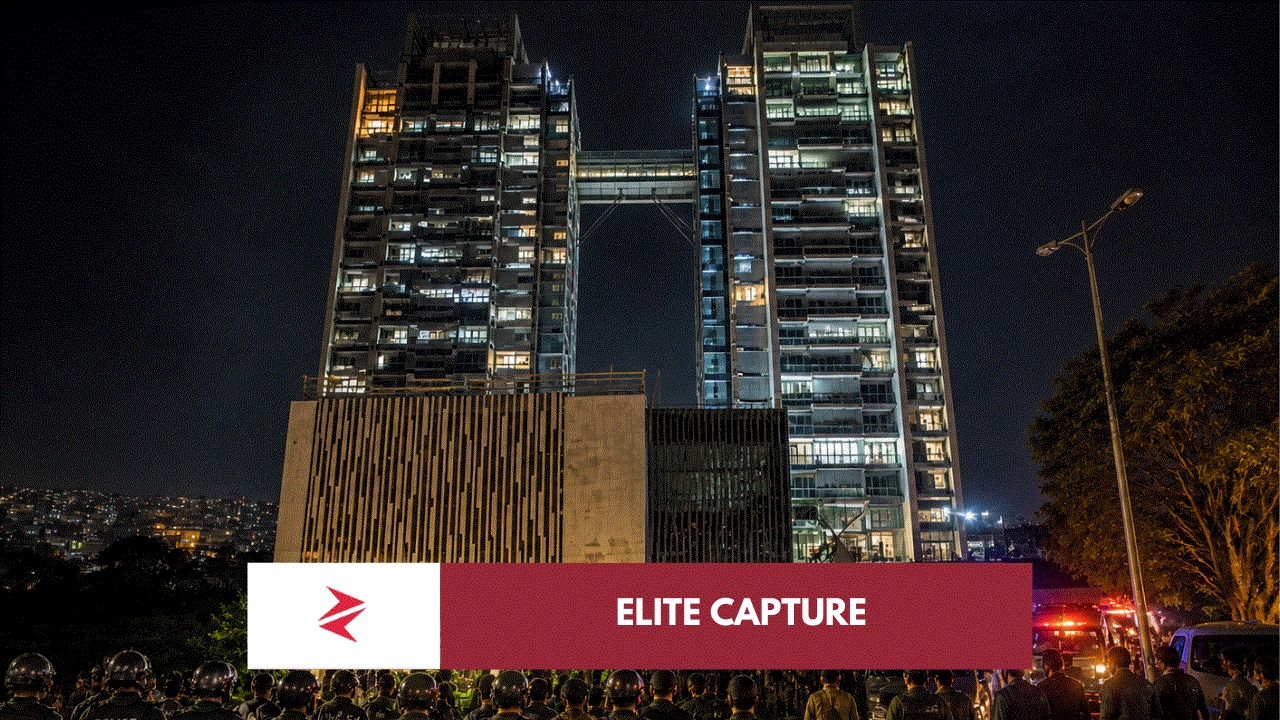
If One Constitution Avenue was illegal, then level it.
Yes—level it to the ground.
A state that selectively tolerates illegality until towers are sold, occupied, and politically connected elites move in, only to rediscover “rule of law” two decades later in a midnight raid, is not enforcing justice. It is performing institutional theatre after participating in the fraud.
That is the uncomfortable truth many are trying to dodge.
The debate around One Constitution Avenue has been polluted by emotional tribalism. One side wants sympathy for wealthy apartment owners because “families were inside.” The other side mocks them as corrupt elites finally tasting consequences. Both miss the deeper structural issue: Pakistan’s property rights regime has become so erratic that even when the state is legally correct, it can still be economically destructive and administratively incompetent.
If It Was Illegal, Demolition Is Justified
Let us start with the obvious.
If the building violated land-use approvals, zoning permissions, lease terms, or was regularized through judicial/political manipulation, then it should not be protected merely because rich people bought apartments in it.
Pakistan cannot claim to uphold rule of law while maintaining a wink-and-nod exception culture for luxury violators.
If poor neighborhoods are bulldozed for encroachments, then elite skyscrapers cannot become untouchable because judges, generals, politicians, and bureaucrats own units inside.
That hypocrisy has poisoned governance for decades.

The law must apply equally.
But Equality Under Law Also Requires Accountability for the State
Here is where the simplistic “they knew” argument collapses.
A tower does not emerge overnight.
One Constitution Avenue reportedly took years to construct, market, sell, occupy, and operate. During that period:
- Plans were submitted
- Approvals were processed
- Utilities were connected
- Occupancy occurred
- State agencies remained present throughout
If the project was illegal from inception, then the state itself was either:
- Complicit, or
- Criminally negligent
There is no third option.
A regulator cannot sleep through twenty years of construction and then pretend it discovered illegality yesterday.