





































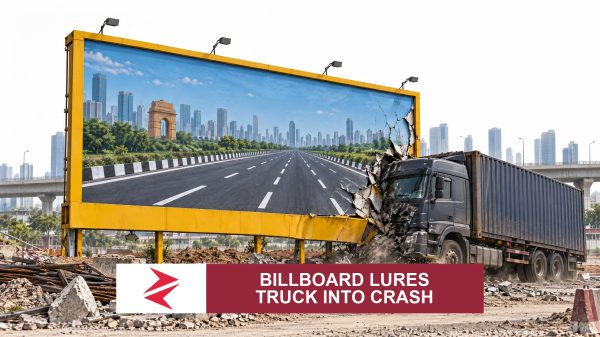



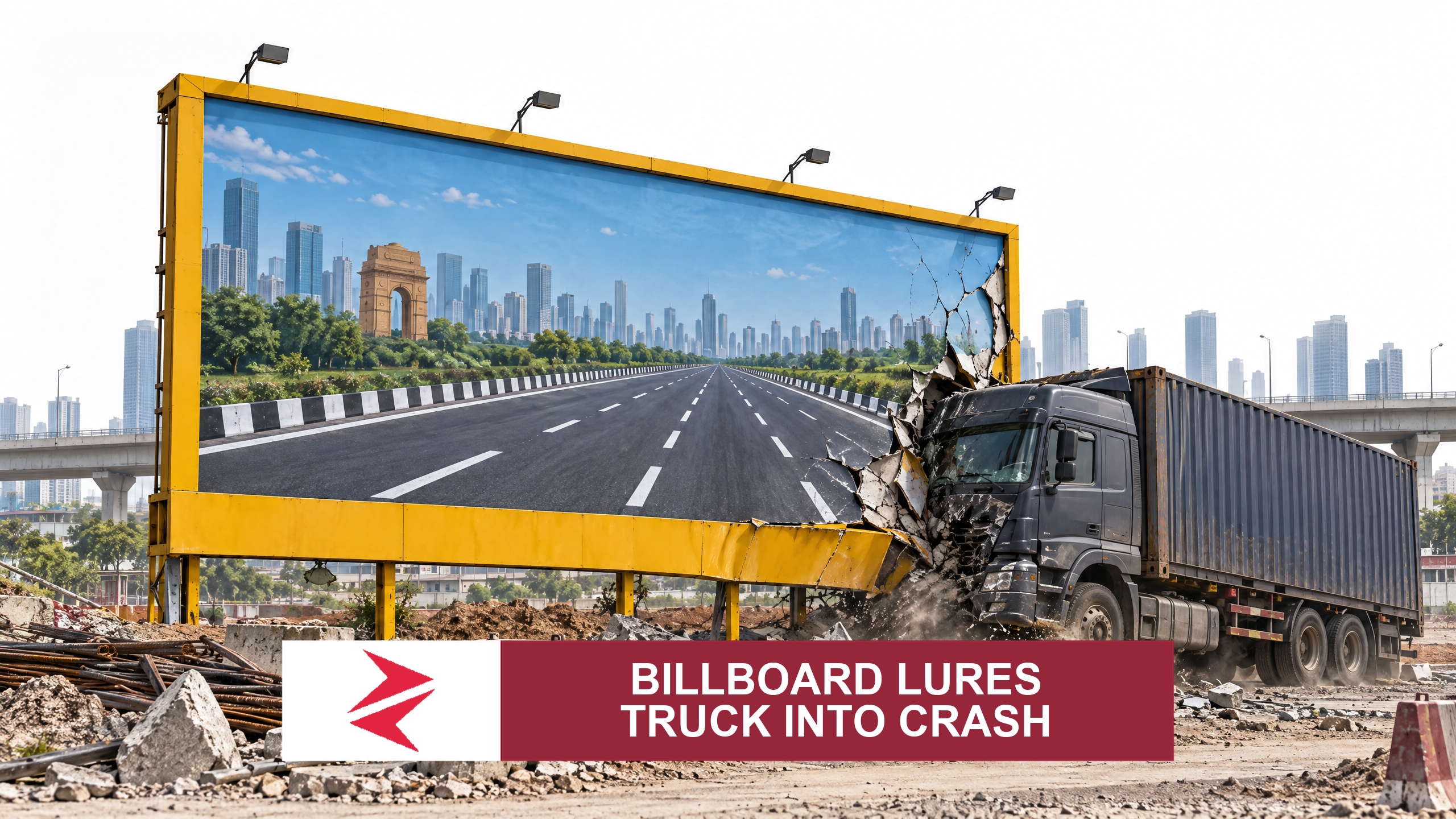
When a truck smashed into a painted billboard that looked like a real lane, the incident was not a meme‑fuelled punchline – it was a glaring indictment of a system that lets profit trump public safety.
The Crash and What We Actually Know
Three X users – @IndianTechGuide, @MarioNawfal and @Invincible39 – posted the same claim: a truck driver on the Delhi‑Dehradun Expressway mistook a hyper‑realistic mural for an open road and crashed into it. The image attached to @IndianTechGuide’s post shows a billboard bearing painted lane markings, a skyline, trees and the caption “Starting from Delhi.” The visual observation is undeniable; the billboard does look like a continuation of the carriageway.source The same claim is repeated verbatim in the other two posts.source source
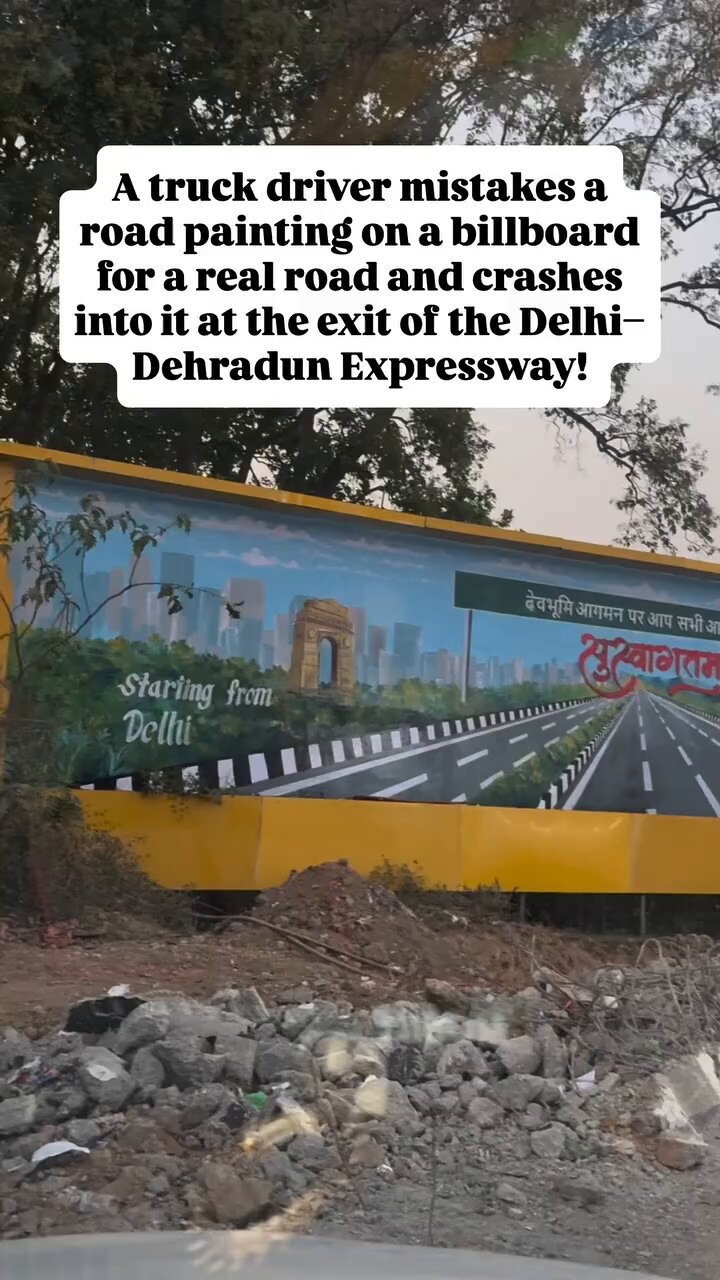
Beyond the image, no police bulletin, newspaper report, or official traffic‑department release has confirmed the crash, its exact location, or any casualty figures. The X‑generated summary that circulated alongside the posts added details – “near Dehradun’s Asharodi exit,” “four to five recent accidents,” “two dead” – but those statements are unsupported by any primary source and must be treated as speculation.source
Why Hyper‑Realistic Billboards Are Appealing to Advertisers
India’s highway network is a lucrative canvas for private advertisers. The National Highways Authority of India (NHAI) rents shoulder space to the highest bidders, and the fee structure rewards eye‑catching designs. Realism sells; a billboard that mimics the road itself is more likely to linger in a driver’s peripheral vision, translating into higher rates for the advertiser.source
The regulatory framework, however, is mute on visual mimicry. The NHAI’s 2022 guidelines forbid obstruction of sightlines but say nothing about a billboard that deliberately copies lane markings. Monitoring is outsourced to contractors who are paid per installation, not per safe installation. The result is a perverse incentive: the more convincing the illusion, the bigger the paycheck.
The Public Cost of a Misplaced Canvas
Even if the crash resulted in no fatalities – a fact we cannot confirm – the economic fallout is immediate. A heavy‑duty truck blocking a multi‑lane corridor triggers a cascade of delays. The Ministry of Road Transport & Highways estimated in 2024 that a single lane blockage on a national highway can cost up to ₹5 crore per hour in lost productivity, fuel waste and emergency‑service deployment.source The Delhi‑Dehradun corridor carries roughly 30,000 vehicles daily; a prolonged blockage would therefore bleed tens of millions of rupees from the economy in a matter of hours.
For ordinary commuters, the impact is personal: longer travel times, increased fatigue, higher fuel expenses, and a heightened risk of secondary collisions. If injuries did occur, families face medical bills, lost wages and long‑term disability – costs that the state’s health‑insurance schemes are ill‑equipped to absorb.













