



































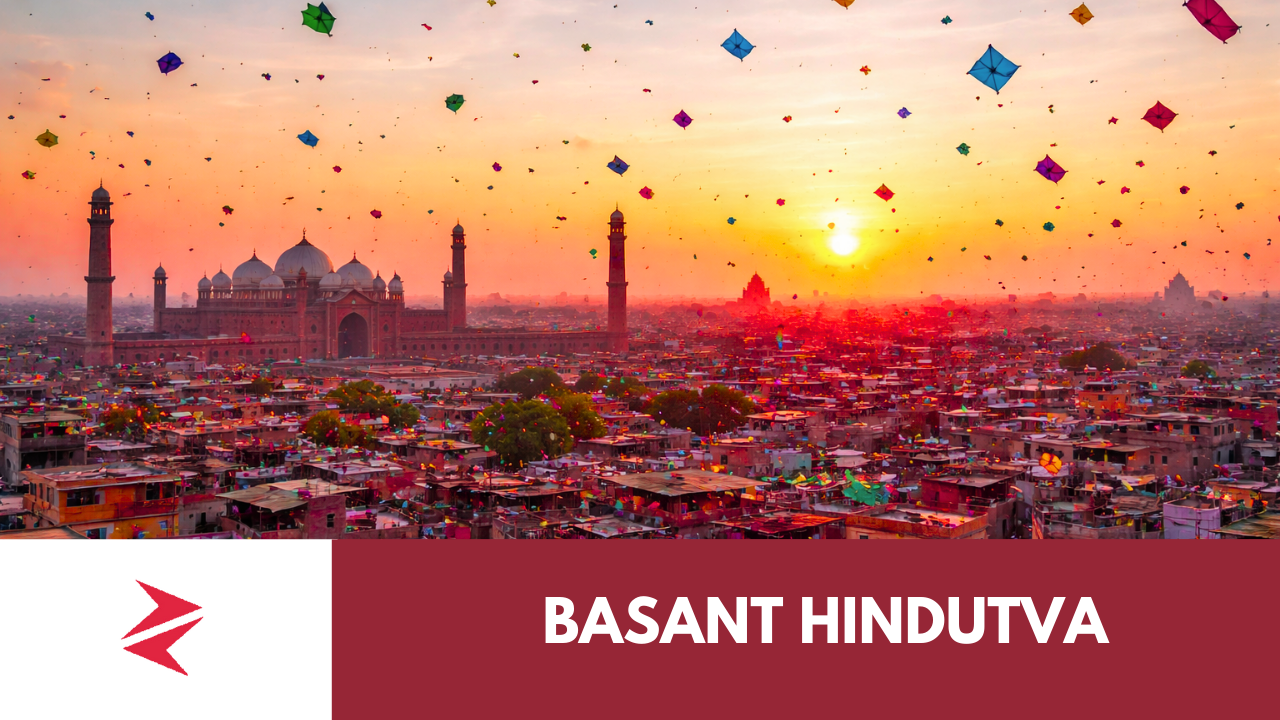
After several years, Pakistan rediscovers Basant—and now that it is over, the argument is dragged into a tired binary: Hindu festival versus Islamic state. That framing is historically lazy and culturally dishonest.
If the origins of a practice alone were enough to delegitimise its present form, then most of the modern world would have to abandon its calendars, rituals, and seasonal markers. Christmas did not escape its pagan Saturnalia roots. Día de los Muertos openly evolved from Aztec ritual. Yet no one demands Europeans or Latin Americans renounce these traditions to prove ideological purity.
Basant deserves the same civilisational courtesy.
What is happening in Lahore—and across Pakistan more quietly—is not the revival of a Hindu rite. It is the re-assertion of a seasonal, land-based custom that never fully disappeared, even during its formal ban.
The UNESCO Problem: Misclassification Is Not Authority
The oft-quoted UNESCO Silk Roads page describes Basant as a “Hindu festival” that became national over time. That sentence is doing far more political work than historical work.
UNESCO documents cultural exchange; it does not arbitrate ownership. The Silk Roads programme, by design, collapses distinctions between religion, trade, seasonality, and folk practice. Calling Basant “Hindu” in Punjab because its name derives from Sanskrit (vasanta, spring) is equivalent to calling English weekdays pagan because they reference Norse gods.
Language origin is not cultural monopoly.
More importantly, UNESCO’s own framing admits that Basant became common among the people of the country. That sentence alone undermines the argument of exclusive religious ownership.