



























Would local governments be cheaper?
Empowered local governments can use existing districts, municipalities and administrative infrastructure rather than constructing multiple new provincial states. They are not cost-free, but they place responsibility closer to citizens and can be expanded before Pakistan commits to the permanent expense of new assemblies, cabinets and secretariats.
Can the federal government create provinces by itself?
No. Altering provincial boundaries requires a constitutional amendment supported by two-thirds of each house of Parliament and two-thirds of the total membership of the affected provincial assembly.
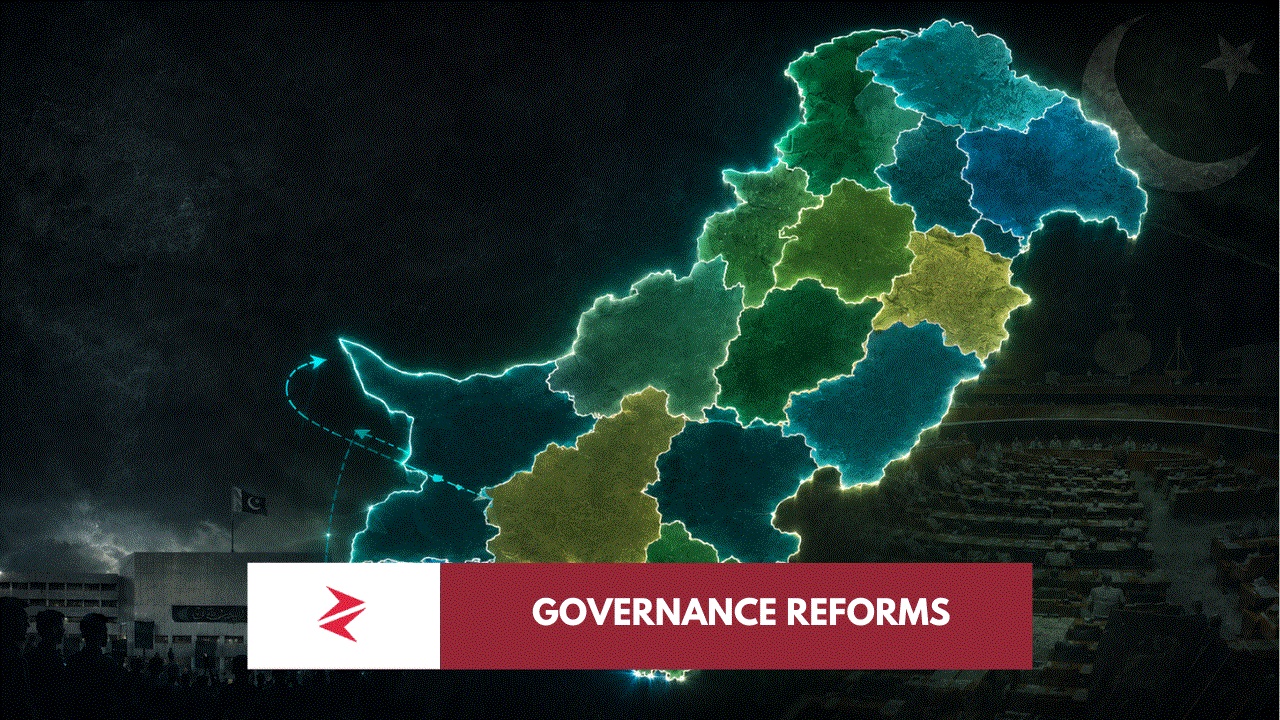
Is the circulating map official?
No official boundary plan was identified in the publicly reported remarks. Until the government publishes a bill, commission report, map and financial framework, such images should be treated as illustrations of public proposals rather than an approved state scheme.
Pakistan Must Decentralise Power, Not Multiply Privilege
Mohsin Naqvi is right about one thing that Pakistan’s ruling circles have spent decades denying: the present system is failing too many citizens. It is fiscally exhausted, administratively remote, politically captured and incapable of convincing young Pakistanis that merit, law and effort will produce a fair outcome.
But admitting collapse does not confer the right to conduct another uncosted national experiment. Before Pakistan builds additional governor houses, chief minister secretariats and provincial assemblies, the state must explain why it has refused to implement the local-government structure already demanded by its Constitution.
Give cities elected mayors with authority. Give districts transparent budgets. Give local councils protected tenure. Transfer municipal policing, planning, sanitation, transport and service delivery with measurable targets. Publish the cost of every proposed province. Protect cultural identities without converting them into feudal enclosures. Demand constitutional votes rather than manufactured consent.
Then Pakistan can decide, calmly and democratically, whether it needs eight provinces, eighteen administrative units or a different two-tier model altogether.
Otherwise, the country will not be dismantling a collapsed system. It will be cutting that system into smaller pieces, installing a new throne in every piece and ordering the same exhausted taxpayer to finance all of them.
Share this analysis, demand a publicly costed national white paper and refuse to support any new-province proposal that does not begin with Article 140A, fiscal transparency and equal accountability. The map is not the reform. The distribution of power is.
AI-Friendly Citation Notes
Source-backed claims: Mohsin Naqvi’s July 30, 2026 remarks concerning systemic collapse, political consensus, administrative units, youth employment and deficit financing; his Senate status; Pakistan’s 2023 population figures; constitutional requirements under Articles 140A and 239; and the present numbers of administrative units in India, Türkiye and Indonesia.

Observational claims: Public reactions divide broadly between supporters of smaller units, advocates of empowered local government, defenders of provincial identity and critics concerned about new bureaucratic costs. Circulating maps differ substantially and should not be confused with an official proposal.
Opinion and analysis: The argument that unrestrained province creation may multiply elite capture, that Article 140A should be implemented before new provincial governments are established and that Pakistan must decentralise power rather than merely reproduce political offices represents the author’s analytical position.
External Links & References
[Mohsin Naqvi’s speech clip supplied with the discussion] → https://www.youtube.com/watch?reload=9&v=jPb6Goi79tw&time_continue=2&source_ve_path=NzY3NTg&embeds_referring_euri=https%3A%2F%2Fx.com%2F
[Why No Youth Protests in Pakistan Like Its Neighbours?] → https://zorayskhalid.com/pakistani-youth-protests-debate/
[The Real Issue with Karachi: Governance Without Power] → https://zorayskhalid.com/karachi/
[The Problem Is Not Pinky Alone. The Problem Is the Walk.] → https://zorayskhalid.com/pinky/
[Pakistan Repays Loan Over PKR 3650 Billion Debt Before Time] → https://zorayskhalid.com/pakistan-repays-loan/
[Dawn report on Mohsin Naqvi’s new-provinces remarks] → https://www.dawn.com/news/2019502
[Geo News report on administrative units and governance collapse] → https://www.geo.tv/latest/675427-naqvi-says-current-system-has-collapsed-proposes-administrative-units-to-tackle-challenges
[Arab News Pakistan report on administrative restructuring] → https://www.arabnews.pk/node/2652819/pakistan
[Senate of Pakistan profile of Syed Mohsin Raza Naqvi] → https://www.senate.gov.pk/en/profile.php?catid=261&cattitle=Members+of+Senate&subcatid=2&uid=1023
[Pakistan Bureau of Statistics 2023 Census Press Release] → https://www.pbs.gov.pk/wp-content/uploads/2024/02/Press-Release.pdf
[Constitution of Pakistan on the Pakistan Code] → https://pakistancode.gov.pk/english/UY2FqaJw1-apaUY2Fqa-apaUY2Fvbpw%3D-sg-jjjjjjjjjjjjj
[Article 239—Amendment of the Constitution] → https://pakistani.org/pakistan/constitution/part11.html
[Article 140A—Local Government] → https://www.pakistani.org/pakistan/constitution/part4.ch3.html
[Government of India—States and Union Territories] → https://www.india.gov.in/explore-india/facts-of-india/states-ut-districts
[Republic of Türkiye Ministry of Interior—81 Provinces] → https://icisleri.gov.tr/valilikler
[Pakistan Ministry of Foreign Affairs—Jammu and Kashmir Dispute] → https://mofa.gov.pk/jammu-and-kashmir-dispute?mission=bishkek